Why the Quiet Child May Be Struggling
At a glance
A quiet child at school can be content, or she may be having a hard time asking for help or joining a conversation. Rifka Schonfeld shares questions to help parents understand what their child is experiencing.
Key takeaways
- Notice how your child feels and participates in familiar settings.
- Practice specific situations, such as starting a conversation or answering a question in class.
- Listen for details. Persistent distress or withdrawal that disrupts daily life deserves professional attention.
What a quiet child at school may be experiencing
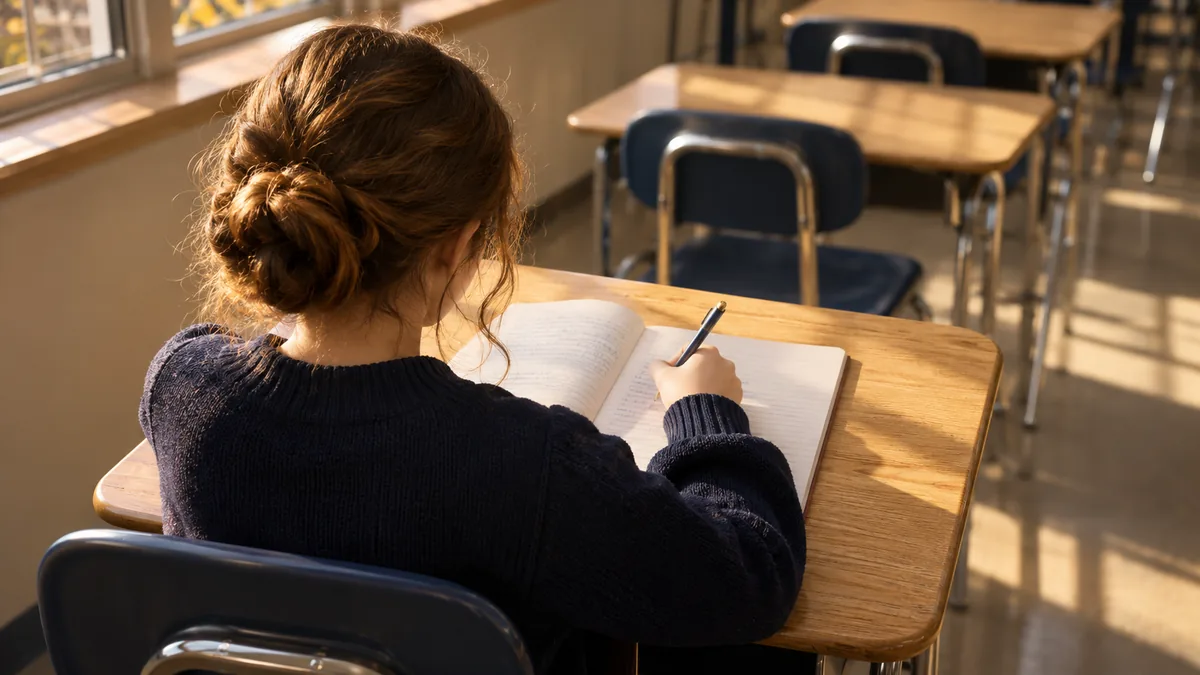
A quiet student is often a teacher's dream. She doesn't call out, interrupt the lesson, or create problems with her classmates. Her notebooks are neat, her behavior is polite, and she rarely asks for attention. When report cards arrive, the comments are predictable: "A pleasure to have in class."
But quiet does not always mean comfortable, and good behavior does not always mean that a child is doing well.
Some children are naturally introverted. They enjoy relationships but need time alone to recharge, and they may prefer one close friendship to a large group.
There is nothing wrong with that preference. Other children, however, are silent because they are afraid of making a mistake, uncertain how to enter a conversation, or struggling to follow what is happening around them.
From the outside, these children may look remarkably similar.
One way to distinguish the situations is to look at the child's experience rather than the number of words she speaks. Does she seem content after spending time with one friend?
Can she speak comfortably in familiar settings? Does she participate when she feels prepared?
Or does she come home distressed, describe herself as invisible, or avoid activities she once enjoyed?
Make classroom participation and friendship easier
Parents sometimes react by pushing a quiet child to become more outgoing. "Go say hello." "Why don't you join the girls?" "You need to speak up." These instructions are understandable, but they can make a self-conscious child feel that her personality is a problem. A better approach is to identify the specific skill or situation she finds difficult.
Perhaps she needs help initiating conversation. You can practice simple openings at home: asking a classmate about an assignment, commenting on a shared activity, or inviting someone to sit nearby.
Perhaps she fears speaking in class. A teacher might arrange for her to answer a question she knows in advance, giving her a successful experience without putting her on the spot.
If friendships are the concern, begin with one child rather than an entire group. A quiet girl may feel overwhelmed at a large birthday party but perfectly comfortable baking with one classmate in your kitchen. Repeated, relaxed contact gives relationships a chance to develop naturally.
Listen first and notice persistent distress
Most important, listen without immediately offering a solution. If your daughter says, "Nobody talks to me," resist the urge to answer, "Of course they do!" Ask what happened that day. Was she excluded, or did she find it hard to enter an ongoing conversation? Did a friendship change? Understanding the details will help you decide whether she needs reassurance, social coaching, or adult intervention.
Persistent anxiety, marked withdrawal, or distress that interferes with everyday activities deserves professional attention. Being introverted, however, is not itself a difficulty to treat.
There is a lovely difference between helping a child find her voice and insisting that she become someone else. Our task is not to make every child the loudest person in the room. It is to make sure that even the quietest child feels entitled to participate, connect, and be heard.
Frequently asked questions
Should I worry about a quiet child at school?
Look at the child’s experience across settings. A child who enjoys one close friendship and talks comfortably at home may simply prefer quieter interactions. Distress, avoidance, or feeling invisible is worth exploring.
How can I help a quiet child participate in class?
Practice one specific situation, such as asking a classmate about an assignment. A teacher can also let the child prepare an answer in advance so she can participate without being put on the spot.
When should I seek support for a withdrawn child?
Rifka Schonfeld recommends professional attention when anxiety persists, withdrawal is marked, or distress interferes with everyday activities. Being introverted is a temperament preference.
Washington Jewish Journal in print
If you have a quiet child at school, ask how they feel about recess or class discussion.
Subscribe to the Journal









































































