When Kriyah Becomes a Daily Struggle
At a glance
Kriyah struggles can appear even when English reading goes smoothly. Rifka Schonfeld explains what to look for and how to keep practice manageable.
Key takeaways
- Check whether the difficulty is recognizing letters, blending sounds, or staying accurate in a line.
- Start with short practice, introduce one new challenge, and end with something the child can do.
- Coordinate with the rebbe or reading specialist and keep other ways to participate in Jewish life open.
Why kriyah struggles can be specific to Hebrew
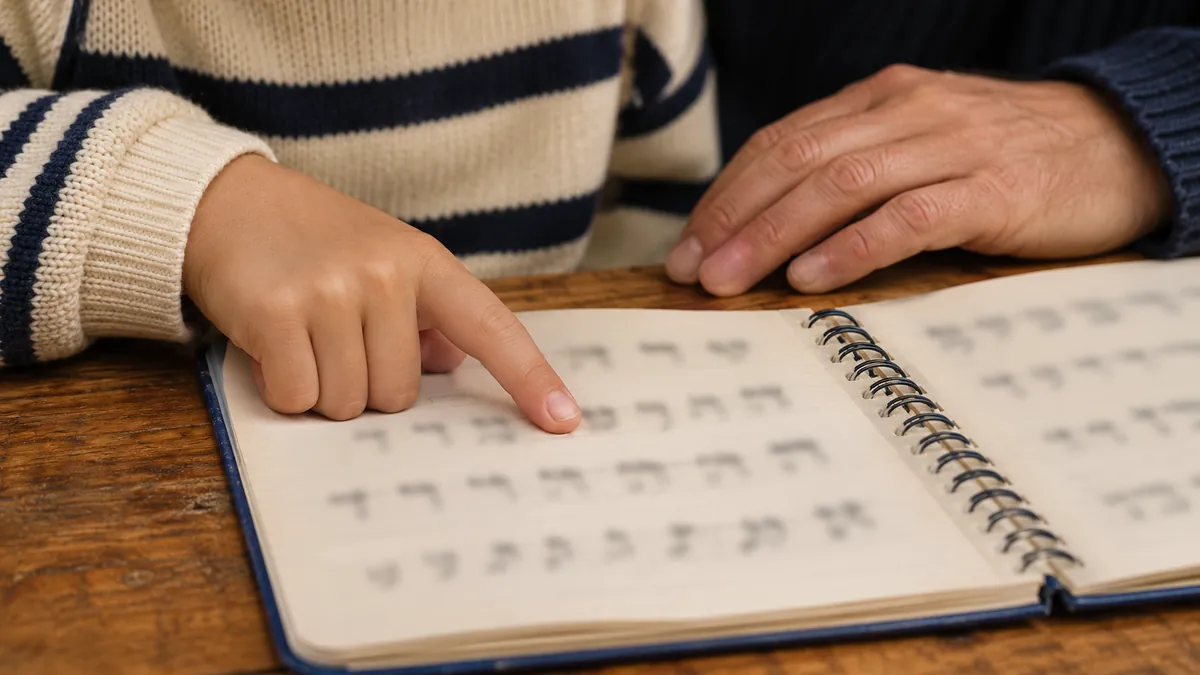
A parent may watch her son read an English story with reasonable confidence and then become frustrated as soon as he opens his siddur. He confuses letters, loses his place, or guesses at words he has practiced many times. Soon, kriyah practice becomes the most unpleasant part of the afternoon.
It is easy to assume that a child who can read in one language should naturally read in another. Yet reading Hebrew presents its own demands.
The child must recognize a different alphabet, connect letters with their sounds, attend to nekudos, and read accurately enough for the words to make sense. For some children, these skills develop quickly.
Others need carefully sequenced instruction and considerable practice.
Find where decoding breaks down
Parents should begin by identifying the exact point of difficulty. Does the child confuse similar-looking letters?
Does he know individual sounds but struggle to blend them? Can he read a word in isolation but lose accuracy in a line of text?
Is he relying on memory rather than actually decoding? Each pattern requires a different instructional response.
Repeatedly asking the child to read the same difficult passage may not provide the practice he needs. If the underlying problem is letter recognition, he must become secure with those letters before moving forward. If blending is difficult, short exercises that combine known sounds may be more productive than long passages that overwhelm him.
Short, successful sessions often work better than lengthy battles. Five or ten minutes of focused practice can accomplish more than half an hour of tears and frustration.
Start with material the child can manage, introduce one new challenge, and end with something he can do confidently. Progress depends on practice, but it also depends on preserving the willingness to practice.
Work with the rebbe and protect a child’s confidence
Parents should coordinate with the rebbe or reading specialist rather than improvising a different method every evening. A consistent approach helps the child understand what is expected and prevents confusion. If difficulties persist despite appropriate instruction, further evaluation may be warranted, especially when there are struggles with decoding in other languages as well.
Be careful about the emotional significance of the material. Hebrew reading is not merely another school subject in many Jewish homes. It connects children to tefillah, Torah learning, and communal life. When every encounter with a siddur becomes a reminder of failure, a child may begin associating those experiences with embarrassment or inadequacy.
That is why it is important to preserve opportunities for positive participation. A child who reads slowly can still enjoy a Shabbos song, learn a meaningful idea from the parshah, or join family tefillah in ways suited to his abilities. His connection to Yiddishkeit should not be measured solely by reading speed.
Praise accurate effort rather than racing. "You looked carefully at the nekudos and corrected yourself" is more helpful than "Finally, you finished." Give the child permission to develop fluency at a realistic pace, with instruction matched to his needs.
Learning to read Hebrew can be difficult, and some children will need sustained specialized support. But the goal is larger than getting through tonight's assignment. We want a child who gradually becomes a capable reader while retaining the belief that the words in his siddur belong to him too.
Frequently asked questions
Why does my child read English but struggle with kriyah?
Hebrew reading requires learning another alphabet, connecting letters to sounds, attending to nekudos, and combining those skills in words and lines.
How can I practice kriyah without a nightly struggle?
Start with something comfortable, practice for a short period, add just one new challenge, and finish with something the child can read confidently.
When should I ask a rebbe or reading specialist for help?
Coordinate methods early. If decoding difficulties persist despite appropriate instruction, discuss whether further evaluation would help, especially if struggles appear in other languages too.
Washington Jewish Journal in print
When kriyah struggles come up, show the rebbe where your child loses their place or starts guessing.
Subscribe to the Journal









































































