You Can't Teach Organization by Saying Be Organized
At a glance
Organization skills for kids are easier to practice when the steps are clear. Rifka Schonfeld starts with one familiar task: getting a schoolbag ready.
Key takeaways
- Choose one routine and show your child each step.
- Practice when you’re both calm, using a simple checklist or a few labeled folders.
- Step back gradually as your child learns to manage more of the task.
What organization skills for kids involve
One parent tells her daughter to clean her room. Another reminds his son to bring home his homework. A teacher writes "needs to be more organized" on a report card. Everyone agrees about the goal, but the child continues losing papers, forgetting supplies, and leaving half-finished projects around the house.
The problem is that organization is not a single decision. It is a collection of skills: sorting, planning, remembering, prioritizing, and creating systems that can be maintained. Some children acquire these habits almost effortlessly. Others need to be taught each step explicitly.
Imagine telling a child who has never learned to cook, "Make supper properly." The instruction would be far too broad. We would first explain how to read a recipe, gather ingredients, and follow a sequence. Children who struggle with organization deserve the same kind of instruction.
Start with a schoolbag checklist
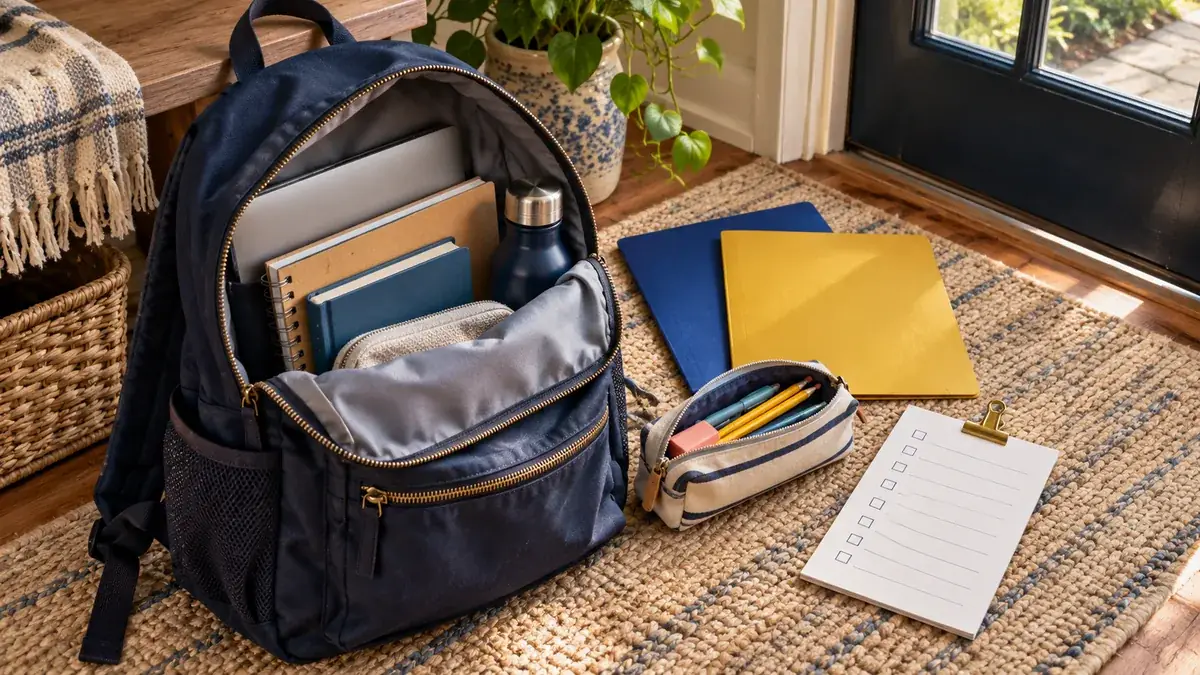
Begin with one area rather than attempting to overhaul the entire child's life. A schoolbag is a good example. Empty it together and decide what belongs inside. Assign a specific place for each item. Make a brief checklist of what must go to school each morning and what should return home each afternoon.
Practice the system at a calm time, not when the carpool is waiting outside. The first few days, you may need to guide your child through every step. Then gradually reduce your involvement. Ask, "What does your checklist say?" rather than immediately packing the bag yourself.
Make planners and visual reminders useful
For older children, managing assignments may be the priority. A planner can help, but only if the child knows how to use it. He must record tasks accurately, identify deadlines, estimate how long work will take, and review the list regularly. Simply purchasing an attractive notebook will not create these habits.
Visual reminders can be effective when they are simple and placed where the relevant activity happens. A checklist beside the front door may help with morning supplies. A short routine on the bedroom wall may support getting ready for bed. Too many charts, however, can become visual clutter that children learn to ignore.
It is also worth examining whether the system suits the child. An elaborate filing arrangement may be perfect for a parent and completely unrealistic for a ten-year-old. A few clearly labeled folders may work better. Successful organization is not the system that looks most impressive; it is the one the child can use consistently.
Help your child build independence
Avoid making organization into a character judgment. "You're such a mess" or "You never think ahead" teaches a child little about what to do differently. Describe the difficulty and its solution instead: "The permission slips keep getting lost. Let's decide on one pocket where they will always go."
Children also need natural opportunities to experience the benefits of organization. When a son finds his homework immediately because he used the folder, point out how much easier his afternoon has become. The goal is for the system to feel useful to him, not merely pleasing to adults.
If difficulties are persistent and affect many areas of life, speak with the school or an appropriate professional about possible executive functioning or attention-related challenges. Support may be necessary even for a child who is very intelligent.
Most important, remember that independence develops gradually. At first, the parent supplies much of the structure.
Then parent and child share responsibility. Eventually, the child manages more of the task himself.
Organization is not a personality trait that some fortunate children possess and others lack. It is a set of habits that can be taught, practiced, adjusted, and strengthened.
Frequently asked questions
How can I teach my child organization skills?
Choose one everyday task, such as packing a schoolbag. Show each step, give supplies a consistent place, and practice together at a calm time.
Why doesn’t a planner make my child more organized?
A planner helps when the child knows how to record tasks, identify deadlines, estimate the time needed, and check it regularly. Practice those steps with the child.
When should I talk to the school about organization problems?
Speak with the school or an appropriate professional if the difficulty persists and affects multiple areas of everyday life. They can help you consider the support your child may need.
Washington Jewish Journal in print
Practice organization skills for kids with one job your child needs to do again tomorrow.
Subscribe to the Journal









































































