Posted on — Leave a comment

    The Value of You: Walking Humbly with Confidence

    Parents with their children, from the original Balanced Parenting article.

    Balanced Parenting

    From the February 2025 issue

    The Value of You: Walking Humbly with Confidence

    Exploring Self-Worth in Jewish Tradition

    Father and son reflected in a mirror, the original photograph from The Value of You.

    Any discussion of the Jewish approach to instilling a positive self-concept in children must first deal with an obvious question. How does one reconcile the strong emphasis that Jewish tradition puts on humility and modesty with the emphasis that psychology places on enhancing a child’s self-worth and importance? The following Talmudic passage is but one of many examples of the emphasis placed by our Sages on the importance of humility: Rava said, “It [the Torah] is not in the heavens” (Deuteronomy) 30:12) …neither will it be found in one who believes his mind is as broad as the ocean — it [the Torah] is not to be found with the person who, because of some level of Torah knowledge, is overly expansive in his self-esteem as the sea. R’ Yochanan said: “It is not in heaven” — it [the Torah] is not to be found among the arrogant (Eiruvin 55a).

    In fact, the Talmud in Sukkah (29b) explains: The sin of arrogance is equivalent to all [the others]; in contrast, regarding the humble it says: “But the humble shall inherit the earth” (Psalms 37:11).

    Rabbi Aharon Kotler, zt”l (of blessed memory), stresses the crucial importance of recognizing one’s self-worth. In Mishnas Rav Aharon (Volume One, p. 151), he explains that the essence of an individual’s identity is based on his ability to recognize his importance. We learn this, Rav Aharon explains, from the following Talmudic passage: Our Rabbis taught: He who eats in the marketplace is like a dog; and some say that he is unfit to testify (Kiddushin 40b). Expounding on this Talmudic passage, the Rambam says that we can’t accept the testimony of an individual who doesn’t respect himself. Rav Aharon asks, “Why nullify the testimony of somebody who eats publicly? What does self-respect have to do with honesty?” He explains that the greatest deterrent to falsehood lies in asking oneself, How can I do such a thing? Without respect for oneself, one is not able to have proper respect for others. Such an individual can’t be trusted to testify truthfully.

    An episode that illustrates this point was told about a father who was concerned about the level of religious observance that his son would adhere to while attending graduate school away from his family and the intense Jewish environment in which he had been raised. He decided to bring his son to a rabbi for whom he had high regard to get a blessing before he left for the university. After giving the blessing the rabbi said that he would also like to give him advice on how to resist the temptations of living in a totally secular environment. Expecting advice that the university student should establish a relationship with a local rabbi who would be his teacher and mentor, the father and son were surprised when the rabbi suggested that he seek out a younger person to whom he would teach Torah. The rabbi explained that being a role model for somebody else would serve as an even greater motivator in keeping him loyal to Torah. If tempted to associate with the wrong friends and participate in unseemly activities, the graduate student would be restrained because he would be fearful that his student might see him and thereby lose respect for his teacher.

    The Talmud in Sanhedrin (37a), marveling on the uniqueness of each individual, comments: If a man mints many coins from one mold, they all resemble one another, but the supreme King of kings, the Holy One, Blessed is He, minted every man in the stamp of the first man, and yet not one of them resembles his fellowman. Therefore every single person is obliged to say, “The world was created for my sake.”

    The obvious question regarding this statement is how one reconciles this with the necessity to be humble as typified by Abraham who said, “I am but dust and ashes” (Genesis 18:27).

    In a well-known statement regarding reconciling the seeming contradiction between these two apparently competing imperatives, Rav Simcha Bunim from Peshischa suggested that everybody needs to have two pockets that should be dipped into as needed: One pocket should contain the phrase, “The world was created for my sake,” and the other should have the words, “I am but dust and ashes.” The ideal balance in achieving an appropriate self-image is attained when individuals are able to reach into the appropriate pocket depending on the demands of the situation (Simchas Yisrael, Mamorei Simcha, Section 12).

    Rabbi Shraga Feivel Mendlowitz, commenting on this insight of Rav Simcha Bunim, noted that people often reach into the wrong pocket at the wrong time. For example, when a person feels that he has been slighted by being given an honor in shul that he feels is beneath him, he reaches into the “The world was created for my sake” pocket and is inappropriately hurt and angry. When approached to do something for the community, however, he goes into the “I am but dust and ashes” pocket, claiming a false and misplaced sentiment that he isn’t up to the job.

    In an age of indulgence and entitlement it is important for parents to note the context in which the Talmud discusses the concept of “The world was created for my sake.” The mishnah in Sanhedrin (37a) discusses this view of man in the context of a witness’s responsibility to testify reliably and honestly. In an attempt to instill a sense of awe about a witness’s responsibility in a capital case, the mishnah highlights the unique sanctity of each individual. The intention of teaching the concept of “The world was created for my sake” is, therefore, not to impart a sense of entitlement, but rather, to teach one’s responsibility to others.

    A father helping his son in front of a mirror, from The Value of You.
    From the original “The Value of You” print feature.

    Parental Role

    Parents play a central role in the development of a child’s self-esteem. They play a pivotal part in the following factors that have been found to influence a child’s self-concept:

    1. A respectful, accepting attitude that children receive from others, particularly parents, is a key building block of a healthy sense of self. Repeatedly, studies have found that parents who provide a home that provides warmth, clear expectations, consistency and appropriate modeling are likely to raise children who experience high levels of self-esteem.
    2. The child’s history of success and the resulting status that this earns the youngster at school and at home is another key force shaping a child’s view of himself. A child’s self-esteem is largely the result of the mirrors held back to him by family members, teachers and peers. A high level of self-esteem is likely when the reflected appraisals of others are positive.
    3. How a child defines success or failure, as well as his general attitude toward negative feedback, is another important influence. This dynamic is shaped by both temperament and how the child is parented.

    In addition to the forces that shape self-esteem, it is helpful to keep in mind that a child’s self-concept is not a monolithic concept. Psychologists describe the following dimensions that comprise self-esteem:

    1. Academic competence: How “smart” a child feels himself to be relative to his peers. Since intelligence is made up of multiple domains, it is possible to feel that one shines in one area of intelligence and is relatively weak in another. For example, a child who is a brilliant writer may feel “dumb” if he has difficulty with math. This domain of self-concept is particularly important for Jewish children, who typically live in an environment that emphasizes academic skills above most other assets.
    2. Physical Appearance: This is a particularly important source of self-esteem for girls. In a shidduch climate that often places inordinate emphasis on a girl’s weight and general appearance, physical self-concept can be a major contributor to a girl’s overall sense of worth. Research has shown that having a poor physical self-concept can be an important risk factor for eating disorders.
    3. Behavioral: How a child views his behavior relative to peers is another component of self-concept. If a child views himself as “bad” he may be more likely to engage in rebellious behavior and is at increased risk for gravitating toward negative peer influences.
    4. Athletic: In the Orthodox world, athletic ability is often not as major a force in shaping self-concept as in the general population. However, parents of young boys know that a child who is a poor athlete often feels badly about himself, particularly during his elementary school years.
    5. Social: Feeling popular, particularly during adolescence — when fitting in with one’s peer group is a major psychological need — is another major dimension of self-esteem.

    Of course the sum can be greater than each of its parts. A child’s global self-worth may be excellent, even if he suffers from a poor self-image in some of the above dimensions. The combination of a child’s temperament, how his parents make him feel about himself and how much relative importance he assigns to a particular component of self-esteem will determine each child’s overall self-image.

    This approach to understanding self-esteem has several practical implications. Research has found that helping youngsters discount the importance of domains in which they are not competent or facilitating an improvement in their competence in areas where they are weak are among the more effective ways of improving children’s self-images. For example, in the case of children who are not particularly skilled athletes, self-esteem can improve by helping them see how, in the long run, this says nothing about their value as a person — while other areas of competence, such as academic skill or good character traits, are far more valuable assets. Another effective approach would be to give such an individual coaching that would improve his athletic skills. Of course, an approach using both of these strategies would have the best chance of improving the child’s self-esteem.

    Development of Self-concept

    Children’s self-concepts become increasingly stable as they grow older. Until the typical child starts school he tends to view himself in an unrealistically positive and optimistic light. His true abilities have not been tested by day-to-day comparison to peers. Consequently, preschoolers will often describe themselves as being the “smartest” or “strongest,” regardless of their true behavior and skills. Research finds that as children move through the early elementary school years their sense of competence sees a decline relative to the preschool years. Their sense of self becomes increasingly more objective and grounded as they forge a sense of relative confidence by comparing their abilities to those of their classmates. In the laboratory of real life, young children gradually discover that they have strengths in some areas and weaknesses in others.

    Self-concept gradually improves and stabilizes as children go through the later elementary school years. Parents should be aware, however, that there are various transition points where a child’s sense of worth typically declines. This is especially true during the early adolescent years — a period often marked by insecurity and a lack of confidence. As the young teen undergoes the transition from elementary school to middle school and endures the stresses that often attend the onset of puberty, many domains of self-concept have been found to drop. A sense of confidence and competence typically reemerges during the latter years of high school. The above is only a very general map of how self-concept develops in a typical child. Any child who feels inferior to peers in academic ability, popularity, athletic skills, appearance or behavior will have low self-esteem in that area regardless of his or her stage of development. Despite competence, children who are raised in a home that is dominated by criticism, a punitive disciplinary style, or a failure to find a balance between love and limits will also be at risk for suffering the ill effects of a poor self-concept.

    Subtle Contributions to Self-Esteem

    Parents with their children, from the original Balanced Parenting article.
    Photography from the February 2025 Balanced Parenting column.

    One of the most powerful contributors to self-esteem is a child’s perception of what he is capable of doing. This is shaped both by the expectations of others, as well as the expectations he has of himself. In Chovas HaTalmidim, the Piacesner Rebbe asked his students to try to picture where they wanted to be in six months. He recognized that a child’s dreams and aspirations are powerful forces that shape his ability to actualize his potential.

    In one of the classic experiments in the field of psychology,⁷ a group of researchers randomly chose one out of five elementary school children in 18 classrooms. Their teachers were told that these students were unusually bright and were expected to make remarkable progress during the coming academic year. Even though these children had no greater inherent potential than the other 80 percent of their classmates, they made unusual progress during the year that their teachers viewed them as gifted. Relative to their peers, significant increases in verbal skill, reasoning ability and overall intellectual ability were documented on intelligence and achievement tests that they were given at the end of the year.

    The authors of this study speculate that expectations of children are transmitted in the most subtle of ways. Facial expressions, posture and tone of voice are all unconscious, yet powerful ways that communicate expectations. This is certainly the case with children. Parents often shape a child’s view of what he can and can’t do via the subtle expression of a raised eyebrow or an understated scowl. Setting appropriately high standards for one’s children while, at the same time, not overwhelming them with inappropriately high expectations is an important ingredient in raising children with high levels of self-esteem

    Ultimately, raising children with strong self-esteem isn’t about perfection— it’s about intention. When parents model humility, demonstrate respect, and show that effort matters more than immediate results, they lay the foundation for their children to grow into confident, grounded individuals. As with all aspects of parenting, a little patience, empathy, and self-awareness can make a world of difference in shaping the next generation.
    Posted on — Leave a comment

    Innovating Healthcare for Klal Yisroel

    Rabbi Moishe Katz, interviewed about United Refuah in the February 2025 issue.

    WJJ 1:1 | Leaders in Action

    From the February 2025 issue

    Innovating Healthcare for Klal Yisroel

    A conversation with Rabbi Moishe Katz

    Rabbi Moishe Katz of United Refuah.

    This interview appeared in February 2025. Program details reflect that edition. Visit United Refuah for current information.

    Washington Jewish Journal had a conversation with Rabbi Moishe Katz, the dedicated and visionary CEO of United Refuah, about his inspiring journey, his commitment to Klal Yisroel, and his passion for revolutionizing healthcare through a community-driven model. As healthcare challenges grow increasingly complex, United Refuah presents a bold reimagining of what it means to care for one another, both physically and spiritually. This model not only exemplifies Jewish ideals but also has the potential to serve as a template for other faith-based or values-driven communities striving for sustainable, community-oriented solutions.

    Rabbi Katz, thank you for you time. To dive right in, how does United Refuah compare to regular health insurance?

    Moishe Katz: It’s essential to clarify the difference between insurance and health sharing.

    A health-sharing group is a group of people with shared religious beliefs coming together to share medical expenses under a non-profit framework. Unlike insurance companies, which are designed to generate profit for stakeholders by managing policyholder expenses, health-sharing groups focus on helping members manage health-care costs collaboratively.

    Our goal as a non-profit health-sharing ministry is to focus on health outcomes, ensuring members access the best care without restricting them to networks or providers. Members can use any doctor or hospital worldwide. At the same time, we strive to make costs affordable—both membership fees and the costs of care.

    How do you maintain affordability and flexibility while managing costs?

    We rely on industry benchmarks to determine fair pricing for medical services. We often look at Medicare’s rates for a service in a given area and allow up to 50% more than that amount. For instance, if Medicare would pay $200 for a service, we’ll allow up to $300. If the bill is within $300, it’s eligible for sharing, though there may still be some member responsibility.

    If the bill exceeds that threshold—say $350 for a $200 Medicare service—the additional $50 becomes the member’s responsibility. However, we don’t have network restrictions, which allows members full flexibility in choosing providers.

    Beyond cost management, our values of sharing and caring define our approach. When members call, they speak to someone who truly cares about them. Our team continuously improves the program based on member feedback, not profit goals.

    Can you give examples of how the program has evolved?

    Absolutely. When we started, there was no sharing for dental expenses because dental care is often separate. About three years ago, we introduced dental credits, allowing members to submit three dental visits per year, with $50 covered per visit. After a year, we saw that dental costs were significantly higher, so we doubled the credits to $100 per visit. For a family of six, that’s up to $1,800 in dental credits annually.

    Another example is mental health. Initially, we limited coverage to 10 visits, but we realized it wasn’t sufficient for many members. We raised it to 12 visits. Similarly, for screening mammograms, we increased coverage from $250 to $300, ensuring it’s not subject to pre-share costs (similar to deductibles).

    Our goal isn’t to cut services but to add value by addressing real needs.

    United Refuah family illustration reproduced from the February 2025 issue.
    United Refuah artwork from the February 2025 issue.

    What distinguishes United Refuah from insurance companies?

    The primary difference lies in purpose and structure. Insurance companies are for-profit entities required by law to promise payment based on issued policies. Health-sharing groups, like United Refuah, don’t promise to pay. Instead, funds come from members’ monthly contributions, which are used to pay medical expenses.

    We ensure financial stability by maintaining a buffer. Since we began, only 51% of the money collected has been used for medical expenses and overhead. The remainder stays in the share fund, which belongs to the members.

    How do members perceive the program?

    Many members find the program valuable. For example, I recently met a high-volume health insurance broker who proudly introduced himself as a United Refuah member. He explained that he doesn’t use the insurance he sells—he prefers United Refuah because it’s more affordable, flexible, and meets his family’s needs!

    In fact, I can name three health insurance brokers who use United Refuah for their families. We also have doctors, lawyers, accountants, and other professionals as members. It’s a testament to the program’s appeal.

    We’re not insurance, and we’re transparent about that. The government allows us to exist as a health-sharing ministry because they recognize the importance of communities supporting one another.

    Posted on — Leave a comment

    The History of Ohr HaTorah: A Journey of Growth and Dedication

    Ohr HaTorah’s synagogue building in Kemp Mill, Silver Spring.

    The Shuls of Our Community

    From the February 2025 issue

    The History of Ohr HaTorah: A Journey of Growth and Dedication

    From Shabbos in the Towers to a permanent home in Kemp Mill.

    Ohr HaTorah’s synagogue building in Kemp Mill, Silver Spring.

    The First Ohr HaTorah Shabbos in the Towers

    In 2011, a group of passionate former talmidim came together with a shared vision: to build a shul that would radiate warmth, energy, and a deep sense of community for the alumni of the Yeshiva of Greater Washington. That vision took shape on November 3, 2012, when Ohr HaTorah held its inaugural Shabbos morning minyan in the Towers Party Room.

    The rented space, available for just three short hours each Shabbos morning, may have been modest, but the atmosphere was electric. On the very first Shabbos, which coincided with Hurricane Sandy, over 75 displaced families came to daven. Jews from all over began filling the room. The sense of togetherness and purpose was palpable, setting the stage for what would grow into a thriving and enduring kehillah.

    Following that memorable beginning, the congregation settled into a core group of a several dozen regulars, primarily young couples, many of whom were alumni of the Yeshiva of Greater Washington. Around 20 couples had married locally in the year leading up to Ohr HaTorah’s founding, marking the start of a growing trend of Yeshiva alumni establishing roots in Kemp Mill.

    In August 2014, Rav Michoel Frank was appointed as Rav and Mara D’Asra, bringing leadership and spiritual guidance that propelled the shul and the entire community forward. On May 12, 2017, Ohr HaTorah moved into its current building, a permanent home that could support its growing membership.

    Today, Ohr HaTorah is a thriving kehillah, serving 190 families and standing as a central makom for Torah, tefillah, and community life. From its humble beginnings, the shul has grown into a center of growth, connection, and community unity in the heart of Kemp Mill.

    Ohr HaTorah’s former rented prayer space above CVS in the Kemp Mill shopping center.
    A view of Ohr HaTorah when in rented space in the Kemp Mill shopping center (above CVS) while the kehillah was building the Kersey Road building.
    Rav Malkiel Kotler speaking at Rav Michoel Frank’s installation at Ohr HaTorah.
    Rav Malkiel Kotler, Rosh Yeshiva of Beth Medrash Govoha (BMG), graciously traveled to deliver heartfelt and inspiring remarks at the hachtarah of Rav Michoel Frank (installation ceremony), celebrating a milestone moment for the community.

    Modular Miracles: How Ohr HaTorah’s Shul Made Its Way to Silver Spring

    Ohr HaTorah’s journey to its permanent home wasn’t without drama. The modular units, preassembled in Birmingham, Alabama, arrived in Silver Spring on massive trucks that navigated past the Kemp Mill Shopping Center. To avoid the steep incline of Kersey Road, part of the Silver Spring Jewish Center’s playground fence was temporarily removed so that the trucks could turn directly off of Arcola. The first three trucks made it through without issue, but the fourth stole the show when its axle cracked, blocking traffic for three hours. Once resolved, construction carried on smoothly, leaving a story that still brings laughs at Kiddush tables.

    A modular section of Ohr HaTorah’s building on Arcola Avenue.
    The first three trucks navigated the route successfully, but the fourth, carrying the final piece of the shul, hit a snag when its axle cracked. Here’s a photo of the shul blocking Arcola Avenue for three unforgettable hours.
    Posted on — Leave a comment

    A Dozen Delights: The 12 Best Kosher Certified Products of the Last Few Years

    The 12 products in A Dozen Delights, reproduced from the February 2025 print issue.

    Certified & Celebrated

    From the February 2025 issue

    A Dozen Delights: The 12 Best Kosher Certified Products of the Last Few Years

    Celebrating Innovation, Tradition, and Flavor in the Kosher World

    The 12 products in A Dozen Delights, reproduced from the February 2025 print issue.

    From the February 2025 archive. For current kosher certification, check the product’s packaging and the certifying agency.

    1. Skittles Littles (2024)

    Skittles Littles (2024) — original February 2025 product image.

    Candy lovers rejoiced when Skittles Littles Original received official kosher certification from the Orthodox Union in 2024. While some imported Skittles varieties had previously been kosher, this marked the first official certification in the U.S., making it a momentous occasion. An OU spokesperson confirmed that Skittles Littles Original, whether in bags or tubes, are kosher even without the OU symbol printed on the packaging. However, the absence of the OU symbol on these certified products raises significant questions about transparency and consumer trust. Why hasn’t Skittles chosen to include the certification symbol, despite meeting all requirements? Regardless, the colorful, fruity candies are now a guilt-free treat for kosher consumers, adding a sweet burst of joy to every bite.

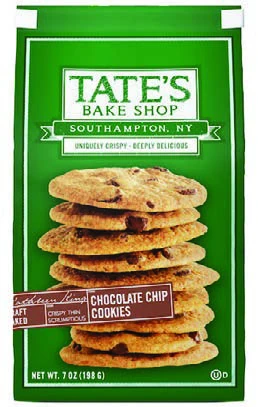
    2. Tate’s Tiny Chocolate Chip Cookies (2024)

    Tate’s Tiny Chocolate Chip Cookies (2024) — original February 2025 product image.

    Tate’s Bake Shop charmed cookie fans in 2024 with the introduction of Tiny Tate’s, a miniature version of their classic cookies. Available in chocolate chip and snickerdoodle flavors, these bite-sized treats come in resealable bags for snacking convenience. Their crisp, buttery texture makes them perfect for a quick indulgence or sharing at social gatherings. Alongside these, Tate’s also launched full-sized snickerdoodle cookies and salted caramel chocolate chip varieties, expanding their already delectable lineup. Widely available at major retailers, these cookies are the ultimate combination of taste and portability for on-the-go lifestyles.

    3. Unreal Chocolate Covered Pretzels & Almonds (2024)

    Unreal Chocolate Covered Pretzels & Almonds (2024) — original February 2025 product image.

    Unreal Snacks continues to push the boundaries of healthy snacking with its latest offerings: chocolate-covered pretzels and almonds. Debuting in March 2024, these treats cater to various dietary needs, being grain-free, gluten-free, and certified vegan. The milk and dark chocolate pretzels deliver a satisfying crunch, while the dark chocolate and dark chocolate coconut almonds are a creamy, nutty delight. Perfect for guilt-free indulgence, these snacks are available online and at Whole Foods, offering a sweet escape for chocolate lovers who want to keep it kosher and health-conscious.

    4. Yasso Frozen Fruit Bars (2024)

    Yasso Frozen Fruit Bars (2024) — original February 2025 product image.

    Yasso, known for its creamy frozen Greek yogurt, took a refreshing turn in 2024 with the launch of three frozen fruit bar flavors. Strawberry Chocolate Crunch, Strawberries & Cream, and Creamy Mango Bars deliver a delightful balance of fruity sweetness and indulgent textures. Made with real fruit, these bars are a healthier dessert option that doesn’t compromise on flavor. Whether you’re cooling down on a summer day or enjoying a light treat after dinner, Yasso’s fruit bars are a vibrant addition to any kosher freezer.

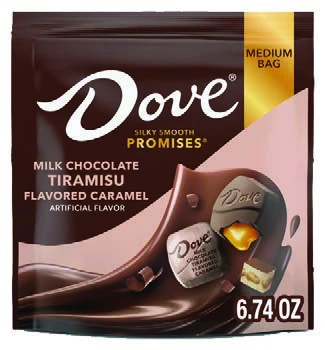
    5. Dove Milk Chocolate Tiramisu Promises (2024)

    Dove Milk Chocolate Tiramisu Promises (2024) — original February 2025 product image.

    Dove Chocolate elevated its Promises line in 2024 with a luxurious twist: Milk Chocolate Tiramisu Caramel Promises. These decadent morsels feature a tiramisu-flavored caramel center, combining rich coffee, creamy chocolate, and luscious caramel in perfect harmony. Packaged in stand-up pouches, they’re ideal for gifting or savoring one piece at a time. Dove’s commitment to crafting indulgent, high-quality treats shines through in this kosher-certified offering, bringing a taste of Italy to your candy bowl.

    6. Impossible Burger (Certified in 2018)

    Impossible Burger (Certified in 2018) — original February 2025 product image.

    Though certified kosher in 2018, the Impossible Burger continues to make waves as a trailblazer in plant-based eating. Its meaty texture and savory flavor have won over vegetarians, vegans, and even meat lovers. Perfect for grilling, sautéing, or crumbling into dishes, it’s a versatile option for creating classic comfort foods with a modern twist. Certified by the OU, this burger aligns with kosher dietary laws while catering to environmentally conscious eaters. Whether served as a burger or as part of a creative dish, the Impossible Burger remains a groundbreaking choice in kosher-friendly dining.

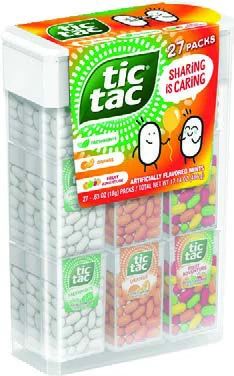
    7. Tic Tac Breath Mints (Certified in 2018)

    Tic Tac Breath Mints (Certified in 2018) — original February 2025 product image.

    Tic Tac, the iconic breath mint brand, became officially kosher-certified in 2018, delighting fans of the tiny treats. With their signature snap-open containers, these mints bring freshness in a portable and playful package. Available in classic flavors like Freshmint and Orange, as well as limited-edition varieties, Tic Tacs are perfect for keeping in your pocket or bag. Their small size and big flavor make them an ideal companion for everyday life. As a kosher-certified product, they’re a staple that’s as practical as it is refreshing.

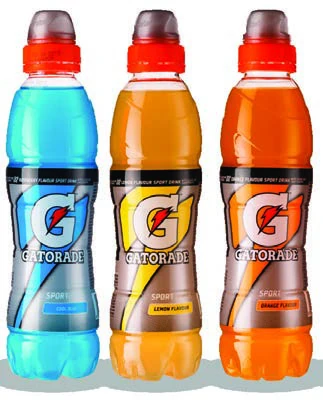
    8. Gatorade (2010)

    Gatorade (2010) — original February 2025 product image.

    In 2010, Gatorade made history by announcing that several of its products had been certified kosher by the Orthodox Union. This milestone brought an iconic sports drink into the kosher market, ensuring athletes and fitness enthusiasts could hydrate with confidence. Known for replenishing electrolytes and fueling performance, Gatorade continues to be a trusted name in sports nutrition. Its kosher-certified options cater to a wide audience, blending practicality with a commitment to dietary inclusivity. Whether on the field or at the gym, Gatorade’s kosher line has become a staple for active lifestyles.

    9. Bob’s Red Mill (2017)

    Bob’s Red Mill (2017) — original February 2025 product image.

    Bob’s Red Mill Natural Foods, an employee-owned company, has been a pioneer in nutritious, organic, and gluten-free products since its founding. Achieving kosher certification in 2017, the brand expanded its accessibility to those adhering to kosher dietary laws. Their diverse product line includes stone-ground whole grain flours, cereals, baking mixes, seeds, and more, making it a favorite among health-conscious consumers. With a mission to promote “whole grains for every meal of the day,” Bob’s Red Mill is as much about quality as it is about community. Their products, available in grocery stores nationwide, bring a wholesome touch to every kitchen.

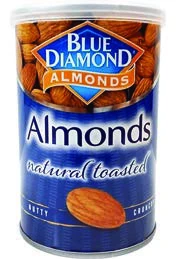
    10. Blue Diamond Almonds (2019)

    Blue Diamond Almonds (2019) — original February 2025 product image.

    In 2019, Blue Diamond Almonds entered the kosher market, offering its beloved almonds with certification to meet kosher dietary standards. From lightly salted and roasted varieties to bold flavors like Wasabi & Soy Sauce, their almond snacks cater to every palate. Known for their health benefits, almonds are a great source of protein, healthy fats, and energy, making these snacks perfect for on-the-go munching. Blue Diamond’s kosher-certified line ensures that their products maintain the highest quality while adhering to dietary requirements. Whether snacking solo or sharing with friends, Blue Diamond Almonds are a delicious and nutritious choice.

    11. Reese’s Baking Mixes (2024)

    Reese’s Baking Mixes (2024) — original February 2025 product image.

    Reese’s, synonymous with the perfect pairing of peanut butter and chocolate, entered the baking aisle in 2024 with three irresistible mixes. The Reese’s Lava Cake Mix, Peanut Butter Muffin Mix, and No-Bake Bars Mix bring the brand’s signature flavors into your kitchen. Whether you’re whipping up a decadent dessert or a quick snack, these mixes deliver the unmistakable Reese’s taste with minimal effort. With two permanent additions and a limited-time lava cake offering, these kosher-certified mixes are a must-try for fans of sweet, peanut butter-infused creations.

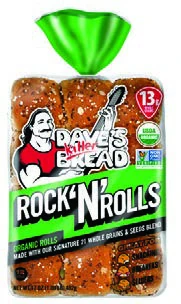
    12. Dave’s Killer Bread Rock ‘N’ Rolls (2024)

    Dave’s Killer Bread Rock ‘N’ Rolls (2024) — original February 2025 product image.

    Known for its organic and wholesome breads, Dave’s Killer Bread introduced its first-ever nationally available rolls in 2024: Rock ‘N’ Rolls. These soft, flavorful rolls are USDA organic, non-GMO, and free from artificial ingredients, making them a standout choice for health-conscious consumers. Perfect for sandwiches, burgers, or dinner rolls, they bring a hearty, nutritious twist to any meal. With their signature bold flavors, Dave’s Killer Bread continues to rock the bread aisle while staying true to its kosher-friendly roots.