Who Has the Best Fruit, Pastries, and Hot Food in Greater D.C? We Compared the Region’s Top Kosher Caterers.
There is something uniquely Jewish about a Shabbos morning Kiddush.
It is more than a spread of food after davening. It’s where neighbors reconnect after a busy week, grandparents introduce grandchildren to friends, a bar mitzvah is celebrated, a yahrtzeit is remembered, or a new baby is welcomed into the community. Some Kiddushim are simple. Others are lavish. But almost every host asks the same question:
“Where should we order from?”
With catering costs continuing to climb, we set out to compare several of the most popular kosher options serving the Greater Washington community. We looked at one simple question:
If you’re hosting a Kiddush for 50–100 people, who offers the best value?
The answer surprised us.
🍓 Best Fruit Platters
Winner: Sunflower Bakery
Runner-Up: Medina Cuisine
Fresh fruit is often the first thing guests gravitate toward. It’s colorful, refreshing, healthy, and balances out the cookies and kugel.
Three local vendors stood out.
Sunflower Bakery
Sunflower publishes one of the clearest catering menus in the area, making comparisons refreshingly easy.
Their large fruit platter serves approximately 20 guests for $90, putting the estimated cost at:
50 guests: about $225
75 guests: about $360
100 guests: about $450
The platter includes fresh melon, pineapple, strawberries, grapes, and blueberries.
For anyone trying to stay within a budget while still offering something beautiful, Sunflower is difficult to beat.
Medina Cuisine
If presentation matters just as much as price, Medina may be in a league of its own.
Their website and event gallery showcase stunning fruit displays featuring carved melons, vibrant berries, grapes, kiwi, pineapple, and elegant garnishes worthy of a wedding reception.
Unlike most competitors, however, Medina doesn’t publish pricing beyond fruit platters starting at $25, making exact comparisons impossible.
Based on commercial catering tray sizes, a realistic estimate would place a 100-person fruit display somewhere in the $350–450 range.
While that estimate requires confirming directly with Medina, one thing is immediately obvious:
Their presentation is exceptional.
Shalom Catering
Shalom offers a straightforward fruit platter at $6.99 per person, bringing the total to roughly:
50 guests: $350
75 guests: $525
100 guests: $699
The fruit selection includes watermelon, honeydew, cantaloupe, pineapple, and grapes.
Although not the least expensive option, Shalom shines for hosts who want one company to handle nearly everything.
🍪 Best Pastries & Cookies
Winner: Pariser’s Bakery (Baltimore)
Sometimes the best value isn’t in your own neighborhood.
Baltimore’s legendary Pariser’s Bakery, serving the Jewish community since 1889, quietly offers one of the strongest pastry values we’ve found.
Nearly every large catering tray—cookies, rugelach, danishes, muffins, or assorted pastries—is priced at $80 and serves approximately 25 guests.
That means:
50 guests: about $160
75 guests: about $240
100 guests: about $320
That’s roughly $3.20 per person for a pastry spread—about half the price of many catered dessert platters.
Pariser’s also offers challah, babka, cakes, mousse cakes, bourekas, knishes, breads, rolls, pies, and sugar-free desserts.
One thing they don’t appear to offer?
Fresh fruit platters.
Honorable Mention: The Kosher Pastry Oven
Located in Silver Spring, The Kosher Pastry Oven remains one of the area’s hidden gems.
Their assorted pastry trays include brownies, blondies, sliced coffee cake, and assorted pastries.
Pricing is equally impressive:
$85 serving approximately 25
$110 serving approximately 40
Estimated costs:
50 guests: about $170
75 guests: about $255
100 guests: about $280
Like Pariser’s, we could not find fresh fruit platters on their catering menu.
🍬 Don’t Forget Dessert
A growing trend at upscale Kiddushim is replacing—or supplementing—the traditional cookie table with decorative candy and chocolate displays.
Companies like Oh! Nuts offer elegant platters featuring gourmet chocolates, dried fruit, premium nuts, and colorful candies that instantly elevate a dessert table.
While certainly more of a luxury than a necessity, they’re becoming increasingly popular for simchas.
🍲 Best Hot Food
If your Kiddush includes more than pastries, one company continues to stand apart.
Shalom Catering offers perhaps the most complete traditional Kiddush menu in the area.
Highlights include:
Beef cholent
Vegetarian cholent
Potato kugel
Sweet potato kugel
Noodle kugel
Chicken tenders
Chicken poppers
Wings
Fried chicken
Wrap platters
Sandwich platters
Drinks
For hosts who prefer one phone call instead of coordinating multiple vendors, that convenience carries real value.
So…Who Wins?
The truth is there isn’t one perfect caterer.
Each excels in something different.
If budget is your priority, Pariser’s is hard to ignore.
If presentation matters most, Medina deserves a close look.
If fruit is the centerpiece of your Kiddush, Sunflower offers outstanding published pricing.
If you want one company to handle virtually everything from cholent to cookies, Shalom remains one of the strongest all-around choices.
And if your guests appreciate fresh bakery desserts, The Kosher Pastry Oven continues to impress.
Our Ideal Kiddush Combination
If we were planning a 100-person Kiddush tomorrow, here’s where we’d shop:
🍓 Fruit: Sunflower Bakery or Medina Cuisine
🍪 Cookies & Pastries: Pariser’s Bakery or The Kosher Pastry Oven
🍬 Candy Display: Oh! Nuts
🍲 Hot Food: Shalom Catering
The result? A Kiddush that feels generous, looks beautiful, supports several outstanding kosher businesses, and, perhaps most importantly, gives people one more reason to linger a little longer after davening.
Because in the end, that’s what a Kiddush is really about.
Not the cookies.
Not the fruit.
Not even the cholent.
It’s about creating a place where community happens—one plate, one conversation, and one “Good Shabbos” at a time.
With so many dental products and so much conflicting advice, it can be hard to know what actually works.
So we asked Dr. Despina Markogiannakis the questions people really want answered.
What toothbrush does a dentist use at home? Are whitening strips worth it? Does mouthwash make a meaningful difference?
In this edition of The Smile Files, Dr. Markogiannakis shares straightforward, practical advice to help you make smarter choices for a healthier smile.
Have a question for Dr. Markogiannakis? Send it our way. Email info@smilesofchevychase.com It may be featured in the next edition.
Let’s start with a question everyone wants answered: What toothbrush do you personally use and why?
I love this question because the right toothbrush can make a real difference. I use a high-quality electric toothbrush—specifically one with a pressure sensor and timer. It delivers a consistently thorough clean without being too aggressive on enamel or gums, which is key for long-term oral health. My favorite is the Oral-B iO.
Is that mostly a professional preference, or is an electric toothbrush genuinely worth the extra money for the rest of us?
Honestly, yes, it is worth it. Many patients notice an improvement in plaque removal and gum health after switching to an electric toothbrush. It takes much of the guesswork out of brushing and helps make every routine more effective.
Okay, you’ve convinced us on the toothbrush. Floss is where people get oddly loyal—what do you use?
My choice? A soft, shred-resistant floss that glides easily, especially if you have tight spaces between your teeth. Personally, I love Cocofloss. The best floss is the one you’ll use daily, so comfort matters more than brand.
And while we’re building the full lineup: favorite toothpaste?
I keep this one simple, but it’s an important one: choose a fluoride toothpaste with enamel-strengthening properties. I usually recommend formulas that are effective without being overly abrasive, especially for everyday, long-term use. A good toothpaste should protect your teeth without doing more than necessary.
Whitening strips seem like the easiest shortcut to a brighter smile. Are you a fan—or should people be more careful with them than they realize?
Whitening strips can be helpful, but they have their limits. They may improve mild surface stains, but they are not the right solution for everyone. Overuse can cause sensitivity, and they cannot treat deeper discoloration. For more consistent results, professional whitening offers a safer, more controlled approach, with results that are often more predictable.
Let’s switch to the parents for a minute. What’s your number-one tip for brushing a toddler’s teeth without turning bedtime into a full negotiation?
With toddlers, make it simple and predictable. Sit them in your lap, gently tilt their head back, and keep brushing quick and calm. The goal is not to win a negotiation every night. It is to build a familiar routine that gradually becomes easier for both of you.
Now for the answer coffee drinkers may not want to hear: Does coffee really stain your teeth?
Coffee lovers may not love this answer, but yes, coffee is a major cause of staining. Its dark pigments build up on enamel over time, especially if you sip it throughout the day. A quick rinse with water afterward, along with regular cleanings, can help keep your smile brighter.
How often should we really be replacing a toothbrush? Is the three-month rule actually a real thing?
Here’s the easy rule: replace your toothbrush every three months, or sooner if the bristles start to fray. Once the bristles are worn, they simply cannot clean your teeth as effectively.
We’ve covered the toothbrush, floss, and toothpaste. Complete the lineup for us: favorite mouthwash?
My pick is an alcohol-free mouthwash with fluoride. It helps strengthen enamel without drying out your mouth. ACT and select Listerine formulas are two of my favorites, but always check the label for both “alcohol-free” and “fluoride.”
But is mouthwash actually necessary—or is it just a nice extra for people who are already doing the basics?
Think of mouthwash as the finishing touch, not the foundation. Good brushing and flossing do the heavy lifting; mouthwash simply adds an extra layer of protection. It can be helpful, but it is not a substitute or an absolute necessity.
Parents see so many “training toothpastes” made for young children. Are they a helpful first step, or do they fall short when it comes to cavity protection?
They can make brushing feel easier, but many toddler toothpastes are fluoride-free and do not provide the same cavity protection. Once the first tooth appears, use a tiny, rice-sized smear of fluoride toothpaste. Around age 3, increase to a pea-sized amount and supervise brushing.
If you could get every patient to adopt one habit—the one most likely to spare them thousands in dental work later—what would it be?
Without hesitation: floss every day. It may be one of the simplest habits, but it is also one of the most overlooked. Daily flossing reaches the areas your toothbrush cannot, helping prevent the decay and gum disease that can eventually lead to more extensive and costly treatment.
All right, last one. If you had to boil everything down to one daily rule for perfect teeth, what would you tell people?
If I had to boil it down: Brush thoroughly twice a day and clean between your teeth once daily. If you do those two things consistently, you’re ahead of 90% of people.
Dr. Despina Markogiannakisis the owner of Smiles of Chevy Chase and a top-rated dentist in the D.C. region. Recognized by Washingtonian, Potomac, Bethesda, and Washington Jewish Journal magazines, she specializes in restorative, cosmetic, general, and implant dentistry, with a reputation for expertise, compassion, and trust. To schedule an appointment, call (301) 652-0656 or email info@smilesofchevychase.com.
You’ve probably noticed that everyone is talking about protein lately. Protein-enhanced products and recipes are everywhere you look. But despite it’s popularity, many people still think protein supplements are only for bodybuilders, professional athletes, or people spending hours at the gym.
In reality, protein matters for almost everyone.
Even if you only work out twice a week. Even if your exercise is mostly chasing after your kids. Even if your days are packed with work meetings, school pickups, errands, and trying to put together a decent dinner before the day ends.
Protein is one of the body’s essential building blocks. It helps support muscle strength, recovery, energy, and overall wellness at every stage of life. As we get older, getting enough protein becomes even more important for maintaining muscle mass and staying active.
For many people, the challenge is not understanding that protein is important. The challenge is actually getting enough of it consistently.
A creamy high-protein iced coffee made with Qualify Vanilla Protein.
Quick Protein Coffee
A simple way to add extra protein to your morning routine.
Ingredients:
1 scoop Qualify Vanilla Protein
1 cup iced coffee
Milk of choice
Ice
Directions:
Shake or blend together for a creamy, high-protein iced coffee that works as a quick breakfast or afternoon pick-me-up.
If you’re a busy parent grabbing meals on the go, someone trying to make healthier choices, or even someone taking GLP-1 medications and struggling to eat balanced meals, getting enough daily protein can become surprisingly difficult. Many people simply do not have the time, appetite, or convenience to prepare 3 protein-rich meals throughout the day.
That’s one reason protein supplements have become so popular outside the fitness world. A protein shake is no longer just a “gym product.” For many people, it is simply a practical way to add quality nutrition to a busy lifestyle.
At Qualify Protein, the goal is to make that easier without compromising on quality or taste. Developed with nutrition experts and made in Israel, Qualify’s protein powders are designed to fit naturally into everyday life, whether that means a quick breakfast, post-workout recovery, or an afternoon snack that actually keeps you full.
Qualify whey protein contains 25-26 grams of protein per serving and includes essential amino acids and BCAAs that help support muscle recovery and performance. The powders are also gluten-free, easy to mix, and designed to taste genuinely enjoyable, not overly artificial or chalky. Many customers enjoy using them not only in shakes, but also mixed into iced coffee, smoothies, oatmeal, and high-protein recipes.
For the kosher community, Qualify also offers something relatively unique in the protein space. Its whey protein line is Cholov Yisroel certified, meeting high kosher standards for dairy supervision and production.
At the end of the day, wellness does not have to look extreme. Sometimes it is simply about making small choices that support your long-term health. Getting enough protein is one of those choices, and it matters far beyond the gym.
Peanut Butter Chocolate Chip Protein Energy Bites
Peanut Butter Chocolate Chip Protein Energy Bites made with Qualify Whey Protein Drink Mix.
A convenient snack to keep in the fridge for busy days.
Ingredients:
1 cup rolled oats
½ cup Qualify Whey Protein Drink Mix (any flavor)
1/4 cup mini dark chocolate chips
1/4 cup unsweetened coconut flakes
1 ½ cups natural peanut butter
½ cup honey
1/8 teaspoon salt
Directions:
Mix ingredients, roll into balls, and refrigerate until firm. Perfect for lunchboxes, post-workout snacks, or an easy grab-and-go bite.
Qualify Protein is available on Amazon in a variety of flavors, including Vanilla, Chocolate, Cookies & Cream, Pistachio, Salted Caramel, and Unflavored.
To see more recipes, reviews, and everyday inspiration, follow Qualify on Instagram or get yours on Amazon.
They grow slowly, thoughtfully, and often quietly — shaped over years by people willing to invest not only in buildings or programs, but in Torah, in relationships, and in creating something larger than themselves. A strong kehillah is not built in a single moment. It is built through thousands of conversations after davening, late-night board meetings, shiurim that stay with people long after they end, families choosing where they want to raise their children, and leaders willing to carry both responsibility and vision at the same time.
And every so often, a moment arrives that signals that growth has reached a new stage.
Not through headlines or grand announcements, but through a decision that reflects confidence in the future.
For Kemp Mill Synagogue, that moment has arrived with the appointment of Rabbi Shmuel Lubin as the shul’s very first Assistant Rabbi.
In many ways, the appointment represents far more than a new position within the synagogue. It reflects what KMS has become over the years: one of the Greater Washington area’s most thoughtful, intellectually vibrant, and genuinely warm Modern Orthodox communities — a kehillah where serious Torah learning exists alongside professional excellence, where Religious Zionism and openness coexist naturally, and where people from different backgrounds and stages of life feel deeply connected under one roof.
As the Silver Spring community continues growing, so too has the role KMS plays within the broader Jewish landscape of the region. What was once a neighborhood synagogue has increasingly become a center of Torah, conversation, mentorship, and communal life for hundreds of families seeking authenticity, warmth, and meaningful Jewish growth.
In an era where many communities struggle simply to preserve identity and continuity, KMS has managed to do something far more difficult: grow while maintaining depth. Grow while preserving seriousness. Grow while remaining personal. There is a certain intellectual and emotional honesty that people feel when they walk into the shul — a sense that beneath the programming, events, and learning opportunities is something genuine: people striving to build meaningful Jewish lives together.
Kemp Mill Synagogue in Silver Spring has officially welcomed Rabbi Shmuel Lubin as its first-ever Assistant Rabbi, marking a defining new chapter in the continued growth of one of the Greater Washington area’s most thoughtful and intellectually vibrant Modern Orthodox communities. Joining Rabbi Weinberg and the KMS leadership team, Rabbi Lubin brings a rare combination of Torah scholarship, warmth, humility, scientific achievement, and a deeply genuine commitment to Jewish communal life, Torah learning, and meaningful personal connection.
“It is a testament to how much KMS has grown, thank God, that the shul is now ready to welcome an assistant rabbi for the first time,” wrote Rabbi Weinberg in his message to the community.
That sentence captures something many throughout the Greater Washington Jewish community already feel: KMS has become far more than simply a neighborhood synagogue. Over the years, it has evolved into one of the region’s most intellectually vibrant, spiritually serious, and genuinely warm Modern Orthodox communities — a place where Torah learning, Religious Zionism, thoughtful conversation, and authentic relationships intersect naturally.
And with the arrival of Rabbi Lubin — a RIETS musmach, Torah educator, podcast creator, and Johns Hopkins PhD candidate in biology — many throughout the community already sense that this is not simply an addition to the staff of a synagogue.
It is the beginning of a new chapter in the story of a growing kehillah.
Rabbi Weinberg described the extensive effort that went into the search process, praising both the committee’s dedication and the thoughtful conversations that helped shape the role itself.
“The search committee worked hard not only to help identify and interview candidates, but also to clarify the role itself and determine what would best support me as rabbi and serve our growing shul.”
He continued:
“The range of perspectives and experiences represented on the committee led to thoughtful and candid conversations that ultimately enabled me to arrive at a clearer sense of direction.”
Rabbi Lubin arrives at KMS with an unusual and compelling background — one that feels uniquely aligned with the character of the community itself. After receiving semicha from RIETS at Yeshiva University, he pursued advanced scientific research and is currently completing a PhD in biology at Johns Hopkins University. Alongside his doctoral work, he continued teaching Torah through JLIC and informal learning initiatives.
Rabbi Weinberg noted that Rabbi Lubin “showed himself to be creative, knowledgeable, humble, talented, hard-working, and deeply passionate about KMS and what we are trying to achieve here.”
That balance between intellectual achievement and deep personal humility appears throughout Rabbi Lubin’s own message to the community.
“It is with great excitement and a deep sense of responsibility that I write to introduce myself as Assistant Rabbi of KMS.”
“I’m equally honored and humbled to be joining you all in continuing to build the shul through this next phase.”
Rather than positioning himself simply as a teacher arriving to lead, Rabbi Lubin emphasized something deeper — a desire to grow alongside the community itself.
“I am excited to join the KMS family as a community where my family and I, too, hope to grow—one where I can not only teach, but learn from all of you and get to know you along the way.”
For many readers, one of the most striking parts of Rabbi Lubin’s story may be the way he speaks about balancing professional life, Torah learning, family, and communal responsibility — something that resonates deeply within the culture of KMS and the broader Greater Washington Orthodox community.
“Becoming an assistant rabbi after doctoral research in biology may not be the most conventional path,” he wrote, “but the more time I have spent as an informal Torah educator, the more I have seen what a meaningful difference Torah learning can make in helping people connect to Hashem and to one another.”
He added:
“I hope that helps give me a perspective on the daily lives of so many congregants who balance a profession with a serious commitment to Torah, to their families, and to the KMS community.”
There is also a personal connection tying the Lubin family back to Kemp Mill itself. Rabbi Lubin shared that his wife Naomi, granddaughter of Rabbi Jacob and Judith Halpern a”h, has deep roots in the community, and that moving to Kemp Mill feels like “returning to our roots.”
Rabbi Weinberg expressed particular excitement not only about what Rabbi Lubin will contribute to the shul, but about the opportunity to mentor and help shape a talented young rabbi at an important stage in his journey.
“We are excited both for what Rabbi Lubin will bring to KMS and for the opportunity to help support and shape a talented young rabbi at an important stage in his professional journey.”
And perhaps most importantly, Rabbi Weinberg reflected on the kind of community KMS strives to remain:
“We have built a shul where people of diverse backgrounds and hashkafot can feel a genuine connection to Torah and community under one roof, grounded in a proudly Modern Orthodox and Religious Zionist ethos.”
“Our community is defined by authenticity, respect, genuinely good people, and a deep sense of purpose.”
In many ways, the appointment of Rabbi Lubin feels like a continuation of exactly that vision — thoughtful, grounded, intellectually serious, and deeply human.
As Rabbi Lubin and his family prepare to officially join the community this summer, there is already a strong sense throughout Kemp Mill Synagogue that this is more than an announcement. It is the beginning of a partnership. A new source of energy, Torah leadership, and meaningful connection. And another important step forward in the continued growth of one of the Greater Washington area’s most remarkable kehillot.
And with the arrival of Rabbi Lubin — a RIETS musmach, Torah educator, podcast creator, and Johns Hopkins University PhD candidate in biology — many throughout the community already sense that this is not simply an addition to the staff of a synagogue.
It is the beginning of a new chapter in the story of a growing kehillah.
At a time when so many communities are searching for deeper meaning, stronger connection, and authentic leadership, KMS continues building thoughtfully and intentionally — investing not only in programs or growth, but in people, relationships, Torah, and the future of Jewish life in the Greater Washington area.
Below is Rabbi Shmuel Lubin’s original letter to the KMS community, shared ahead of his family’s move to Kemp Mill this summer. In many ways, the letter reflects the same qualities that left such a profound impression throughout the search process: humility, intellectual depth, warmth, sincerity, and a genuine desire not only to teach Torah, but to grow together alongside the community itself.
As Rabbi Lubin prepares to officially begin his role this August, many throughout KMS are already looking forward to the wisdom, energy, and perspective he and his family will bring to the shul — and to the next stage in the continued growth of one of the Greater Washington Jewish community’s most vibrant, thoughtful, and inspiring communities.
Rabbi Shmuel Lubin’s Original Letter to the KMS Community
Dear KMS community,
It is with great excitement and a deep sense of responsibility that I write to introduce myself as Assistant Rabbi of KMS. It is a testament to how much KMS has grown, thank God, that the shul is now ready to welcome an assistant rabbi for the first time, and I’m equally honored and humbled to be joining you all in continuing to build the shul through this next phase. I look forward to supporting Rabbi Weinberg in his work to deepen this kehillah’sTorah learning and spiritual life, and at the same time I am excited to join the KMS family as a community where my family and I, too, hope to grow—one where I can not only teach, but learn from all of you and get to know you along the way.
To start that off, I’ll share a little about myself: I grew up in West Hempstead, NY, and my parents now live in Yerushalayim. Through marriage, I have deep roots in Silver Spring: my wife Naomi (née Wakschlag) is the granddaughter of Rabbi Jacob and Judith Halpern a”h, two remarkable people who lived in Kemp Mill for many decades and whose professional lives were devoted to Jewish education in the wider Greater Washington community. Naomi and I, along with our two boys, Matanel and Yakov, are thrilled to be “returning to our roots” by moving to Kemp Mill from Baltimore this summer.
After receiving semicha from RIETS (Yeshiva University), I spent several years on a path toward becoming a research scientist. I am now wrapping up a PhD in biology at Johns Hopkins, where I’ve also continued to teach Torah informally through their JLIC and Hillel. Becoming an assistant rabbi after doctoral research in biology may not be the most conventional path, but the more time I have spent as an informal Torah educator, the more I have seen what a meaningful difference Torah learning can make in helping people connect to Hashem and to one another through deepening our understanding of our Jewish heritage. With Hashem’s help, I also intend to remain professionally active alongside my role in the shul, and I hope that helps give me a perspective on the daily lives of so many congregants who balance a profession with a serious commitment to Torah, to their families, and to the KMS community.
I want to express my deepest gratitude to Rabbi Weinberg, someone whom I have long admired from afar for his warmth and his vision, and now have the privilege of looking to both as a mentor and partner. Just as importantly, I want to publicly say a very heartfelt thank you to all the members of the Assistant Rabbi Search Committee, and to KMS president Tobie Hollander, who all did an extraordinary amount of work to bring the shul to this point.
It is truly inspiring to see how much thoughtfulness and dedication went into this process, and with Hashem’s help, I hope to honor that effort by devoting myself to the shul’s continued spiritual growth. I am looking forward to partnering with Rabbi Weinberg, Yoetzet Halacha and Community Scholar Adina Blaustein, and all of you to grow together in Torah and avodat Hashem, both as individuals and as a community, when I begin this role in August. Until then, if you see me around the neighborhood or in shul, please come over and introduce yourself. I cannot wait to meet you!
Rabbi Aaron Lopiansky, Rosh Yeshiva of Yeshiva of Greater Washington–Tiferes Gedaliah
I. The Mountain and the Choice
Revelation is the cornerstone of faith upon which all of Judaism rests. As the Rambam (Yesodei HaTorah 8:1) points out, it is not simply a proof of faith, but the perception of the Divine in the most direct way possible. While other miracles served to demonstrate Divine existence, Revelation was the experience of the Divine itself. For one brief moment, the curtains of concealment were parted, allowing the rays of the Divine to shine in all their brilliance.
Yet, strangely enough, Chazal tell us that the Revelation at Sinai was somehow not the ultimate acceptance of God’s dominion. The Gemara (Shabbos 82) states that at Sinai “the mountain was poised over the Jews like a barrel.” The Jewish people were compelled to accept the Torah. Only during the miracle of Purim, nearly a thousand years later, did they willingly reaffirm their commitment.
This itself is difficult to understand. How could a nation that directly experienced the Divine require coercion to accept the Torah? Furthermore, the Torah’s description of Mattan Torah contains no mention of force, while the story of Purim does include a threat of destruction that ultimately led the Jewish people toward teshuvah and renewed closeness to God.
II. Searching to Fill the Void
There are two ways through which one becomes aware of the sun. One can behold it in all its dazzling brilliance, or one can sit locked in complete darkness, where every passing moment intensifies the longing for even the smallest crack of light.
Similarly, a father-son relationship may peak during a warm embrace in a moment of joy, yet sometimes the yearning created by prolonged absence can stir even deeper feelings. Many who fail to appreciate closeness in the moment discover the pain of distance to be far more powerful.
The Maharal explains this idea through the importance of the Four Questions at the Pesach Seder. Someone who merely delivers the story in monologue form does not properly fulfill the mitzvah. A statement alone remains external to a person. But when a question is asked, it creates a void — and the answer fills that void, becoming integrated into the person himself.
The Vilna Gaon expresses a similar principle in Shir HaShirim. The pleasure derived from food is directly proportional to hunger. Even the finest meal means little to someone already full, while a starving person treasures every bite.
The Sefas Emes (Parashas Vayeitzei) applies this concept to Yaakov Avinu, explaining why he did not receive prophecy until after leaving the yeshivah of Shem and Ever. Spiritual longing born in a barren environment creates a far deeper thirst than one developed amid constant holiness. As the Midrash says: “My soul thirsts for You — in a barren and arid land.”
III. Compulsion through Clarity
This, too, reflects the difference between Shavuos and Purim — between the giving of the Torah at Sinai and its reaffirmation in Shushan.
At Sinai, Klal Yisrael was compelled to accept the Torah, not through physical force, but through the overwhelming clarity of Revelation itself. The experience was so immense, so undeniable, that it left no room for doubt. In such a moment, rejecting the Torah was simply impossible.
Purim was different. It was not merely the threat of annihilation that inspired teshuvah. Rather, it was the hester panim — the sense of Divine concealment and abandonment — that awakened within the Jewish people a profound longing to reconnect with God.
Chazal (Megillah 15b) tell us that as Esther approached Achashveirosh, she cried out: “My God, my God, why have You abandoned me?” According to the Vilna Gaon, this chapter of Tehillim became the designated psalm of Purim — a chapter associated with the darkest moment of night.
Shavuos celebrates the recognition of God through Revelation. Purim celebrates the recognition of God that emerges through searching for Him in darkness.
IV. The Gift and the Acquisition
Torah itself contains these two dimensions. The Written Torah — “God’s Torah,” so to speak — was given through direct revelation. Yet standing alone, it would remain closed to us. We require the second dimension, the Oral Torah, also given at Sinai, to unlock and understand the written word.
This includes the Divine interpretations and principles through which Torah becomes accessible to human understanding, as well as the methods through which man is taught to delve deeper and apply Torah to changing circumstances throughout history.
Chazal (Sanhedrin 24a) describe the difficult process of analyzing Torah in the Babylonian Talmud as “You restored me in the darkness,” for the labor of Torah is often like “grappling in the dark.” Yet it is precisely through that struggle that Torah becomes internalized. The Oral Torah does not merely provide information — it raises questions, challenges the mind, and ultimately leads a person toward clarity and understanding that become part of his very being.
For this reason, the Mishnah begins with a question — “From when does one recite Shema?” — and concludes with the word “shalom.” Torah is not simply absorbed as a statement; it is acquired through seeking, questioning, and discovering. That process transforms Torah from something received into something deeply lived.
The Maharal explains that while Torah was given on Shavuos, true deveikus baTorah — attachment to Torah — emerged through Purim. Revelation can present Torah to man, but only searching, yearning, and personal effort allow Torah to become permanently integrated into one’s soul.
V. Revelation Again
If searching is deeper than revelation, and its discoveries more lasting, why was revelation necessary at all?
The Kuzari explains that not every person in every generation can independently reach a profound connection with God through personal searching alone. Sinai therefore serves as the eternal foundation upon which all future generations can stand. Even those unable to ascend to great spiritual heights on their own still possess the inheritance of Revelation itself.
The Yerushalmi (Peah 1:1) offers another profound insight. On the verse, “It is not an empty thing from you,” Chazal explain: if Torah appears empty, the emptiness comes “from you.” Torah itself is never lacking meaning; rather, the deficiency lies in the person’s receptiveness. Just as a blind person cannot appreciate a painting, or a deaf person cannot experience music, spiritual emptiness reflects a blockage within the individual, not within Torah itself.
The Revelation at Sinai implanted within the Jewish people an eternal memory — a point of reference embedded deep within the neshamah. That memory fuels every future search for truth and meaning. Chazal teach that every Jewish soul stood at Sinai, even the souls of future converts. Without that imprint of Sinai within us, the endless labor required to master Torah would be impossible.
For this same reason, the Gemara teaches that a child learns the entire Torah while in the womb, only to forget it before birth. The knowledge is hidden, not erased. A person’s lifelong journey in Torah is therefore not the discovery of something entirely new, but the rediscovery of something already planted deep within the soul.
VI. Return to Torah
Studying Torah is, in many ways, an act of return. This is reflected in our daily prayers: “Return us to Your Torah.”
Parts of the Oral Tradition were forgotten and later rediscovered. Human effort alone could never have recreated them without the spark of Sinai buried within the Jewish soul. Torah learning is therefore not simply invention or innovation — it is remembrance.
The Gemara (Menachos) relates that Moshe Rabbeinu once observed Rabbi Akiva teaching Torah and marveled at the depth of his understanding. The Or HaChayim explains that Moshe certainly knew the Oral Torah itself, but Rabbi Akiva possessed the ability to reveal how those teachings were hidden within the Written Torah.
Similarly, it is said that in his later years the Vilna Gaon studied only Chumash. His mastery of Torah was so complete that he could perceive the depths of the Oral Law embedded within the simplest verses. The Gaon famously taught that there are three levels of understanding: simple understanding, depth, and then simple understanding once again. Yet the “simplicity” reached after depth is infinitely greater than the simplicity at the beginning.
A shaliach once described his mission as restoring erased letters within Jewish souls. His rebbe corrected him: “God forbid that the letters of a Jewish soul are ever erased. They are merely covered in dust. Blow away the dust, and the letters reappear.”
Our avodah is therefore not linear, but circular. We begin with Revelation, yet that which is simply given cannot endure forever without effort. Through searching, struggle, and rediscovery, we uncover the Revelation already planted within us — the eternal flame of Sinai itself.
_____
In the world of contemporary Torah scholarship, few voices combine depth, breadth, and clarity quite like Rabbi Aaron Lopiansky, internationally recognized as one of the foremost Orthodox Jewish Torah scholars, educators, and contemporary Jewish thinkers of this generation. As Rosh Yeshiva of Yeshiva of Greater Washington–Tiferes Gedaliah in Silver Spring, Maryland, Rabbi Lopiansky has influenced thousands of students, families, and readers through decades of Torah teaching, Jewish philosophy, mussar, and leadership rooted in the traditions of the Mir Yerushalayim.
A close talmid of Harav Chaim Shmuelevitz zt”l, Harav Nachum Partzovitz zt”l, and his father-in-law Harav Beinish Finkel zt”l, the late Rosh HaYeshiva of the Mir, Rabbi Lopiansky continues a profound mesorah of Torah scholarship and Jewish thought. His Torah worldview was also deeply shaped through his longstanding relationship with Harav Moshe Shapiro zt”l.
Rabbi Lopiansky is the author of more than twenty widely studied seforim and is known internationally for his shiurim on Torah hashkafah, emunah, Jewish philosophy, Talmudic thought, spirituality, and contemporary Torah issues. His teachings are studied throughout the Orthodox Jewish world in yeshivos, בתי מדרש, and Jewish communities across the United States, Israel, Europe, and beyond.
His books, essays, audio shiurim, and Torah resources are available through Eshel Publications — www.eshelpublications.com — a nonprofit Torah platform dedicated to preserving and sharing Rabbi Lopiansky’s teachings with readers and listeners around the world.
Reese’s Pieces is now pareve — and this Hershey kosher update is a major win for consumers.
A small ingredient shift. A massive win for kosher consumers everywhere.
OU advisory confirms Reese’s Pieces Peanut Butter Candy is now fully pareve, with no milk ingredients and no dairy equipment, even though some packaging may still display OU-D temporarily.
Every so often, something small happens… and you just know it’s bigger than it looks.
This is one of those moments.
Reese’s Pieces Peanut Butter Candy — yes, that Reese’s — is now officially pareve. And not “kind of,” not “technically,” not “check with your rabbi first.”
OU advisory confirms Reese’s Pieces Peanut Butter Candy is now fully pareve, with no milk ingredients and no dairy equipment, even though some packaging may still display OU-D temporarily.
Here’s your quick, practical guide:
✔️ Check the ingredient list ✔️ Check the allergen statement
👉 If you do NOT see “milk” listed, you’re holding the new pareve version.
Now here’s where people get confused:
Some packages may still say OU-D.
But the OU has confirmed clearly: 👉 The product is fully pareve — not even dairy equipment
The label will be updated to OU in the future.
Translation: Trust the ingredients. You’re good.
💡 Why This Kosher Update Matters More Than You Think
Let’s zoom out.
This isn’t just about Reese’s. This is about momentum.
Kosher consumers aren’t an afterthought anymore. They’re informed. Intentional. Loyal.
And when brands respond?
Everyone wins.
Families get more flexibility
Kids get more options
Shabbos tables get a little more fun
And shopping gets a little less complicated
That’s not small. That’s real-life impact.
😄 The Real-Life Moment (You’ve Been Here)
You’re setting up dessert. Someone reaches for the candy.
And instead of: “Wait… is that dairy?”
You just say: “It’s pareve.”
No hesitation. No label-checking. No debate.
Just smooth, simple confidence.
That moment? That’s what this change creates.
🔥 A Leadership Move (And a Sign of What’s Coming)
Let’s call it what it is:
This is leadership.
When a global brand like Hershey invests in making a product pareve, they’re not just changing ingredients — they’re expanding access.
They’re saying: “We see you. We understand how you live. And we’re building for that.”
And if this is the direction?
Expect more.
More brands. More pareve options. More clarity. More ease.
💬 Final Take: A Small Candy, A Big Shift
There are moments that feel… light. But carry real weight.
Reese’s going pareve is one of them.
Because in the world of kosher living, clarity is everything.
And today, things just got a little clearer. A little easier. And honestly…
A little sweeter. 🍫
🔎 FAQs
Is Reese’s Pieces now pareve? Yes. Reese’s Pieces Peanut Butter Candy has been reformulated and is now fully pareve according to the OU.
Does Reese’s Pieces still say OU-D? Some packages do temporarily, but the product itself is fully pareve.
How can I tell if it’s the new version? Check that “milk” is not listed in the ingredients or allergen statement.
Is it made on dairy equipment? No. The OU confirms it is not produced on dairy equipment.
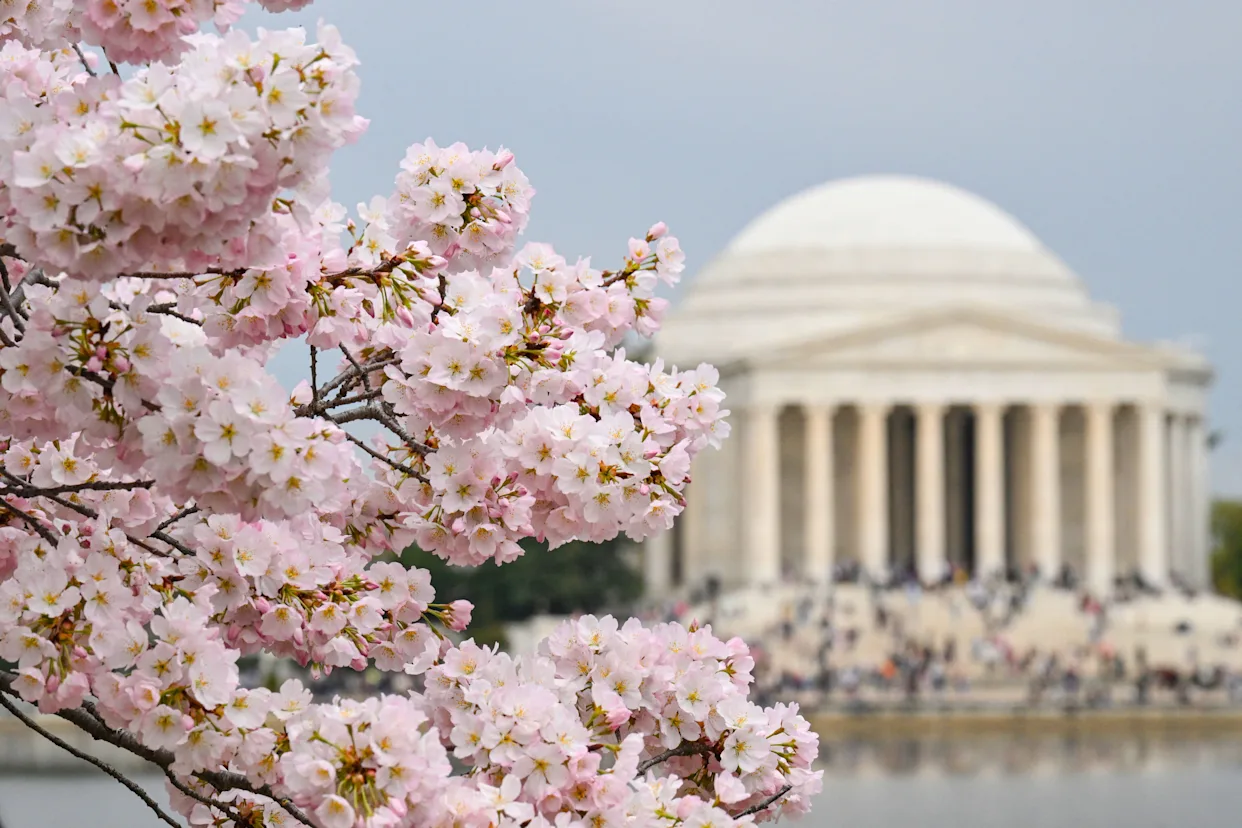
The Cherry Blossoms Are Back—Here’s Exactly When to Go, Where to Stand, and How to Experience It Like You Actually Know What You’re Doing
Cherry Blossom Festival 2026 in Washington DC is a short window—but if you time it right, it’s unforgettable. Here’s exactly when to go, what to see, and how to experience it properly.
For most of the year, Washington runs on schedules, strategy, and… let’s be honest—traffic.
Then, for about ten days, the city quietly flips.
People slow down. Strangers smile. Even the most “I don’t have time for this” personalities somehow find themselves standing still, staring at trees.
Welcome to peak cherry blossom season.
The National Cherry Blossom Festival runs March 20 through April 12—but the real magic lives in a very tight window. Miss it, and you’ll hear about it. Catch it, and you’ll understand why everyone suddenly becomes a photographer.
The Window Everyone’s Talking About
Peak bloom is expected March 29 – April 1.
That’s not a suggestion—that’s the moment.
And here’s the part most people miss: 👉 The 4–7 days after peak bloom might actually be better.
That’s when petals start falling—light, quiet, almost cinematic. Less “tourist photo,” more “this feels unreal.”
The Events Worth Showing Up For
You don’t need to attend everything. But if you pick right, you’ll feel like you did.
Opening Ceremony (March 21) at DAR Constitution Hall — polished, cultural, a strong start
Blossom Kite Festival (March 28) by the Washington Monument — surprisingly fun, even if you didn’t plan on smiling
Petalpalooza (April 4) at Capitol Riverfront — music, energy, movement
Parade (April 11) along Constitution Avenue — classic DC, done right
Sakura Matsuri (April 12–13) on Pennsylvania Avenue — culture, food, and a full close to the season
Opening Ceremony at DAR Constitution Hall kicks off the 2026 National Cherry Blossom Festival with culture, music, and tradition. 📸 @visitwashingtondc
How to Experience the Cherry Blossoms in DC the Right Way
Most people visit the cherry blossoms and walk away saying, “that was nice.”
And it is.
But with just a little intention, it can be something much better— something memorable, calming, even a little transformative.
Because the National Cherry Blossom Festival 2026 in Washington DC isn’t just something to see. It’s something to experience well.
Here’s how to do it right:
🚊 Take the Metro — give yourself a smoother start. No traffic stress, no parking gamble—just arrive ready to enjoy
📸 Go early morning or just before sunset — the light is softer, the crowds are lighter, and everything feels more personal
🌸 Respect the blossoms — they’re meant to be admired, not picked. Preserving them is part of the experience
🐶 Bring your dog (leashed) — it’s one of the rare DC outings that’s genuinely enjoyable for everyone
Small choices. Big difference.
The Part Most People Don’t Say (But Feel)
The cherry blossoms don’t last.
And that’s exactly what makes them special.
In a city defined by permanence—monuments, institutions, legacy—the blossoms offer something different: a moment that’s brief, beautiful, and shared.
For a few days, Washington DC feels lighter. Softer. More human.
And that’s why people return every year.
Not just for the Cherry Blossom Festival events Not just for the photos
But for that quiet reminder to slow down… look up… and be present while it’s here.
This may be the most-asked question about Silver Spring’s kosher dining scene. A close second is “What time is Mincha?” on the Chabad Ana”sh chat.
Buckle up, because I’m going to give you my opinion — which you should absolutely treat as fact.
Kosher restaurants struggle not because the community won’t support them, but because too many are designed for people with no other choice. From the kosher food supply chain to the customers we try to attract, the difference between us and the non-kosher restaurant industry is who we think we’re competing against — and which diners we’re actually trying to win over.
First disclaimer: it’s not a money or community lifestyle issue. I’m not advocating that families begin radically increasing their dining-out budgets. A restaurant is not a kollel (but don’t tell the mashgiach… or maybe do). It does not automatically deserve your support.
Second, this isn’t a critique of the people involved. The owners and operators I know care deeply about the community and sacrifice nights, weekends, and holidays to serve it. This is about the structure we’ve built around them — and the limits that structure quietly imposes on kosher restaurants in Silver Spring and the greater DC area.
A Local Perspective on the Silver Spring Kosher Food Scene
Some background:
I was born in Holy Cross Hospital and have been cooking since preschool (see the H.A.G.W.A.S.H. Mother’s Day project still on my parents’ fridge). Professionally, for the past fifteen years, I’ve watched restaurants here come and go. I’ve been asking this question — why doesn’t Silver Spring have more great kosher restaurants? — since the first “YGW – Building the Future” banner went up.
Early in my career, I spent years working in non-kosher kitchens — places where restaurants survive only if people choose them over every other option. That experience reshaped how I think about food, service, and what restaurants are actually competing against. I returned to the kosher world with that lens, inspired to improve what we have.
Why Restaurants Fail (Kosher and Non-Kosher Alike)
Being a chef is hard. Operating a successful restaurant profitably is expert-level hard. The Washington, DC restaurant industry saw over 90 closures in the past year — including at least one with four consecutive Michelin stars.
Margins are thinner than butter spread on too much toast. Staffing requires more patience than raising children (and many of the same skills). Customer tastes are constantly evolving — even in this economy. And finding the right location? Critical. But rent prices alone can make you rethink everything.
Successful restaurateurs understand one thing clearly:
The job of a restaurant is to create food and service so good that people will travel out of their way — and even wait in a block-long line — for the experience.
Because great food isn’t just taste. It’s memory. It’s emotional. It sticks.
What Successful Kosher Restaurants Get Right
Kosher is not the limitation people think it is.
If you’ve been here long enough, you might remember the lunchtime line for Momi’s shawarma at Max’s. Or maybe you’ve been to Zak the Baker in Miami or Izzy’s BBQ in Crown Heights.
If you have, you probably noticed something: not everyone there is visibly Jewish.
That’s not an accident.
The common thread is simple — these places are built by people who’ve dedicated their lives to mastering their craft. They’re not just “kosher options.” They’re destination restaurants that happen to be kosher.
The Real Goal: Better Kosher Restaurants, Not Just More
My goal for Silver Spring isn’t more kosher restaurants.
It’s better ones.
Restaurants so good that being kosher is a feature — not the reason they exist.
Because when a restaurant competes for everyone, it gets sharper, more disciplined, and more sustainable.
And in the end, the entire community benefits.
This is the mindset.
How to make it happen? That’s a wholeother story.
Yehuda Malka is a chef with fifteen years experience in the DC area hospitality industry. He has cooked everything from fast casual to fine dining, working in food trucks, Michelin starred restaurants, and many places in between — proudly keeping kosher throughout. He lives in Kemp Mill with his wife and four sons.
Kemp Mill Sees New Safety Upgrades on Lamberton Road
Residents of Kemp Mill may have noticed some major changes taking shape along one of the neighborhood’s central roads.
The Montgomery County Department of Transportation has begun installing traffic-calming features and upgraded crosswalks along Lamberton Road, running from Monticello Avenue down toward Blomley Drive in Silver Spring.
These updates are part of a broader effort to improve pedestrian safety within residential communities like Kemp Mill, where foot traffic is a daily reality.
What’s Changed
The improvements include:
New cement traffic-calming islands (raised triangular medians)
Fresh, highly visible crosswalk markings
Safer pedestrian crossing zones along the corridor
Additional crosswalk enhancements have been added near:
Fulham Street & Lamberton Road
Rockbridge Road (lower Lamberton area)
The goal: create a road that naturally encourages slower driving and safer crossings.
Why It Matters for Kemp Mill
Lamberton Road is more than just a street — it’s a daily route for families, children, and pedestrians throughout Kemp Mill.
With shuls, schools, and local foot traffic nearby, these types of upgrades help:
Reduce speeding in residential areas
Increase driver awareness
Make crossings safer and more predictable
For a neighborhood like Kemp Mill, this kind of infrastructure isn’t just helpful — it’s essential.
A Shift Toward Safer Streets in Silver Spring
Projects like this reflect a growing push by Montgomery County to prioritize:
Pedestrian-first design
Neighborhood safety
Smarter traffic flow without heavy enforcement
Expect to continue seeing similar improvements across Silver Spring and surrounding areas.
What to Expect
If you drive on Lamberton regularly:
Traffic patterns may feel slightly tighter
The new islands are designed to slow you down naturally
Crosswalks are now more visible — stay alert
These are subtle changes — but they reshape how the road works.
Final Thought
In a neighborhood like Kemp Mill, small upgrades like these can have a big impact on everyday safety.
How a Baalas Teshuva Brought the Discipline of Global Commodities Trading to the Shirt Worn in Yeshiva Every Day
When most people look at a white dress shirt — especially the kind worn daily by boys in yeshiva — it seems like one of the simplest products in the world.
But after watching my mom build her company, I learned something surprising: there is nothing simple about making a truly exceptional one.
And what makes the story evenmore remarkable is that my mom didn’t come from the clothing industry at all.
For many years, she worked in commodities trading, specifically in steel and pig iron. Her world revolved around cargo ships crossing oceans, multi-million-dollar contracts, international negotiations, and high-pressure decisions where every detail mattered. It was a serious, demanding industry built on numbers, margins, logistics, and risk.
And she succeeded in it — in a field that is tough, competitive, and about as far from fashion as you can imagine.
But her life began to change in a much deeper way when she became abaalas teshuva.
As Torah moved to the center of her life, her priorities shifted. Business success was no longer the ultimate goal. What mattered most became Torah, Jewish family life, and serving Hashem in a meaningful way.
And that transformation eventually led to something unexpected:
What I admire most is that she approached the project the same way she approached commodities trading — with relentless attention to standards and details.
She wasn’t trying to simply sell a shirt.
She wanted to understand what actually makes one exceptional.
So she researched everything.
Fabric quality — to find the softest, lightest cotton twill that could still maintain structure.
Stitching and collar construction — so collar stays wouldn’t fall out in the wash.
Buttons — durable enough for everyday wear but easy to fasten.
And fit engineering — so the shirt looks polished while still feeling comfortable.
She understood that if she was going to make something for boys learning Torah every day, it had to be done right.
Comfortable. Durable. Polished.
Built to a higher standard.
For boys learning Torah every day, a comfortable and durable white shirt matters.Lvorn was created with a commitment to quality and giving back to yeshivos.
A Company Built to Serve the Jewish Community
But for her, this was never just about clothing.
She wanted to build a company that could genuinely serve the Jewish people.
That’s why Lvorn isn’t just another apparel brand.
From the very beginning, she made a permanent commitment that 20% of profits would go directly to yeshivos.
This isn’t a promotion or a marketing angle.
It’s part of the company’s purpose.
When someone buys a Lvorn shirt, they can choose which yeshiva receives the donation.
That idea says a lot about who my mom is.
She wanted to create something practical and beautiful — but also something that carries real values behind it.
In a world where many companies focus only on selling more products, she wanted her business to support Torah learning.
Because she believes Torah is the foundation of our people.