Posted on Leave a comment

    IndyCar Freedom 250 Comes to Washington D.C. — A Historic Race Celebrating American Energy and Revival

    IndyCar race car speeding past the Washington Monument during the Freedom 250 Grand Prix in Washington DC.

    IndyCar Freedom 250 Brings High-Speed Racing to the National Mall

    For the first time in history, IndyCar racing will roar through the streets of Washington D.C. as the Freedom 250 Grand Prix takes place on the National Mall in August 2026.

    The historic event will feature a 1.7-mile street circuit weaving around America’s most iconic landmarks, including:

    • The U.S. Capitol
    • The National Gallery of Art
    • The National Archives
    • The Smithsonian Air & Space Museum
    • The Washington Monument


    IndyCar machines reaching speeds up to 180 mph will race through the symbolic heart of the nation.

    And remarkably — the event will be free for the public to watch.

    For Washington residents and visitors alike, the Freedom 250 promises to become one of the most unforgettable sporting events ever held in the nation’s capital.


    A Celebration of American Speed, Innovation, and Freedom

    The Freedom 250 is more than just a race.

    It represents something deeply American.

    Motorsports have always symbolized innovation, risk-taking, engineering excellence, and the pursuit of victory — values that many believe are part of the country’s renewed spirit.

    In recent years, America has seen a resurgence of patriotic events and celebrations of national identity, and the Freedom 250 fits squarely within that momentum.

    Supporters say the race reflects a broader return to confidence in American strength, industry, and cultural pride.


    A Historic First for Washington D.C.

    Street circuits are common in cities like:

    • Monaco
    • Long Beach
    • Nashville
    • Singapore

    But never before has a major international motorsport event taken place directly on the National Mall.

    The layout revealed by IndyCar includes seven turns and a 0.4-mile straightaway along Pennsylvania Avenue, offering dramatic views of the Capitol dome behind the starting grid.

    Few races in the world will ever offer a backdrop this iconic.


    Tourism and Economic Boost for the Capital

    Major sporting events often generate massive economic impact, and organizers expect the Freedom 250 to draw tens of thousands of visitors.

    Hotels, restaurants, and local businesses across:

    • Washington D.C.
    • Northern Virginia
    • Montgomery County
    • Silver Spring and Bethesda

    are expected to see a major surge in tourism.

    For local communities, the race could become a signature annual event, similar to how other cities have built global identities around motorsports.


    The Spirit of American Competition

    At its core, IndyCar racing represents something timeless:

    the desire to push faster, innovate further, and compete at the highest level.

    The Freedom 250 brings that spirit directly to the capital of the United States.

    With engines echoing across the National Mall and the Capitol standing in the background, the race will symbolize something larger than sport.

    It will be a moment where American energy, pride, and tradition meet the thrill of modern competition.


    When Is the Freedom 250?

    📅 August 21–23, 2026
    📍 National Mall – Washington, D.C.

    Practice, qualifying, and race events will take place over three days.

    And for spectators along the Mall — watching the race will be completely free.


    IndyCar race car speeding past the Washington Monument during the Freedom 250 Grand Prix in Washington DC.
    IndyCar cars will race through the streets surrounding the National Mall during the historic Freedom 250 Grand Prix in Washington DC.

    Why This Race Could Become One of America’s Most Iconic Events

    If the Freedom 250 succeeds, Washington could soon join the list of cities known worldwide for hosting legendary races.

    Imagine it:

    IndyCars screaming down Pennsylvania Avenue…

    the Washington Monument towering above…

    and crowds cheering in the heart of the capital.

    For many Americans, the Freedom 250 could become a powerful symbol of national pride, resilience, and the thrill of American engineering at full throttle.


    Gabe Bensimon – ProActive Lenders Refinance Opportunity | Mortgage Broker
    Now is a great opportunity to refinance with Gabe Bensimon at ProActive Lenders.
    Posted on Leave a comment

    Chai Lifeline Mid-Atlantic Brings Purim Simcha to 350 Children and Families

    Children and families celebrating at the Chai Lifeline Mid-Atlantic Purim party in Maryland with carnival activities and mishloach manos

    This Purim, the sound of laughter echoed louder than ever.

    Chai Lifeline Mid-Atlantic transformed the holiday into an unforgettable celebration of strength, unity, and simcha for 350 children and parents navigating illness and crisis across the Greater Washington and Baltimore communities.

    Purim is about light in darkness — and this year, that message was felt in every corner of the room.

    A Carnival of Joy

    The Purim Party brought color, music, and energy to families who need it most. From festive decorations and interactive entertainment to carnival-style attractions and warm community spirit, the event created a space where children could simply be children.

    Smiles replaced stress. Laughter replaced worry.

    A vibrant carnival hosted at Beth Tfiloh added to the celebration, filling the day with games, treats, and unforgettable moments of connection.


    Mishloach Manos with Meaning

    Beyond the party, the impact extended directly into homes.

    Hundreds of mishloach manos packages were lovingly prepared and delivered to families, ensuring that no child facing illness would celebrate Purim alone. Special thanks go to the Baltimore Chesed League for assisting with packaging and deliveries, and to students from UTAP and Yeshiva of Greater Washington for partnering in preparing the packages.

    Each basket carried more than treats — it carried community.

    A Community That Shows Up

    The event was made possible thanks to the generous support of the Reisterstown Road Plaza and countless volunteers and donors who stepped forward to help.

    Chai Lifeline Mid-Atlantic continues to provide emotional, financial, and practical support to families facing pediatric illness throughout the region. Events like this are not just celebrations — they are reminders that strength grows when community stands together.

    Purim may last a day, but the impact of support lasts all year.

    To support Chai Lifeline Mid-Atlantic and help ensure no family faces illness alone, visit:
    👉 www.chailifeline.org/midatlantic

    www.chailifeline.org/midatlantic

    Posted on Leave a comment

    Israel 2048: EMET Hosts Strategic Blueprint for Israel’s Post–October 7 Global Doctrine

    Is Israel preparing to defend its borders — or redefine global power?

    In a world reshaped by October 7, the question is no longer simply how Israel will respond — but how it will reimagine its future.

    Today at 12 noon Eastern (7 p.m. Jerusalem time), EMET — Endowment for Middle East Truth will host a live Zoom briefing titled Israel 2048: A Blueprint for a Rising Asymmetric Geopolitical Power. The conversation promises more than policy analysis; it aims to outline a strategic reset — one that touches deterrence, technological dominance, economic leverage, and Israel’s broader civilizational mission.

    Is Israel merely fortifying its borders? Or is it preparing to redefine the balance of power across the Middle East and beyond?

    Featured speakers include strategic analyst Barak Seener and veteran Middle East policy expert Dr. David Wurmser, who will present what they describe as a next-generation doctrine for Israel’s long-term strength. Their discussion is expected to examine how asymmetric strategy — combining military preparedness with innovation, diplomacy, and economic power — could shape Israel’s trajectory toward its 100th year of statehood in 2048.

    The event comes at a pivotal moment. Regional alliances are shifting. Global powers are recalibrating. Technology is transforming the nature of warfare and influence. For Israel, the stakes extend beyond immediate security concerns to questions of identity, resilience, and long-term strategic vision.

    Whether you follow geopolitics closely or are simply concerned about Israel’s future in a volatile world, this briefing offers an opportunity to hear directly from voices engaged in shaping that conversation.

    The webinar takes place today, Wednesday, February 25, at 12:00 p.m. Eastern Time (7:00 p.m. in Jerusalem).

    Registration is available online.

    Posted on Leave a comment

    Purim in Silver Spring Starts with One Thing: Hamantaschen from The Kosher Pastry Oven

    Fresh chocolate and raspberry kosher hamantaschen baked in Silver Spring for Purim at The Kosher Pastry Oven

    Purim is around the corner.

    And in Greater Washington, that means one thing — the trays come out.

    The golden ones. The perfectly folded ones. The ones that disappear before you even finish setting the table.

    For over three decades, The Kosher Pastry Oven in Silver Spring has been baking the hamantaschen that quietly define Purim for families across Montgomery County and the D.C. area.

    Not trendy. Not flashy.
    Just baked right.


    Fresh chocolate and raspberry kosher hamantaschen baked in Silver Spring for Purim at The Kosher Pastry Oven
    Chocolate and raspberry kosher hamantaschen baked fresh in Silver Spring at The Kosher Pastry Oven for Purim.

    The Hamantaschen Everyone Waits For

    Walk into The Kosher Pastry Oven on Lamberton Drive this time of year and you’ll see it immediately — trays lined with warm, fresh, triangular perfection.

    The dough is tender but structured. The folds are clean. The filling is generous without overpowering.

    And the flavors?

    • Chocolate
    • Raspberry
    • Prune
    • Apricot
    • Poppy

    The classics. The ones that actually belong on a Purim table.

    Whether you’re assembling mishloach manot, preparing for the seudah, or just stocking the kitchen for the week, these hamantaschen have become a Silver Spring ritual.

    Every year, same question:
    “Did you pick them up yet?”


    Fresh kosher hamantaschen in Silver Spring baked for Purim at The Kosher Pastry Oven. Chocolate, raspberry, prune, apricot & poppy. Order today.


    Baked Right Here in Silver Spring

    In a time when so much is shipped, frozen, or mass-produced, there’s something grounding about knowing your Purim pastries are baked locally.

    The Kosher Pastry Oven has been serving the Greater Washington Jewish community since 1995 — and that consistency shows. These aren’t factory cookies.

    They’re handcrafted.
    They’re community-made.
    They’re the kind that show up at shul kiddush tables, school celebrations, and family dining rooms year after year.

    When people search for “best kosher hamantaschen near me” in Montgomery County, they’re often looking for this exact place — even if they don’t realize it yet.


    A Tradition That Tastes Like Home

    Purim is loud. Joyful. A little chaotic.

    But the food? That’s memory.

    It’s the taste you grew up with. The one your kids now expect. The one that quietly tells you the chag has arrived.

    And in Silver Spring, that taste has a name:
    The Kosher Pastry Oven.

    No gimmicks.
    No overcomplication.
    Just fresh, golden hamantaschen baked the way they’re supposed to be.


    Planning Your Purim Table?

    The season moves fast. So do these trays.

    📍 1372 Lamberton Drive, Silver Spring, MD
    📞 301-592-8844
    🌐 www.thekosherpastryoven.com

    Because some traditions don’t need reinvention.

    They just need to be baked right.

    Posted on Leave a comment

    Bamba Is Now at Costco in Gaithersburg & Wheaton — And Yes, It’s a Big Deal

    Bamba peanut snack now available at Costco in Gaithersburg and Wheaton Maryland

    If you live in Montgomery County and have ever found yourself tossing a bag of Bamba into your cart “just in case,” this one’s for you.

    The iconic Israeli peanut snack — light, airy, and instantly recognizable from that first melt-in-your-mouth crunch — is now available at Costco in Gaithersburg and Wheaton.

    For families across Silver Spring, Rockville, Potomac, and beyond, Bamba isn’t just another snack food. It’s the thing you keep in the pantry for toddlers learning to self-feed. It’s what disappears first at playdates. It’s what somehow makes its way into school lunchboxes, car rides, and those quiet late-night kitchen visits.

    And now? It’s at Costco.

    That means bulk bags. That means fewer emergency grocery runs. That means finally stocking up without wondering if the local kosher aisle will be cleared out by Sunday morning.

    For anyone searching “Bamba at Costco Maryland” or “Where to buy Bamba in Gaithersburg,” the answer is simple: check your local Costco warehouse in Gaithersburg or Wheaton and head straight for the snack section.

    No hype needed. Just a familiar favorite, now easier to find — and probably not staying on shelves for long.

    If you’ve got little ones (or let’s be honest, if you are the little one at heart), it might be worth the trip.

    Posted on Leave a comment

    🇮🇱 From Potomac to the Front Lines

    Rebbetzin Sarah Blooming of Chabad of Potomac shared a powerful milestone as her son Yosso was commissioned as an IDF officer — standing proudly with his parents and later seen in conversation with Prime Minister Benjamin Netanyahu

    Rebbetzin Sarah Blooming of Chabad of Potomac shared a moving milestone this week as her son Yosso was commissioned as an officer in the IDF.

    In one photo, Rabbi Mendel and Rebbetzin Blooming stand beside their son; in another, he is seen speaking with Prime Minister Benjamin Netanyahu, joined by senior leadership. (His face is respectfully blurred in accordance with IDF protocol.)

    A family moment. A national moment. Faith, service, and responsibility meeting in one frame.

    Some uniforms are worn. Others are carried.

    Posted on Leave a comment

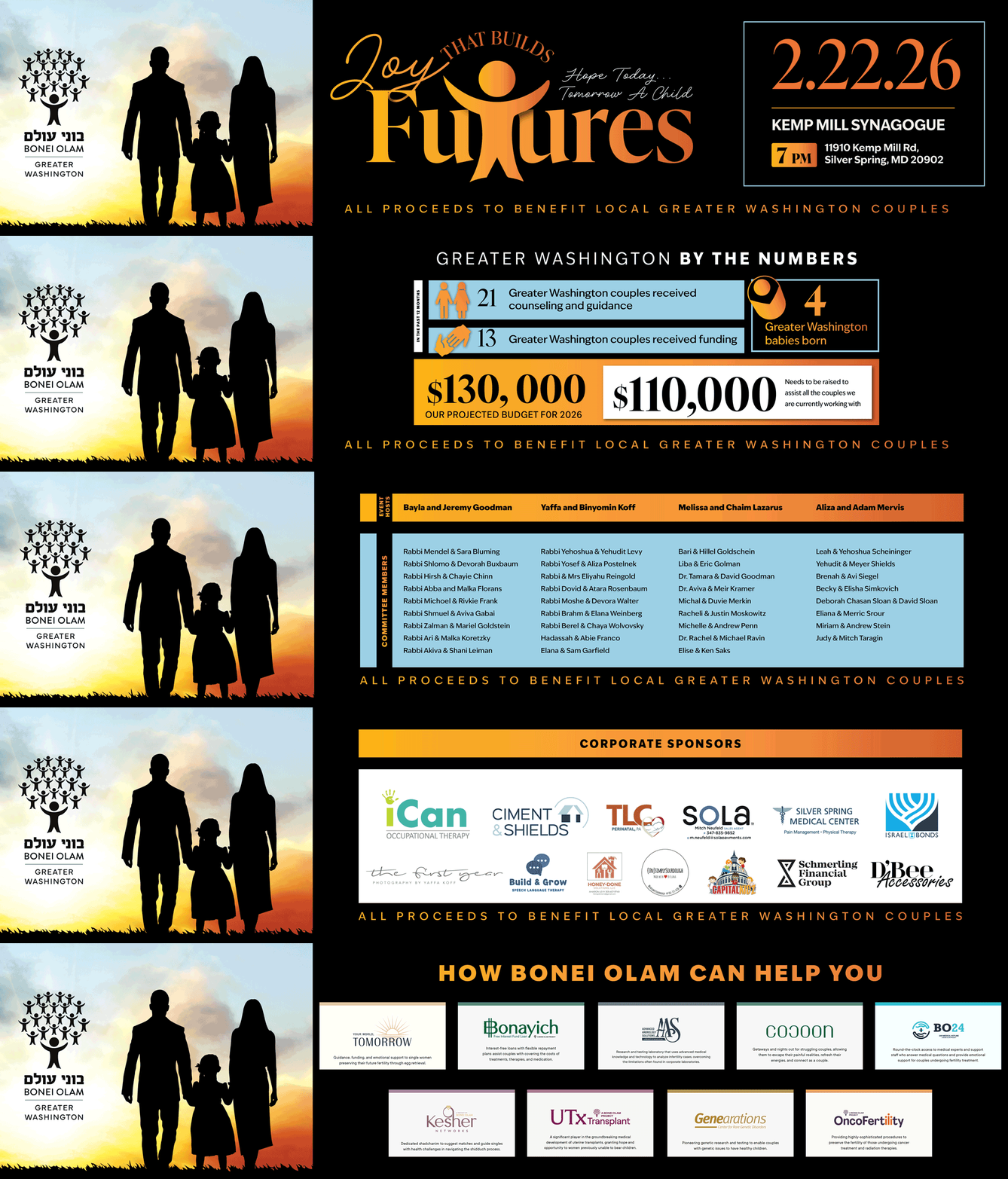
    Bonei Olam of Greater Washington is Building Futures of Joy in Our Own Backyard

    Bonei Olam Greater Washington: Jewish Fertility Support in Silver Spring

    There are simchos that arrive with music.

    A l’chaim that echoes across a hall.
    A stroller parked outside shul.
    A baby name whispered for the first time.

    And then there are the chapters that unfold in silence.

    The appointments no one talks about.
    The treatments scheduled between work meetings.
    The Shabbos tables where a couple smiles warmly — while carrying a weight few can see.

    And in that quiet space, Bonei Olam Greater Washington stands as something extraordinary: a community’s promise that no couple will walk this road alone.


    Bonei Olam Greater Washington: Building Futures in Silver Spring

    The Part No One Prepares You For

    In a family-centered frum community, children are not just milestones — they are the rhythm of life.

    Schools, carpools, Shabbos invitations, simchos — our entire social fabric is woven around family growth. Which makes infertility not just medically challenging, but emotionally isolating.

    Couples navigating fertility treatments often face:

    • Emotional strain that feels relentless
    • Physical exhaustion from procedures and medications
    • Financial pressure that can reach tens of thousands per cycle
    • The quiet loneliness of not knowing who to talk to

    Fertility treatment costs can range from $15,000 to $30,000 per cycle — sometimes more — and many couples require multiple attempts. Insurance coverage varies widely. Savings can disappear quickly.

    The journey becomes not only about hope — but about survival.

    And that’s where Bonei Olam steps in.


    What Bonei Olam Really Does

    Bonei Olam is not just a funding source. It is an anchor.

    Founded in 1999, the organization now includes 28 regional chapters and has helped bring over 14,000 children into the world. But statistics, as inspiring as they are, only begin to tell the story.

    Locally, in Greater Washington, this past year alone:

    • 21 couples received counseling and guidance
    • 13 families received financial assistance
    • 4 babies were born
    • The projected 2026 budget is $130,000
    • $110,000 still needs to be raised to continue assisting couples currently in process

    Read that again slowly.

    Those are not abstract numbers.

    Those are couples sitting across from specialists.
    Those are husbands and wives who chose not to give up.
    Those are babies now sleeping in cribs in our own neighborhoods.

    Bonei Olam provides confidential guidance, halachic direction when needed, medical navigation support, and financial assistance that often determines whether a couple can continue treatment at all.

    It does not simply fund procedures.

    It restores oxygen to families running out of breath.


    Neighbor Helping Neighbor

    One of the most beautiful aspects of Bonei Olam Greater Washington is that it is local.

    This is not anonymous philanthropy drifting somewhere else.
    This is Silver Spring helping Silver Spring.
    This is our own community quietly ensuring that dreams are not deferred because of cost.

    Every dollar raised here stays here.

    Every contribution becomes:

    • A consultation
    • A medication
    • A treatment cycle
    • A moment where a couple says, “We can try again.”

    In a world where so much feels beyond our control, this is something profoundly Jewish: taking responsibility for each other.

    Dor l’dor is not just a phrase.
    It is an obligation.


    Joy That Builds Futures

    This Sunday, February 22, 2026, at 7:00 PM, the Greater Washington community will gather at Kemp Mill Synagogue for an evening titled:

    Joy That Builds Futures

    There will be a beautiful fleishig buffet.
    There will be an inspiring program.
    There will be an exceptional Chinese auction featuring thoughtfully curated prizes.

    But the heart of the evening is something far deeper.

    It is about choosing to show up for couples who are still waiting for their first baby announcement.

    It is about ensuring that finances are never the reason a dream ends.

    It is about transforming heartbreak into hope — one family at a time.


    A Community That Shows Up

    Somewhere in our neighborhood tonight, a couple is hoping their next appointment brings good news.

    Somewhere, a husband and wife are calculating costs while calculating courage.

    Bonei Olam ensures that when the bracha comes — and b’ezras Hashem it does — money is not the obstacle.

    When our community gathers, when we give, when we attend, when we care — the impact is immediate and deeply personal.

    Because behind every future stroller is a story.

    Behind every baby’s cry is a journey.

    And behind every journey should be a community that says:

    We are with you.


    For event details or to support Bonei Olam Greater Washington, visit: https://boneiolam.org/greaterwashington


    Bonei Olam Greater Washington provides Jewish infertility support in Silver Spring through funding and guidance. Join the Feb 22 Kemp Mill Synagogue event.

    https://boneiolam.org/greaterwashington
    Posted on Leave a comment

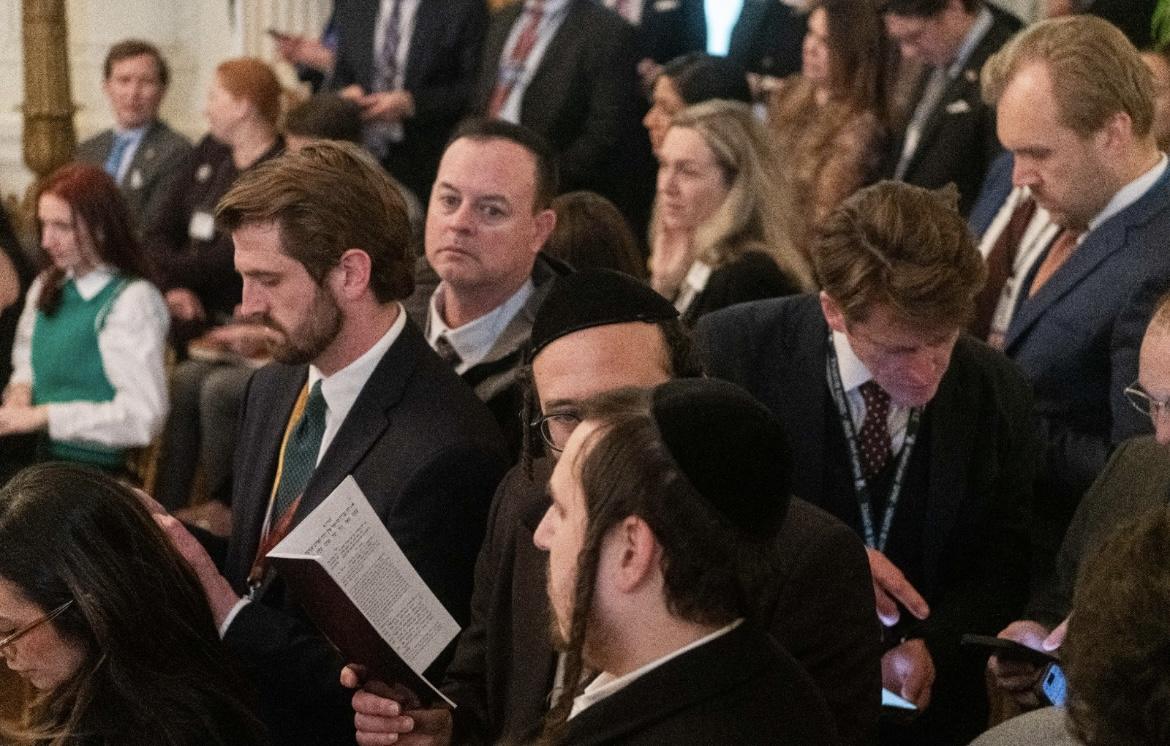
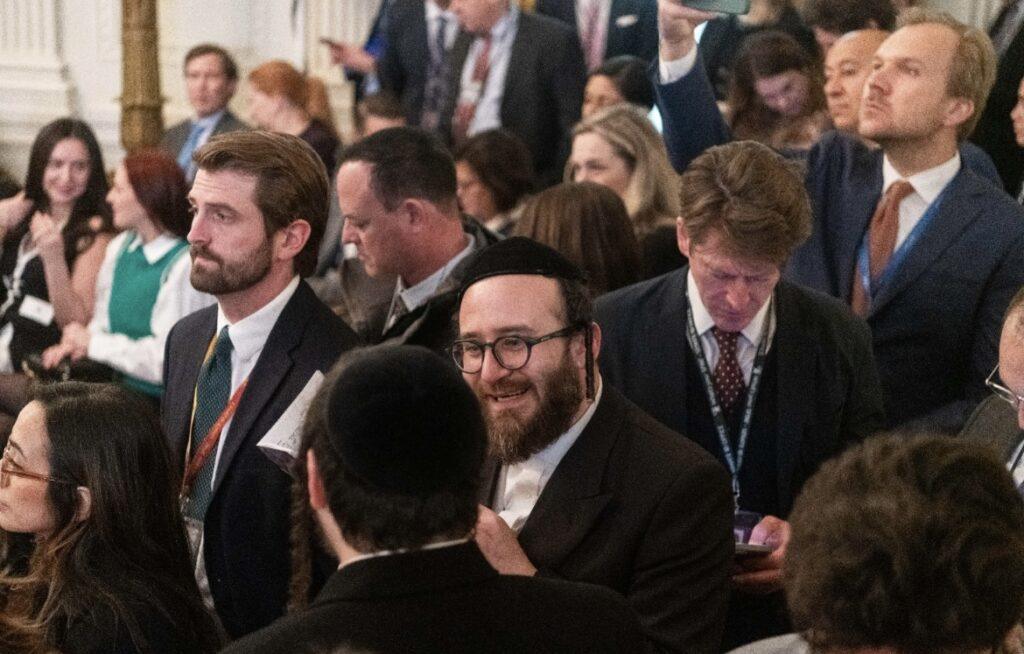
    Two Orthodox Jewish Journalists Learning Torah in the White House Press Room: Jake Turx and Shloime Zionce Redefine Representation

    Jake Turx & Shloime Zionce Learning Torah in the White House

    In a moment that quietly made history, two Orthodox Jewish journalists were photographed learning Torah together inside the White House press briefing room — a space usually reserved for rapid-fire questions, breaking headlines, and political tension. Instead of microphones and press credentials dominating the scene, a sefer rested open between them. The image — featuring Jake Turx of Mishpacha Magazine and Shloime Zionce of Ami Magazine — is more than symbolic. It’s a statement. Faith and professionalism. Identity and excellence. Torah and journalism — not in conflict, but in harmony.

    Jake Turx, widely recognized as the first Hasidic journalist to receive permanent White House press credentials, has become a trailblazer in political media. As a senior correspondent for Mishpacha Magazine, Turx has reported from the West Wing, interviewed global leaders, and brought nuanced, intelligent coverage to a readership that values both Torah perspective and world affairs. His presence in the press corps is not just representation — it is elevation. A Hasidic Jew standing confidently among the world’s most powerful institutions, asking thoughtful, sharp questions while remaining unapologetically anchored in his beliefs.

    Jake Turx of Mishpacha Magazine and Shloime Zionce of Ami Magazine learning Torah together inside the White House press briefing room.

    Beside him stands Shloime Zionce of Ami Magazine, a journalist known for immersive reporting and global investigative features. Zionce has traveled across continents — from remote Jewish communities to geopolitical flashpoints — documenting stories with depth, empathy, and clarity. His journalism bridges worlds: traditional and modern, religious and secular, local and international. In the White House press room, however, the story wasn’t politics. It was partnership. Two observant Jews carving out sacred time in a place built for headlines.

    The scene speaks volumes about Orthodox Jewish representation in American media. It challenges outdated assumptions. It proves that one can wear a kippah, speak in the cadence of Torah, and still operate at the highest professional levels of national journalism. More than that — it suggests that perhaps the highest levels of journalism are strengthened by moral clarity, spiritual grounding, and intellectual discipline shaped by Torah learning.

    Jake Turx & Shloime Zionce Learning Torah in the White House

    And maybe that’s the real headline. Not just that two Orthodox journalists were learning together in the White House — but that they belong there. Fully. Authentically. Confidently. In an era searching for identity and integrity in media, the image of Jake Turx and Shloime Zionce learning side by side may quietly represent the future: principled voices asking hard questions, grounded in something eternal.

    For readers in Silver Spring — one of the largest Orthodox Jewish communities in the Greater Washington D.C. area — the image carries particular meaning. Silver Spring has long been a hub of Torah learning, community leadership, and civic engagement. Seeing two visibly Orthodox journalists learning Torah inside the White House press room resonates deeply with a community that values both spiritual commitment and professional excellence. It reflects the ethos many Silver Spring families live every day: fully engaged in American society while unwavering in Jewish identity.

    The presence of Jake Turx and Shloime Zionce in the White House also underscores the growing influence of Orthodox Jewish media beyond local communities like Silver Spring and the D.C. region. What was once considered niche journalism has become nationally relevant, shaping conversations at the highest levels. For young Jewish professionals in Silver Spring and across Maryland who aspire to careers in media, politics, or public service, the message is clear: you do not have to compromise who you are to sit at the table. You can bring Torah values into the room — even the White House press room

    Photos taken by Aryeh Leib Abrams

    Posted on Leave a comment

    Tu B’Shvat Meaning in Judaism: The Halachic Definition of a Tree and a Message of Hope

    By Rabbi Brahm Weinberg, Kemp Mill Synagogue – Silver Spring, Maryland

    Celebrating Trees and Their Message of Hope

    By Rabbi Brahm Weinberg, Kemp Mill Synagogue – Silver Spring, MD

    The Mishna (Brachot 35a) says that there are different brachot that Chazal instituted for foods depending on their type, growth, and usage. One of the things the Mishna tells us is that the bracha over fruit of the tree is “Borei Pri Haetz” and the bracha over fruit of the ground is “Borei Pri Haadama.” How do we define fruits of the ground vs. fruits of the tree? What is the halachic definition of a tree? Do we follow the botanical or scientific definition? Do we follow some colloquial definition? Do we follow a definition that is subjective based on what we see and feel?

    The Halachic Definition of a Tree

    According to the simple reading of the Gemara, the fruit of perennials would be haetz, whereas the fruit of annuals would be haadama. Fruit that comes from a plant that remains from year to year and simply generates new fruit would receive a bracha of haetz, whereas fruit that comes from a plant that needs to be replanted each year would receive a bracha of haadama. Regeneration is part of the definition of a tree.

    Regeneration and the Message of Hope

    The Gemara is pointing to the great hope of regeneration that is inherent in every tree. Even when a part of the tree that remains after the season is over appears to be lifeless, one can and must have the faith and understanding that beneath the surface there is still the potential for life and rebirth.

    What an amazingly hopeful and empowering thought! The tree itself, by its nature, provides for such a marvelous metaphor for life and a philosophy that each of us can strive to emulate: Even when things seem down or depressed or dull or tedious or wearying… we can and must still believe that beneath the surface radical change is happening and that more of life is yet to come.

    It is that metaphor of hope for life contained within the very DNA of a tree that is celebrated and reinforced by the holiday of Tu Bishvat. It is a day which reminds us of the importance of looking at life not in a superficial way, but in a way that sees the hope and the possibilities that lie beneath the surface. May those hopes come to fruition, and may we enjoy the fruits that are yet to come.

    Rabbi Brahm Weinberg has served as the Rabbi of Kemp Mill Synagogue (KMS) in Silver Spring, Maryland since August 2015. Through his vision, scholarship, and unwavering commitment to community growth, he has helped KMS become a dynamic center of Jewish life, offering innovative programming and fostering a warm, inclusive atmosphere that deepens members’ connection to Judaism. Rabbi Weinberg earned his Master’s degree and Semicha from Yeshiva University’s Rabbi Isaac Elchanan Theological Seminary (RIETS), where he studied in the Katz Kollel. He received numerous honors, including the Torah Umadda Award, as well as distinctions in Gemara and History, reflecting both his intellectual rigor and passion for Torah learning and teaching. Beyond the synagogue, Rabbi Weinberg serves as Secretary of the Vaad Harabanim of Greater Washington, contributing to the strength of the broader Jewish community. Together with his wife, Elana, and their family, he exemplifies dedication, scholarship, and service. Rabbi Weinberg delivers multiple daily shiurim, including his well-known “Rashi a Day” and “5-Minute KMS Divrei Halacha,” available on Apple Podcasts.

    Posted on Leave a comment

    Tu B’Shevat: Koach and Poel — Understanding the Machlokes of Beis Hillel and Beis Shamai

    Rabbi Ephraim Miretzky: Leading Greater Washington NCSY & Inspiring Jewish Youth Leadership

    RABBI EPHRAIM MIRETZKY

    While the holiday of Tu B’Shevat is known simply as a date on the Hebrew calendar, the Mishnah in Rosh Hashana presents a deeper discussion. There is a machlokes between Beis Shamai and Beis Hillel regarding when the Rosh Hashana l’Ilan, the New Year for trees, should occur.

    Beis Shamai maintains that it should be the first of Shevat. Beis Hillel, however, holds that it should be the fifteenth of Shevat — the day we celebrate as Tu B’Shevat.

    This raises an important question. What is the significance of this day? Furthermore, what lies at the root of this fundamental disagreement?

    Koach and Poel: A Core Theme in Shas

    The Lubavitcher Rebbe, among others, develops a consistent theme to explain many disputes between Beis Hillel and Beis Shamai throughout Shas. One illuminating example appears in the Gemara in Shabbos 23b, which discusses how to light the Chanukah menorah.

    Beis Hillel rules that we begin with one candle on the first night and increase each day until we reach eight. By contrast, Beis Shamai teaches that we begin with eight candles and decrease each night until only one remains.

    Although the Gemara provides specific reasons for each view, the Rebbe highlights a deeper distinction: koach and poel.

    Koach refers to potential. Poel refers to actualization.

    According to Beis Shamai, we focus on the koach. On the first night of Chanukah, there is already the potential for eight nights of miracles. Therefore, we begin with eight lights.

    Beis Hillel, however, focuses on poel — what is presently revealed. On the first night, only one miracle has occurred. Therefore, we light one candle. Each subsequent night reflects the number of miracles that have already unfolded.

    Applying Koach and Poel to Tu B’Shevat

    This same framework helps us understand the Mishnah in Rosh Hashana regarding the Rosh Hashana l’Ilan. The purpose of this day is practical. It establishes the cutoff for calculating maaser on fruits.

    If fruit blossomed before Rosh Hashana l’Ilan, it belongs to the previous year. If it blossomed after, it belongs to the new year. This distinction determines how one calculates the total produce and the required maaser.

    We rule in accordance with Beis Hillel that Tu B’Shevat falls on the fifteenth of Shevat. But how did each opinion arrive at its respective date?

    The Rebbe cites the Gemara in Rosh Hashana 16a, which teaches that on Sukkos — the fifteenth of Tishrei — we are judged specifically regarding water. However, on Rosh Hashana, we are judged on everything. That includes water as well.

    So what is the difference?

    On Rosh Hashana, the judgment exists in koach — in potential. On Sukkos, the judgment is finalized in poel — in actualization.

    Beis Shamai, who emphasizes koach, calculates Rosh Hashana l’Ilan based on the potential judgment of rain on the first of Tishrei. Four months later is the first of Shevat.

    Beis Hillel, who emphasizes poel, bases the date on the revealed judgment of rain on Sukkos, the fifteenth of Tishrei. Four months later is the fifteenth of Shevat — Tu B’Shevat.

    Tu B’Shevat and Shavuos: Tree and Fruit

    The Satmar Rebbe, quoted in Maayan Hamoed, offers a powerful insight that deepens this discussion.

    The Gemara in Megillah 31b teaches that Shavuos is the Rosh Hashana for peiros ha’ilan — the fruits of the tree. Tu B’Shevat, by contrast, is the Rosh Hashana for the ilan itself.

    Interestingly, the minhagim appear reversed. On Tu B’Shevat, the New Year for trees, we eat fruits. On Shavuos, the New Year for fruits, we decorate shuls with trees.

    At first glance, it seems backwards.

    On Shavuos, when we are judged regarding fruits, we are reminded to look at their roots. Fruit does not appear in isolation. It emerges from a tree with deep roots and history. It has a mesorah.

    Similarly, the Torah we receive on Shavuos did not appear suddenly. It flows from generations of transmission. Therefore, when we celebrate the fruits, we display the trees.

    On Tu B’Shevat, however, we stand in the winter. Trees appear barren and frozen. Yet beneath the surface, sap flows quietly. Life is preparing to emerge.

    The koach is present, even when unseen.

    Therefore, on Tu B’Shevat we eat fruits — the poel — to remind ourselves of the hidden potential within the tree.

    Ki Ha’Adam Eitz HaSadeh

    The Torah compares a person to a tree of the field. Just as a tree contains unseen potential, so too does every individual.

    Tu B’Shevat calls upon us to recognize both dimensions. We must appreciate what is already actualized in our lives. At the same time, we must nurture the koach within ourselves and within others.

    This Tu B’Shevat, may we merit to develop our potential fully. May we help our families, friends, and community discover both their koach and their poel. And may we grow, like trees, toward strength, purpose, and lasting impact.


    Rabbi Ephraim Miretzky serves as Regional Director for Greater Washington NCSY, leading impactful programs that inspire Jewish youth and foster leadership throughout the Washington, D.C. region. Rabbi Miretzky can be reached at Miretzkye@ncsy.org.