
Silver Spring therapist Pinny Roth draws on couples therapy and Tehillim 139 to explore the space between an instinctive reaction and a chosen response.
Pinny for Your Thoughts · By Pinny Roth, LCSW-C
Compassion for self and others starts with the body. When a toddler melts down, most of us pause and think, What choice does the child really have? They are only two years old. We assume their nervous system is overwhelmed and respond with patience.
But when our thirty-five-year-old spouse melts down with a sharp tone, a shutdown, or a slammed door, that patience evaporates. We expect better. They have mature, rational minds, sophisticated values, and principles. They are supposed to know how to behave. That expectation isn't wrong, and I'll come back to it. Still, it misses what that adult is carrying.
The Part That Never Grew Up
An adult has a developed prefrontal cortex, the part of the brain that weighs consequences and chooses. Yet that part came online after the nervous system had already taken shape. The body absorbed childhood experiences and adaptations long before we had any say. It learned what to brace for, what to avoid, and what closeness costs.
Inside every capable adult is a body that is still a child. It reacts first based on what it learned long ago. Fortunately, the nervous system never stops changing. What was learned in childhood can be softened and relearned in adulthood, though not through force.
The Body in Relationships
In couples therapy, I often see a predictable pattern. One spouse says something, the other is triggered, and the response is sharp: You shouldn't feel that. Get over it. Thoughts and emotions are judged as choices that could simply be dropped.
Now listen to a different kind of sentence: "When you said that, my stomach turned into knots." Or, "When you glanced at your phone, I felt an intense tightness in my chest."
Rarely have I seen a spouse reply, "Don't feel that in your body!" Nobody argues with a racing heart, shaky legs, or a flushed face. We don't choose those sensations, and we intuitively know our spouse didn't choose them either.
While emotions and thoughts also arise without our permission from early attachment history, the body is where we most readily grant that people have no choice. The barrier to acceptance is lower. For many couples, sharing physical sensations without interpretation or accusation allows one spouse to hear the other without getting defensive. We expect a child to tell us where it hurts, not why it hurts. Compare "I notice tightness in my chest" with "You make my chest tight." The latter sounds like an accusation and will be heard as one. Once a couple achieves "somatic compassion," they can extend that same understanding to the emotions and thoughts that follow.
But Isn't That Just an Excuse?
A thoughtful reader may worry: if so much was set in motion before we could choose, doesn't that let everyone off the hook? No, and the distinction matters. Limited agency until now is a statement about the past, not a license for the future.
Many clients try to conquer their reactions with willpower alone, failing and judging themselves for it. Realizing how little choice they had in how their nervous system was built does not remove responsibility. It removes the shame blocking them from taking it. For many, healing begins when they stop fighting the body and start understanding it.
What Tehillim Teaches
This idea has a precise anchor in Tehillim. The Ibn Ezra writes that Chapter 139 helps us approach the limits of our understanding of the soul and HaShem's ways. In verse 5, Dovid says: אָחוֹר וָקֶדֶם צַרְתָּנִי וַתָּשֶׁת עָלַי כַּפֶּכָה.
The word צרתני is read in two ways. The Radak derives it from יצר, to form: You formed me, front and back, in the womb. That is our nature, the traits we were born with. The Ibn Ezra derives it from צור, to encompass: You surround me on every side and keep shaping me. That is our nurture, the ongoing influence of our environment. Nature and nurture appear in a single verse, and both are placed in HaShem's hands.
This suggests that the relationships each child encountered were not random. They were what that neshama needed to absorb tension, adapt, and prepare for its mission. Beyond the uniqueness of each person's individual purpose, at the heart of the neshama's mission lies the capacity to choose—an ability forged specifically through the process of countering the life we did not choose. To be clear, this does not mean harm was good or anyone who caused pain was justified. Pain is pain, and abuse is never excused. It means only that the neshama's mission is real, and nothing in a person's history disqualifies them from it.
Meeting the Body with Compassion: The 5 A’s
If both nature and nurture are in HaShem's hands, where does free will fit in? Here is the practical outline: the part of us that has בחירה is the neshama, which draws from the Source of בחירה itself. The body does not choose. The neshama can.
So how do we begin to create that free will in daily life? You don't need to overhaul your life to achieve it. You just need to tend with patience and care to the part of you that cannot choose on its own—treating the body like a frightened or overwhelmed child. Begin with AWARENESS, then offer ACKNOWLEDGMENT, APPRECIATION, ACCEPTANCE, and for those who can stretch, ADMIRATION.
AWARENESS: Become familiar with your current experience. Notice if an area of your body feels "lit up" when triggered. Approach it with radical curiosity, like a confused child.
Instead of asking, "Why are you acting this way?" say, "It seems you are feeling something uncomfortable." Name the sensation—tightness in your chest, a knot in your stomach—and stay with it without judgment or interpretation.
ACKNOWLEDGMENT: "Hey body, I see you tightening in the chest and throat. I sense you're trying to protect me, and that's why you're reacting this way."
APPRECIATION: "Thank you for that protection—not just now, but for decades. Without you, I don't know how I would have survived the stress in my life and relationships."
ACCEPTANCE: "I’ve watched you work so hard to protect me with everything you've got. You developed these tools on your own at a tender age. What choice did you really have? I love you for showing up with all you've got."
ADMIRATION: "אדרבה! On the contrary, you are remarkable! How many children figure out on their own how to protect a growing adult? You’ve carried me through school, work, marriage, and parenting. You're awesome!"
Take this one "A" at a time, spending a few days on each step. If noticing your body brings up overwhelm, numbness, or flooding, pause and work with a trauma-trained therapist. Compassion should never require pushing through.
Patience is a Necessity for בחירה
Over time, the 5 A’s allow the body to trust and integrate with the neshama. Then, the part of us that can truly choose is trusted to lead. Self-leadership requires the free will of the neshama; the neshama requires the body's trust; and that trust is built on acceptance, compassion, and patience.
So the next time you catch yourself asking, Why can't you just get over this? ask the question you would ask a child: What choice do you really have?
Then, gently and patiently, begin to give yourself one.
Practice the five A’s
Move through Pinny Roth’s five steps at your own pace. Keep a line you want to return to.
›My reflection steps 0
Choose an item above to start your list.
- Awareness
Become familiar with your current experience. Notice if an area of your body feels "lit up" when triggered. Approach it with radical curiosity, like a confused child.
- Acknowledgment
"Hey body, I see you tightening in the chest and throat. I sense you're trying to protect me, and that's why you're reacting this way."
- Appreciation
"Thank you for that protection—not just now, but for decades. Without you, I don't know how I would have survived the stress in my life and relationships."
- Acceptance
"I’ve watched you work so hard to protect me with everything you've got. You developed these tools on your own at a tender age. What choice did you really have? I love you for showing up with all you've got."
- Admiration
"אדרבה! On the contrary, you are remarkable! How many children figure out on their own how to protect a growing adult? You’ve carried me through school, work, marriage, and parenting. You're awesome!"
About the author
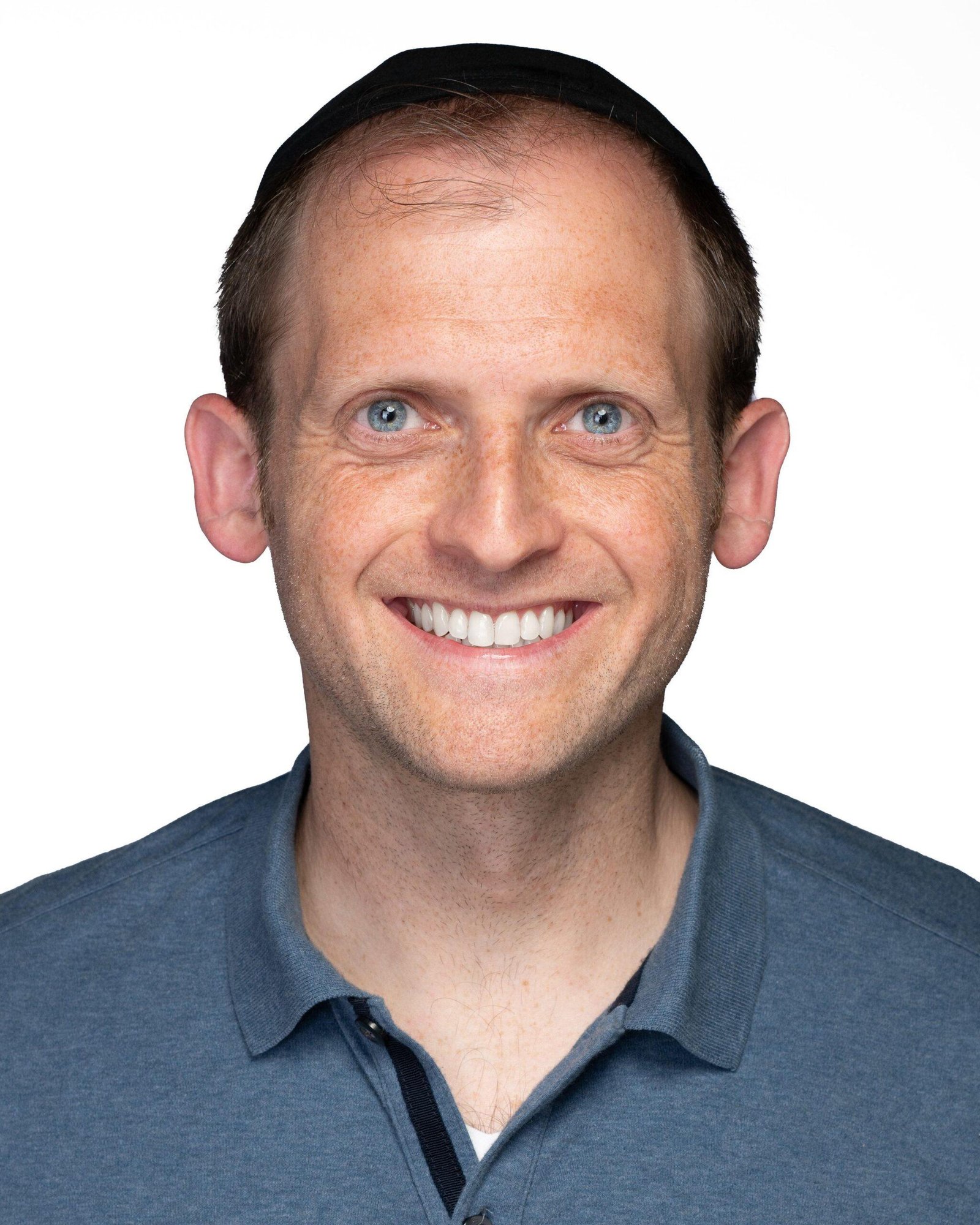
Richard "Pinny" Roth, LCSW-C, is a Silver Spring-based therapist who uses his gifts of connectedness, warmth, humor, and deep insight to help his clients make sense of their emotional patterns. Trained in Emotionally Focused Therapy under master instructor George Faller, Pinny integrates his clinical expertise with innate ability to create clarity, guiding his clients toward achieving their goals. When he's not in session, he’s focused on his "inpatient" caseload—his six lively boys and markedly outnumbered wife!
Comments or inquiries? Feel free to text it to (301) EFT-MD53 [338-6353] or email info@eft.center.
Pinny Roth, LCSW-C at Washington Jewish Journal · Professional biography
Related reading · Understanding Bids for Connection in Marriage
About the contributors
Pinny Roth, LCSW-C
Richard “Pinny” Roth, LCSW-C, is a licensed clinical social worker and couples therapist based in Silver Spring, Maryland. He writes WJJ’s Pinny for Your Thoughts column on love, connection and emotional well-being. His work draws on Emotionally Focused Therapy and training with George Faller, helping couples understand emotional patterns, communicate their needs and build connection. He earned his master’s degree at the Wurzweiler School of Social Work and is a Maryland board-approved social work supervisor.
More by and about Pinny Roth, LCSW-C →