
From the America at 250 · June 2026 issue
View the complete issue
Ilan Cohn sat down with Captain Cohn to hear his inspiring journey from neuroscience to naval aviation, overcoming challenges, embracing his faith, and serving with pride in the U.S. Navy.
Captain Cohn’s career took an unexpected turn from the world of neuroscience to the cockpit of naval aviation. As an Orthodox Jew in the United States Navy, he navigated unique challenges, from keeping kosher to observing Shabbat while serving his country. In this exclusive interview, Captain Cohn shares his remarkable journey, the values that guided him, and his advice for other Orthodox Jews considering military service.
Ilan: Captain Cohn, it’s an honor to speak with you today. Your journey—from the world of neuroscience to the cockpit of naval aviation—is nothing short of extraordinary. As an Orthodox Jew navigating the unique challenges of military service, your story is one that few have experienced. I’m excited to dive into your time in the U.S. Navy and hear how you balanced faith, duty, and adventure.
Captain Cohn: It’s a pleasure to be here. Please, ask away.
Tell me a little about your background before you joined the Navy.
Originally, I was training as a neuroscientist at the University of Illinois. My main interests at the time were biology and math, so I completed a bachelor’s degree in biology. I wasn’t exactly sure what I wanted to do, so, like most people in my position, I applied to graduate school.
I started a graduate program in immunology at Brandeis University, but I quickly realized I wasn’t interested in lab work and the traditional path of a biologist. Fortunately, I had an advisor who guided me through my uncertainty. He suggested that instead of leaving, I make a list of the top five things I was interested in. My list included math, biology, computer science, and robotics—that’s only four, but he took that and told me about a new neuroscience PhD program starting the next year. He offered me the opportunity to be one of its first graduate students, which was phenomenal.
I pursued the program and focused on nonlinear dynamics—chaos theory—which was quite popular in the late ’90s. However, when it came time to do my postdoctoral research, I wasn’t sure if academia was the right fit for me.

Tell me a little bit about flight school. What was your initial experience like when you joined?
Before flight school, I had to attend Officer School. The type of Officer School I went to was designed for professionals with degrees or expertise that the Navy specifically needed—such as doctors, lawyers, physical therapists, and scientists. Our training was slightly different from that of “line officers,” who serve in combat roles.
Because of my professional background, I entered with a mid-level officer rank and attended Officer Indoctrination School, which is a six-week program. It teaches the fundamentals of being a naval officer—military history, how to wear the uniform, and a phenomenal amount of physical training.
Flight school itself was in Pensacola, Florida, the “cradle of naval aviation.” Both Officer School and flight school were incredibly exciting and unlike anything I had ever experienced. I was the only person out of 400 officers wearing a kippah. Fortunately, I met the school chaplain, Chaplain Carney, who approached me on my second day and asked how she could help make my experience more accommodating for my religious needs. She helped me navigate challenges, including observing Shabbat.
For example, Officer School was in Newport, Rhode Island—home to the oldest synagogue in America. I asked if I could get a pass to walk there on Shabbat and spend the entire day at the synagogue. She made it happen, which was amazing. Similarly, in flight school, training was often 24/7, including evenings and weekends. However, I was able to request a “snivel” to avoid flying on Shabbat, and my superiors were very accommodating.

How did you keep kosher while in training? I assume the meals they provided weren’t kosher.
In Officer School, we ate meals together with our classmates, so my diet was limited to yogurt, fruits, vegetables, and various cereals for breakfast, lunch, and dinner. The moment I was allowed to leave base, I went shopping for kosher food.
In flight school, I had more flexibility since I lived in my own apartment. My wife, Debbie, and I got an apartment on the beach in Pensacola, on a cliff overlooking the bay. Occasionally, we would drive to New Orleans to pick up kosher food.
Were there other Jewish service members in your flight school class?
Yes, there were other Jewish students in both Officer and flight school, and we definitely connected. However, I was the only Orthodox Jew. Most of the other Jewish service members were from Reform or Conservative backgrounds.
Now that you’ve honorably retired, what do you consider your greatest accomplishment in the Navy?
That’s a tough one. I would say my most rewarding accomplishment was during the last three years of my military career when I served as the specialty leader, or head, of my community.
My specific naval community was aerospace experimental psychologists, which is part of a larger group called aeromedical officers. Our community consisted of about 30 members. Along with my assistant, I helped navigate significant personnel challenges, ensuring we retained the critical people needed to keep our community viable. I was proud to retire knowing I left behind a strong, capable team to continue supporting naval aviation.
Looking back on your service, what lessons or thoughts stand out to you?
Over time, I realized that the best way to guide my career, personal growth, and leadership development was by learning from the wisdom of my mentors. There were three key principles I carried with me throughout my career:
- Own your mistakes.
- Never lie, cheat, or steal.
- Excellence, not arrogance.
These values shaped the way I served and led others.
What advice would you give to Orthodox Jews considering a career in the U.S. military?
The most important thing is to approach military service with a solutions-oriented mindset. I never went in saying, “I’m a religious Jew, and you have to accommodate me.” Instead, I would analyze the challenges ahead—whether it was standing watch on Shabbat or flight training conflicts—and find a way to balance my religious observance with my military duties.
I always found a way to make it work, and my superiors respected that approach.
Final question—would you recommend the Navy to other Orthodox Jews?
It depends on the role. There’s a big difference between serving as a line officer in combat and serving as a staff officer in a specialized field. Staff officer roles—like mine—offer more flexibility to navigate religious observance.
Before committing to military service, you have to be honest with yourself. Are you willing to go the extra mile to balance faith and duty? If you’re up for the challenge, the Navy offers an incredibly rewarding and diverse career path.

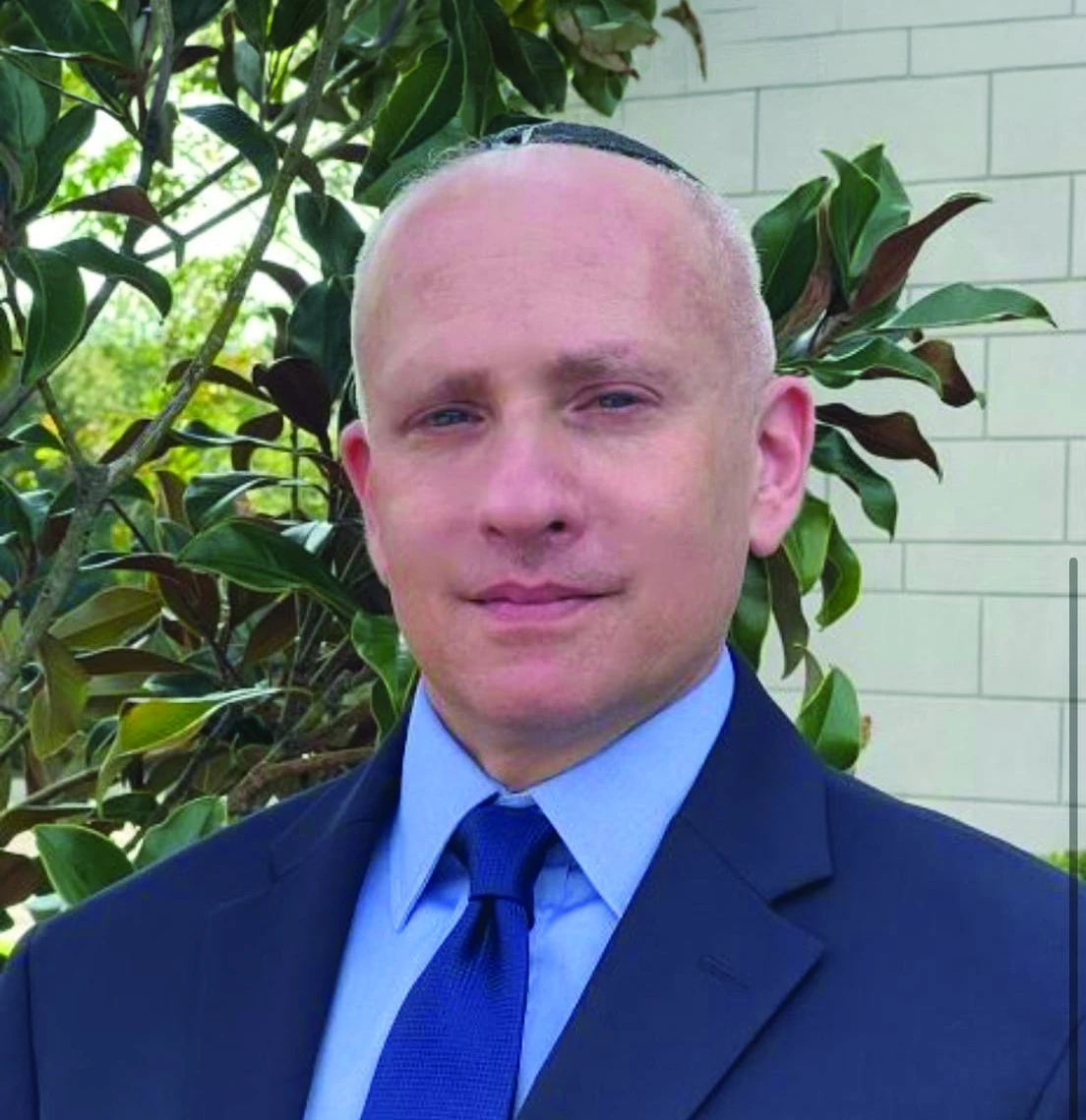
Captain Joseph Cohn, PhD
U.S. Navy Medical Service Corps, retired
Neuroscience · Naval aviation · Human performance
From neuroscience to naval service
Captain Joseph Cohn is a retired U.S. Navy Medical Service Corps officer whose work has connected neuroscience, aviation, military medicine and human performance. His 24-year Navy career included research, development and acquisition assignments across the Navy and Department of Defense. He brought a scientist’s understanding of perception and behavior to the practical challenges facing service members. SoarTech career profile
Cohn earned a bachelor’s degree in biology at the University of Illinois Urbana-Champaign and a doctorate in neuroscience at Brandeis University, working with Dr. Jim Lackner. His doctoral research examined how visual illusions influence movement, exploring the relationship between sensory information, decisions and action. At Florida Atlantic University’s Center for Complex Systems and Brain Sciences, he completed postdoctoral work with J. A. Scott Kelso and Betty Tuller, applying nonlinear models to human cognition and behavior. Education and research background
Research that reaches the people who serve
His assignments extended from individual performance to large-scale research leadership. A University of Central Florida workshop biography describes his oversight of a joint team charged with combining more than $3 billion in military medical research, development and acquisition assets within a Defense Health Agency-led organization. It also records his co-leadership of a $20 million U.S.–India cognitive science and human performance collaboration and his work on selecting operators for unmanned aerial systems. UCF workshop biography, 2024
In May 2018, Cohn addressed William Beaumont Army Medical Center’s Research Day in El Paso as the Defense Health Agency’s research programs division chief. The Army’s account describes his emphasis on connecting clinical investigators’ ideas with larger research programs, developing useful products and putting successful work into the hands of health care professionals. The event brought together resident and faculty projects across military medicine. U.S. Army report, May 21, 2018
Education, innovation and life after the Navy
Education also became a substantial part of his service. As the Office of Naval Research’s first deputy director for Naval STEM, he coordinated a program spanning all 50 states and reaching 200,000 students annually. His professional record includes more than 100 co-authored publications and three co-edited textbooks. He is a Fellow of the American Psychological Association and the Society of Military Psychologists, and an Associate Fellow of the Aerospace Medical Association. UCF professional profile
An example of that educational work appeared in the Office of Naval Research’s 2013 announcement of Exploration Now. The initiative connected students and teachers with oceanographers through live research broadcasts and opportunities to speak with crews at sea. Cohn described the value of opening a direct window into scientists’ work, helping students encounter research as it happened. Office of Naval Research, June 20, 2013
After retiring from the Navy, Cohn joined SoarTech, where his work has focused on human-centered technology and military medical readiness. Away from work, his interests include hiking in Maryland and Virginia and rock climbing, which he took up during flight school. SoarTech profile
In this WJJ interview, Cohn reflects on the personal side of that career, including wearing a kippah in officer training, arranging for Shabbat observance, finding kosher food and leading the Navy’s aerospace experimental psychology community. His account gives readers a firsthand perspective on the daily choices involved in combining Orthodox Jewish life with military service.