If you’ve eaten at Ben Yehuda Pizza anytime over the past six years, chances are you’ve seen the mural on the back wall.
You may have noticed its bright colors. You may have searched for the section your family painted. Or perhaps it simply became part of the landscape—so familiar that after a while you stopped noticing it.
Soon, after nearly six years on the wall, the mural will be retired and replaced with a new work of art. Before that happens, it’s worth taking a closer look at what has been hanging there all this time. More than just a mural, it became a record of a community and a snapshot of a moment when we were apart, yet still found a way to create something together.
Back in 2020, when the world had become very small, schools were closed. Shuls were quiet. Playdates vanished. Simchas moved to screens. We waved to friends from across sidewalks and driveways.
That was when Josh Katz, owner of Ben Yehuda Pizza approached me about creating a mural for the restaurant. Rather than paint it myself, we came up with a different idea: what if the community painted it together?
I sketched one large neighborhood scene across 62 separate canvases. Then I broke the image apart, canvas by canvas, labeling each section with colors like a giant paint-by-number puzzle. Families received a kit containing a canvas, brushes, and six paints: red, yellow, blue, black, and white.
The original sketch on paper
Each family painted its section in its own way. Some were careful. Some were bold. Some were neat. There were assorted patterns painted throughout, and the unmistakable evidence of children being handed paint and permission.
One by one, the canvases came back. As they arrived, I pieced them together, outlined the mural in black, added some cars, people, and a few special details requested by Josh (Go Caps!), and slowly watched dozens of individual artworks become one unified picture. What looked random on a single canvas suddenly made sense as part of a larger scene.
Laying it all out & putting it together.
When the mural finally went up at Ben Yehuda, it was exciting to see all of the pieces patchworked together for the first time. What had started as 62 separate canvases, painted in 62 different homes, had become one colorful neighborhood scene stretching across the wall.
Hanging it up.
As America prepares to celebrate its 250th birthday, I find myself thinking about the patchwork quilts that have become such a recognizable part of American history. Individual pieces, stitched together by many hands, create something larger than any one person could make alone. Looking at the mural today, it’s hard not to see a similar idea at work.
There is something deeply Jewish about this idea as well: Chazal teach, “כשם שפרצופיהם שונים כך דעותיהם שונות”—just as people’s faces are different, so too are their minds and opinions different. Human difference is not a problem to be solved. It is part of Hashem’s design. The work of community is not to erase those differences, but to weave them together into something larger than ourselves. This is true achdus.
Perhaps that’s why the mural has remained meaningful for so many people. It wasn’t just the finished artwork people remembered but the process. Families painted their small section without knowing exactly how it would fit into the final picture. Only when all 62 canvases came together did the full image emerge.
Soon, the mural will make way for a new painting. Before it comes down, stop by and spend a few minutes with it. Look for the careful sections and the wild ones. Look at the mural not simply as a mural, but as a group photograph taken during a time when no group photograph was possible. The mural was born during a season of separation. For nearly six years, it has quietly reminded us of connection.
That’s a pretty good run for 62 canvases and a pizza shop wall!
Kindness Behind the Counter From the June 2026 Summer Issue · View the magazine
Some businesses become successful. Very few become part of the emotional fabric of a community.
For more than two decades, Ben Yehuda Pizza has quietly been far more than a pizza shop for thousands across Silver Spring and Greater Washington. Behind the busy counter, late-night orders, and familiar slices is a place built on something deeper — quiet acts of kindness, community responsibility, second chances, fundraising efforts, hospitality, and countless moments most people never see.
For this year’s Summer Issue of the Washington Jewish Journal, we sat down with owner Josh Katz for a thoughtful conversation about community, hospitality, hidden acts of chesed, growth, mozzarella sticks, and the deeper purpose behind one of Washington’s most beloved neighborhood staples.
Ben Yehuda has become such a staple of the community. How did it all begin?
It’s actually a really great story because Ben Yehuda was built specifically for this community. Back in 2000, Roger Kerlins, Steven Franco, and Ronnie Rosenbluth felt the Kemp Mill area needed something local — a pizza place people could walk to, something that felt connected to neighborhood life. At the time, there were kosher pizza options, but nothing that truly felt like it belonged right here in the center of the community.
I was there from the very beginning. I was actually the first person officially hired by the founders, which is funny to think about now. The restaurant opened in the summer of 2000, originally for a private baseball team event for Roger’s daughter, but word spread quickly and people started showing up before we had even officially opened. In a way, the community opened the restaurant with us.
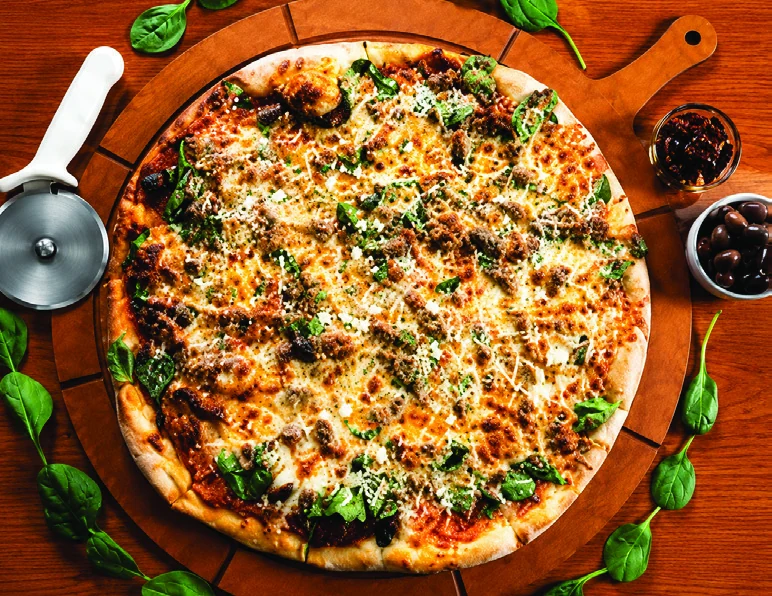
A vegetable-topped pizza on a wooden serving board.
That’s incredible — almost like the restaurant belonged to the community from day one. How did you eventually become the owner?
It happened very naturally. Scott Schleslinger bought the business in 2008 during an incredibly difficult economic time and really strengthened the operations side of the restaurant. By 2012, he was ready to move on, and at the time I had been working in e-commerce for Sammy Franco.
The opportunity came up, and honestly, it just felt right.
I already understood what the restaurant meant to people. This was never just about pizza. Community pizza shops are different. People celebrate there, they bring their kids there after school, they stop in after shiurim or games or family events. There’s a responsibility that comes with that.
So when I took over in May of 2012, the biggest thing for me was preserving that community-centered feeling while continuing to improve the business itself.
You can really feel that community aspect when you walk in. Ben Yehuda seems to constantly support local causes and organizations.
That’s always been important to us.
We’ve done fundraisers for schools, organizations, and community causes over the years. One example was Noah Night Out at Max’s which helped support the Torah School. We try to look at these partnerships as a win for everybody involved — the institution benefits, the community comes together, and yes, it helps the restaurant too.
Sometimes financially it may not even be the best decision on paper, but community businesses shouldn’t only think on paper.
A fundraiser brings in new families, introduces people to the restaurant, creates positive experiences. That matters long term. If you’re part of a community, you have to actively participate in it.
Josh Katz of Ben Yehuda Pizza with Montgomery County’s finest outside the Silver Spring community staple.
That mindset probably explains why people feel so connected to the restaurant. But at the same time, Ben Yehuda has also modernized a lot over the years.
Absolutely — and honestly, that’s become one of the biggest focuses for us.
I once attended a seminar where they said something that completely changed how I think about restaurants. They said your biggest competitor isn’t another restaurant. It’s the customer’s refrigerator.
That’s so true.
If ordering food feels complicated or annoying, people will just stay home and make something themselves. So our job is to make ordering as easy and seamless as possible.
That’s why we changed our POS system, introduced the app, improved online ordering, and added self-service kiosks. We’re constantly trying to remove friction from the experience. People are busy. Families are busy. Convenience matters.
That’s actually such a smart way to think about it. Are there plans to expand even further?
We’ve definitely explored ideas.
One thing we’ve been researching seriously is a movable pizza trailer concept. The idea would be to have flexibility — being able to serve different areas or events while still maintaining the Ben Yehuda quality and experience.
The challenge with kosher restaurants is density. You need enough of a Jewish population concentrated in one place to support it consistently. Pizza is also different from something like shawarma — people will travel farther for certain foods than others.
So expansion has to make sense operationally and for the community. We never want growth to come at the expense of quality in our current location.
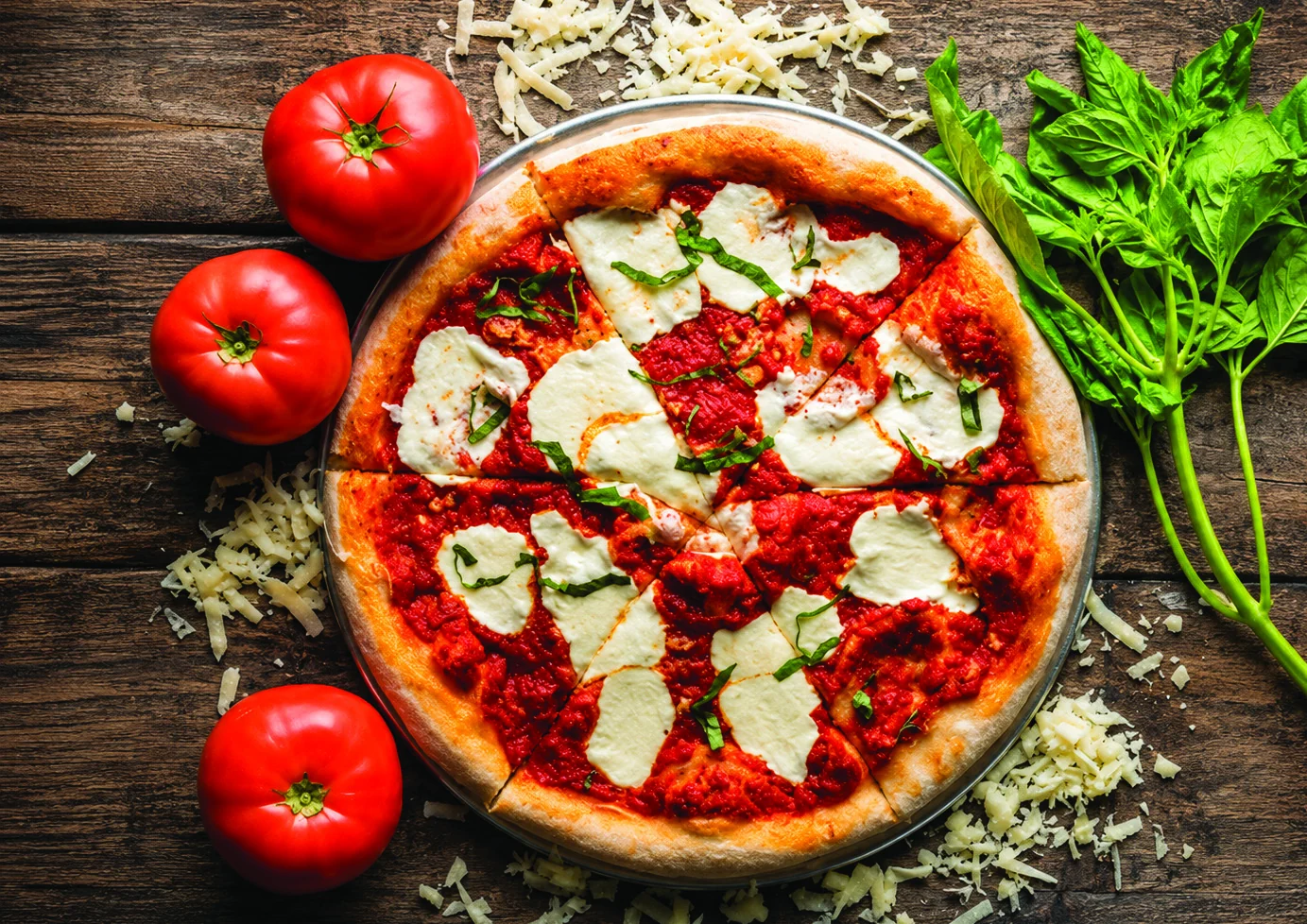
A cheese pizza cut into slices.A tomato-topped pizza surrounded by roses.
Speaking of quality — people definitely have their Ben Yehuda favorites. What’s your personal order?
I keep it pretty simple actually.
Usually a smaller pie with thinner crust, light cheese, and green peppers.
But one thing I always tell people is underrated is the Tony sauce. It’s a thicker sauce with a stronger tomato base and people who try it usually love it.
We even tested changing sauces entirely at one point, but customers were very attached to the original. That taught us something important — consistency matters. People build emotional connections to food.
And of course, the mozzarella sticks get a huge reaction from people, especially customers visiting from out of town.
They’re hand-made with our own spice blend and people are genuinely shocked by how good they are.
Mozzarella sticks with tomato dipping sauce.French fries with ketchup.Garlic knots with dipping sauce.
What stands out most to you after all these years running the restaurant?
Honestly? The moments that have nothing to do with pizza.
The feedback that means the most to me is when customers compliment our staff for kindness or hospitality.
There was one story that really stayed with me. A family came in one night and one of our employees, Ashley, noticed they seemed upset and emotionally drained. Without anyone asking, she offered the kids free ice cream just to brighten the mood a little.
Later, the family sent us a letter explaining how difficult their day had been and how much that small gesture meant to them.
That’s the stuff that matters most.
Anybody can serve food. But hospitality — real hospitality — is different. We want people to feel cared about when they come in here.
That really says a lot about the culture you’ve built there.
The truth is the staff deserves most of the credit.
The restaurant only works because of the people behind it every day. We have team members constantly looking for ways to help others — whether it’s donating supplies to food banks or helping organize community efforts quietly behind the scenes.
There was even a fundraiser one of our assistants helped coordinate while she was literally in a bomb shelter in Israel. That level of dedication is humbling.
And most community impact doesn’t happen through giant public campaigns. Usually it’s small acts. Quiet moments. Helping someone out when they need it.
That’s really what we try to be about.
“Anybody can serve food. But hospitality — real hospitality — is different. We want people to feel cared about when they come in here.”
Josh Katz
Last question — after all these years, what do you hope people feel when they think about Ben Yehuda Pizza?
I hope they feel community.
Of course we want them to love the pizza. But bigger than that, I hope they feel like Ben Yehuda is part of their lives in a positive way.
This community supports local businesses in an incredible way, and we never take that for granted. If we can continue serving good food while also supporting people, schools, organizations, and families along the way, then we’re doing something meaningful.