The Cherry Blossoms Are Back—Here’s Exactly When to Go, Where to Stand, and How to Experience It Like You Actually Know What You’re Doing
Cherry Blossom Festival 2026 in Washington DC is a short window—but if you time it right, it’s unforgettable. Here’s exactly when to go, what to see, and how to experience it properly.
For most of the year, Washington runs on schedules, strategy, and… let’s be honest—traffic.
Then, for about ten days, the city quietly flips.
People slow down. Strangers smile. Even the most “I don’t have time for this” personalities somehow find themselves standing still, staring at trees.
Welcome to peak cherry blossom season.
The National Cherry Blossom Festival runs March 20 through April 12—but the real magic lives in a very tight window. Miss it, and you’ll hear about it. Catch it, and you’ll understand why everyone suddenly becomes a photographer.
The Window Everyone’s Talking About
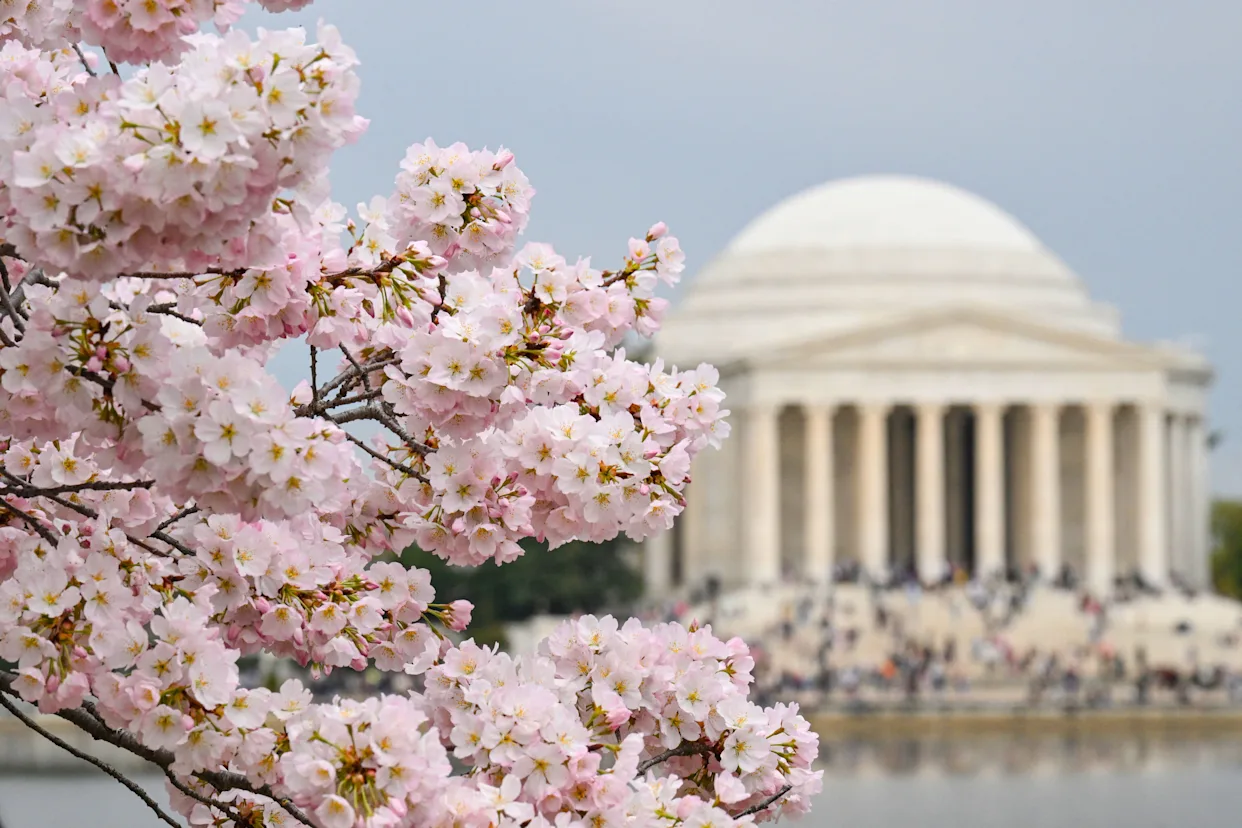
Peak bloom is expected March 29 – April 1.
That’s not a suggestion—that’s the moment.
And here’s the part most people miss: 👉 The 4–7 days after peak bloom might actually be better.
That’s when petals start falling—light, quiet, almost cinematic. Less “tourist photo,” more “this feels unreal.”
The Events Worth Showing Up For
You don’t need to attend everything. But if you pick right, you’ll feel like you did.
Opening Ceremony (March 21) at DAR Constitution Hall — polished, cultural, a strong start
Blossom Kite Festival (March 28) by the Washington Monument — surprisingly fun, even if you didn’t plan on smiling
Petalpalooza (April 4) at Capitol Riverfront — music, energy, movement
Parade (April 11) along Constitution Avenue — classic DC, done right
Sakura Matsuri (April 12–13) on Pennsylvania Avenue — culture, food, and a full close to the season
Opening Ceremony at DAR Constitution Hall kicks off the 2026 National Cherry Blossom Festival with culture, music, and tradition. 📸 @visitwashingtondc
How to Experience the Cherry Blossoms in DC the Right Way
Most people visit the cherry blossoms and walk away saying, “that was nice.”
And it is.
But with just a little intention, it can be something much better— something memorable, calming, even a little transformative.
Because the National Cherry Blossom Festival 2026 in Washington DC isn’t just something to see. It’s something to experience well.
Here’s how to do it right:
🚊 Take the Metro — give yourself a smoother start. No traffic stress, no parking gamble—just arrive ready to enjoy
📸 Go early morning or just before sunset — the light is softer, the crowds are lighter, and everything feels more personal
🌸 Respect the blossoms — they’re meant to be admired, not picked. Preserving them is part of the experience
🐶 Bring your dog (leashed) — it’s one of the rare DC outings that’s genuinely enjoyable for everyone
Small choices. Big difference.
The Part Most People Don’t Say (But Feel)
The cherry blossoms don’t last.
And that’s exactly what makes them special.
In a city defined by permanence—monuments, institutions, legacy—the blossoms offer something different: a moment that’s brief, beautiful, and shared.
For a few days, Washington DC feels lighter. Softer. More human.
And that’s why people return every year.
Not just for the Cherry Blossom Festival events Not just for the photos
But for that quiet reminder to slow down… look up… and be present while it’s here.
This may be the most-asked question about Silver Spring’s kosher dining scene. A close second is “What time is Mincha?” on the Chabad Ana”sh chat.
Buckle up, because I’m going to give you my opinion — which you should absolutely treat as fact.
Kosher restaurants struggle not because the community won’t support them, but because too many are designed for people with no other choice. From the kosher food supply chain to the customers we try to attract, the difference between us and the non-kosher restaurant industry is who we think we’re competing against — and which diners we’re actually trying to win over.
First disclaimer: it’s not a money or community lifestyle issue. I’m not advocating that families begin radically increasing their dining-out budgets. A restaurant is not a kollel (but don’t tell the mashgiach… or maybe do). It does not automatically deserve your support.
Second, this isn’t a critique of the people involved. The owners and operators I know care deeply about the community and sacrifice nights, weekends, and holidays to serve it. This is about the structure we’ve built around them — and the limits that structure quietly imposes on kosher restaurants in Silver Spring and the greater DC area.
A Local Perspective on the Silver Spring Kosher Food Scene
Some background:
I was born in Holy Cross Hospital and have been cooking since preschool (see the H.A.G.W.A.S.H. Mother’s Day project still on my parents’ fridge). Professionally, for the past fifteen years, I’ve watched restaurants here come and go. I’ve been asking this question — why doesn’t Silver Spring have more great kosher restaurants? — since the first “YGW – Building the Future” banner went up.
Early in my career, I spent years working in non-kosher kitchens — places where restaurants survive only if people choose them over every other option. That experience reshaped how I think about food, service, and what restaurants are actually competing against. I returned to the kosher world with that lens, inspired to improve what we have.
Why Restaurants Fail (Kosher and Non-Kosher Alike)
Being a chef is hard. Operating a successful restaurant profitably is expert-level hard. The Washington, DC restaurant industry saw over 90 closures in the past year — including at least one with four consecutive Michelin stars.
Margins are thinner than butter spread on too much toast. Staffing requires more patience than raising children (and many of the same skills). Customer tastes are constantly evolving — even in this economy. And finding the right location? Critical. But rent prices alone can make you rethink everything.
Successful restaurateurs understand one thing clearly:
The job of a restaurant is to create food and service so good that people will travel out of their way — and even wait in a block-long line — for the experience.
Because great food isn’t just taste. It’s memory. It’s emotional. It sticks.
What Successful Kosher Restaurants Get Right
Kosher is not the limitation people think it is.
If you’ve been here long enough, you might remember the lunchtime line for Momi’s shawarma at Max’s. Or maybe you’ve been to Zak the Baker in Miami or Izzy’s BBQ in Crown Heights.
If you have, you probably noticed something: not everyone there is visibly Jewish.
That’s not an accident.
The common thread is simple — these places are built by people who’ve dedicated their lives to mastering their craft. They’re not just “kosher options.” They’re destination restaurants that happen to be kosher.
The Real Goal: Better Kosher Restaurants, Not Just More
My goal for Silver Spring isn’t more kosher restaurants.
It’s better ones.
Restaurants so good that being kosher is a feature — not the reason they exist.
Because when a restaurant competes for everyone, it gets sharper, more disciplined, and more sustainable.
And in the end, the entire community benefits.
This is the mindset.
How to make it happen? That’s a wholeother story.
Yehuda Malka is a chef with fifteen years experience in the DC area hospitality industry. He has cooked everything from fast casual to fine dining, working in food trucks, Michelin starred restaurants, and many places in between — proudly keeping kosher throughout. He lives in Kemp Mill with his wife and four sons.
Kemp Mill Sees New Safety Upgrades on Lamberton Road
Residents of Kemp Mill may have noticed some major changes taking shape along one of the neighborhood’s central roads.
The Montgomery County Department of Transportation has begun installing traffic-calming features and upgraded crosswalks along Lamberton Road, running from Monticello Avenue down toward Blomley Drive in Silver Spring.
These updates are part of a broader effort to improve pedestrian safety within residential communities like Kemp Mill, where foot traffic is a daily reality.
What’s Changed
The improvements include:
New cement traffic-calming islands (raised triangular medians)
Fresh, highly visible crosswalk markings
Safer pedestrian crossing zones along the corridor
Additional crosswalk enhancements have been added near:
Fulham Street & Lamberton Road
Rockbridge Road (lower Lamberton area)
The goal: create a road that naturally encourages slower driving and safer crossings.
Why It Matters for Kemp Mill
Lamberton Road is more than just a street — it’s a daily route for families, children, and pedestrians throughout Kemp Mill.
With shuls, schools, and local foot traffic nearby, these types of upgrades help:
Reduce speeding in residential areas
Increase driver awareness
Make crossings safer and more predictable
For a neighborhood like Kemp Mill, this kind of infrastructure isn’t just helpful — it’s essential.
A Shift Toward Safer Streets in Silver Spring
Projects like this reflect a growing push by Montgomery County to prioritize:
Pedestrian-first design
Neighborhood safety
Smarter traffic flow without heavy enforcement
Expect to continue seeing similar improvements across Silver Spring and surrounding areas.
What to Expect
If you drive on Lamberton regularly:
Traffic patterns may feel slightly tighter
The new islands are designed to slow you down naturally
Crosswalks are now more visible — stay alert
These are subtle changes — but they reshape how the road works.
Final Thought
In a neighborhood like Kemp Mill, small upgrades like these can have a big impact on everyday safety.
On a recent day in Silver Spring, something remarkable happened.
Boxes stacked high. Tables filled with kosher-for-Passover staples. Volunteers moving quickly but with purpose. And in the middle of it all — dozens of students from the Yeshiva of Greater Washington quietly packing food.
By the end of the day, the numbers were staggering.
Yad Yehuda volunteers prepare Passover food packages for local families.
16,000 pounds of Pesach food packed.
And behind those numbers?
More than 1,200 Jewish households in the Greater Washington area who will be able to sit down to a proper Passover Seder.
But to understand why this moment mattered, you have to understand something deeper.
This wasn’t just a volunteer project.
This was Torah in motion.
YGW students pack Pesach food boxes for over 1,200 families through Yad Yehuda’s Ma’ot Chittim campaign.
The Jewish Value That Happens Before Pesach
Every year before Passover, Jewish communities around the world fulfill an ancient tradition called Ma’ot Chittim — literally “money for wheat.”
For centuries, communities have ensured that every Jewish family can celebrate Pesach with dignity. No one should sit down to a Seder table without the basics needed for the holiday.
That responsibility hasn’t disappeared in the modern world.
If anything, it’s become more important.
Organizations like Yad Yehuda exist precisely for this reason: to ensure that families experiencing financial hardship can still celebrate Shabbat, Yom Tov, and daily life with dignity.
Through programs like the Capital Kosher Pantryand Tomchei Shabbos, the organization provides food assistance, emergency support, and other critical services for hundreds of individuals and families across the Greater Washington Jewish community.
But even the most organized chesed efforts require something essential:
People willing to help.
Enter the Students of Yeshiva of Greater Washington
When the YGW students arrived to volunteer, the scene quickly transformed.
What might have taken days suddenly began moving with remarkable efficiency.
Boxes opened. Items sorted. Packages assembled.
The boys worked assembly-line style — one placing matzah, another stacking grape juice, another sealing boxes. Someone joked that if Gemara learning requires teamwork, apparently packing Pesach food does too.
Students from the Yeshiva of Greater Washington help pack thousands of pounds of kosher-for-Passover food for local families through Yad Yehuda’s Ma’ot Chittim campaign.
16,000 Pounds of Food — One Community Effort
By the time the project wrapped up, the numbers told the story.
16,000 pounds of kosher-for-Passover food packed.
Food that will now make its way to more than 1,200 local households struggling financially.
That means:
• Families who can cook proper Yom Tov meals • Parents who don’t have to quietly worry about grocery bills • Children who will sit at a Seder table that feels normal
Yad Yehuda’s broader programs already distribute significant amounts of food annually, helping community members maintain dignity while navigating difficult financial periods.
But Pesach adds another layer of complexity.
Kosher-for-Passover food is expensive.
Demand spikes.
And for families already facing financial stress, the holiday can feel overwhelming.
What made the day especially meaningful wasn’t just the scale of the project.
It was who was doing the work.
Teenage boys.
Future community leaders.
Young men who, only hours earlier, may have been deep in a sugya of Gemara.
Now they were lifting boxes, sealing packages, and helping ensure that strangers they will never meet can celebrate Pesach with dignity.
That’s a powerful lesson.
In Judaism, Torah study and acts of kindness are never separate tracks.
They are two halves of the same life.
The Culture of Chesed in Silver Spring
The Greater Washington Jewish community has quietly built one of the strongest volunteer cultures in the country.
Students. Parents. retirees. Professionals.
Everyone participates.
Yad Yehuda’s programs are powered almost entirely by volunteers — individuals from across the community who unload deliveries, organize inventory, and help distribute food to those who need it most.
The students of Yeshiva of Greater Washington are simply the latest generation stepping into that tradition.
And if this project is any indication, the future looks promising.
Supporting the Ma’ot Chittim Campaign
Pesach is approaching quickly.
The need remains significant.
If you’d like to support the effort to ensure that every Jewish family in the Greater Washington area can celebrate the holiday with dignity, donations to the Ma’ot Chittim campaign are still being accepted.
A Rebbi’s Influence Can Change a Life There is no doubt that a rebbe can make or break a student and alter a student’s trajectory, affecting their very destiny. I struggled with ADHD and learning disabilities, coupled with a severe disinterest in anything school-related, so it’s safe to assume I wasn’t high on their list of great students. More likely, I was top on a different list — something like “most likely to attend summer school.”
Thankfully, it only takes a few.
Rabbi Shraga Gross: A Leader Who Saw the Soul
In 1989, I was a 12th grader doing very poorly in school and generally disliked by most rabbis, and no doubt the sentiment was mutual.
One day, literally out of the blue, a young, dynamic rabbi whom I remembered from my youth by the name of Rabbi Shraga Gross took over as principal of Hebrew Academy. Aside from coming from royalty — his parents built the first day school in South Florida almost 75 years ago — his love of Torah and klal Yisroel was palpable from the moment he came to town.
He was universally loved because his ultimate goal was bringing people closer to God and His Torah. Plain and simple.
Although I only had him for one year, all I remember was his sincerity and kindness.
When I left for my gap year in Israel, he eventually moved to New Jersey where he, along with his eishes chayil Shira, continued his legacy of teaching Torah.
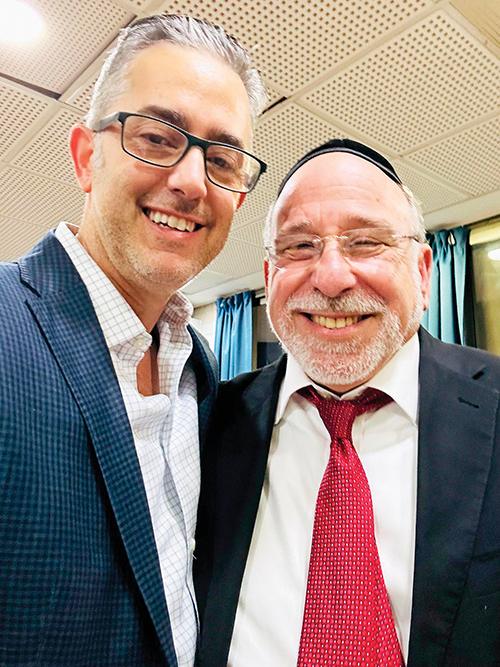
The Author, Avi Ciment with Rabbi Shraga Gross, respected Torah educator and son of Rav Sender Gross of Miami Jewish education legacy
The Rebbe Who Believed in Me
My year in Israel proved to be an eye-opener, but I was still wild and once again most of the rabbis didn’t like me.
Except one.
His name was Rabbi Hirschorn.
He had the vision to overlook my immaturity and ADHD and treated me with kindness and patience. One day he somehow gave me the idea that I had some spiritual potential.
I’m not really sure why, but I always remembered his encouragement.
I also admired his complete devotion to learning Torah, yishuv haaretz, and raising an unbelievable family with his wife Sarah in Neveh Daniel.
Mentors Who Change a Student’s Destiny
The following year I made my way to Yeshiva University where once again I failed every Talmud test.
Luckily, unlike my high school years where my home was barraged with daily conduct referrals for failing and misbehaving, I met an angel by the name of Rabbi Aaron Selevan.
His credentials were far beyond teaching individuals such as myself, yet that didn’t stop him from educating all kinds with brilliance and patience, constantly inviting students for Shabbos meals.
After Yeshiva University I spent time at Ohr Sameach where I had the good fortune to find a powerhouse of a rav named Rav Yehoshua Bertram.
Not just an all-star basketball player, this towering angel was (and still is) a magnet for Torah and ahavat Yisroel.
He has changed the lives of so many because of his concern and constant devotion to Torah and doing the Ratzon Hashem.
Plain and simple.
When the Student Returns as the Teacher
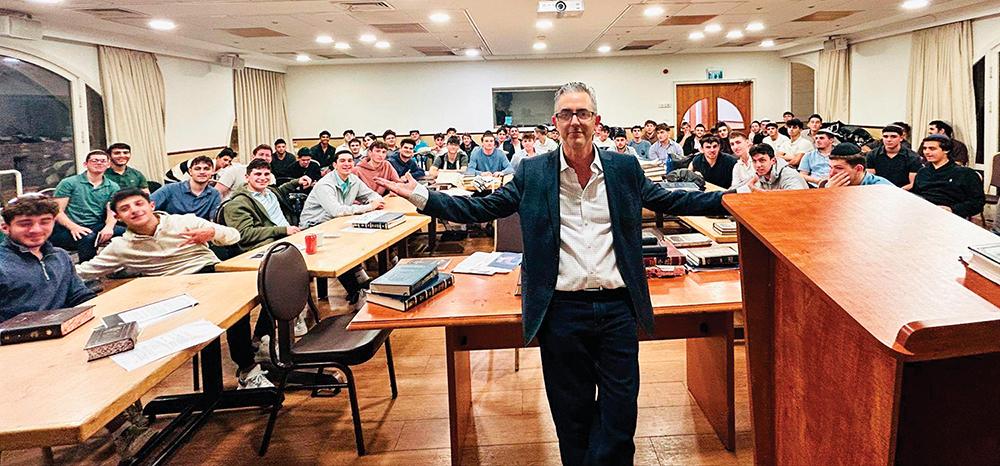
Fast forward 35 years, and I’m on a lecture tour for my book “Real Questions Real Answers,” speaking and visiting these very rabbis.
Only this time, the student came as a teacher.
My first stop was Nitivei Hatorah, where Rav Gross was doing exactly what I remembered from 35 years ago — singing nigunim with his boys before learning Torah and creating a positive energy.
Sporting a suit, tie, and cufflinks, Rav Shraga was running a well-oiled machine, infusing his divrei Torah as only he can and touching the very neshamas of the students he teaches.
As an adult, it’s easy to see what made him so successful all of these years.
Seeing Students for Who They CanBecome
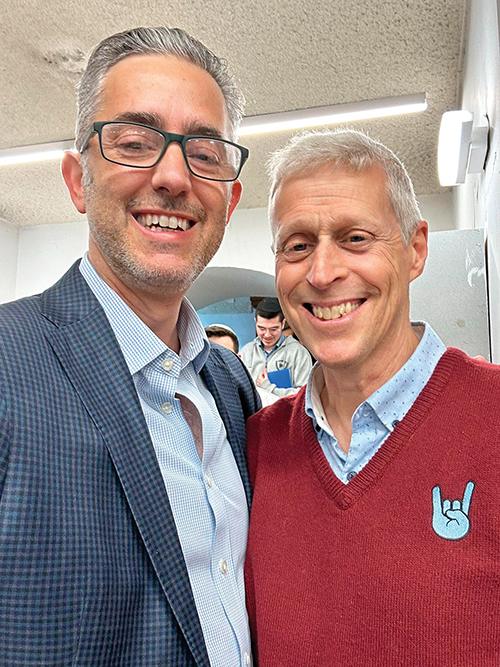
My next stop was Nitivei Hatorah where I found my rebbe, Rabbi Hirschorn, doing the same thing he was doing 35 years ago — preparing for a class with copious notes.
He introduced me as his craziest student ever.
Yet without his patience and wisdom, I’m pretty certain my life would have had a different outcome.
I also made a trek to Matisdorf where I had the zechut of seeing Rav Bertram, shlita.
Not surprisingly, he was being visited by another old student whose life he had clearly changed along with countless others.
Rav Selevan left Yeshiva University and today his shiurim are legendary. He is a sought-after lecturer throughout Canada and beyond.
The Secret of Great Torah Teachers
What was it about all of these angels that allowed them to see me — and other kids that didn’t fit the mold — in a different light when so many others couldn’t?
I believe what allowed them to see the forest from the trees was looking at the heart and not necessarily the words or brains of their students.
All of these rabbis are extremely educated and accomplished teachers.
Yet they were able to see beyond the obvious.
They chose to place their egos on hold and look beyond the silliness and lack of intellectual understanding.
Instead, they focused on Jewish neshamas that simply needed more patience.
A Lesson from the Rebbes
This is perhaps the key ingredient to their unique success.
Amazingly, each of these rabbis are not only teaching with the same passion they had 35 years ago — but even more so.
They continue growing in their own learning as well.
I remember when Rabbi Gross walked me out after my lecture and removed a piece of paper from his wallet.
It was a list of all the Gemaras he wished to complete.
Even after a full day of teaching students and building a yeshiva, he’s still a student just like you and me.
Mamish givaldik.
Avi Ciment speaking at Yeshivat Reishit Yerushalayim in Jerusalem about Torah learning and Jewish mentorship
Seeing the Soul of Every Student
All of these great men chose to look beyond the outward and see people on a deeper level.
Didn’t Hashem tell Jonah not to judge the people of Nineveh at face value?
How many students are marginalized because they don’t fit into the box — yet often have untapped spiritual potential lying dormant and undeveloped?
My father often speaks of the metaphoric telescope — the idea of bringing faraway things much closer.
Whenever you look at something, project 30 years ahead and envision its outcome rather than simply seeing what it is today.
I guess these rabbis had their own telescopes and chose to see their students as far more than students.
“I Don’t Have Students — I Have Children”
Rabbi Shraga Gross’ father, Rav Sender Gross, z”l, built the Hebrew Academy nearly 75 years ago.
As an eight-year-old boy, I vividly remember how he always referred to us as his “kinder.”
He even kept a file on many of his students, monitoring their progress as they grew older.
To Rabbi Gross, we weren’t just another number.
He saw us as Jewish souls.
No doubt these lessons trickled down to all of his children, who continue his great legacy.
Indeed, the secret to all great rebbes can be encapsulated by what Rav Shraga, shlita, mentioned to me on more than one occasion:
“I don’t have students — I have children.”
About the Author: Avi Ciment
Avi Ciment is a Jewish author, lecturer, and columnist whose writings on Torah, Jewish identity, and contemporary Orthodox life have appeared in publications including The Jewish Press,The Jewish Link, and Aish.com. He is the author of Real Questions, Real Answers and lectures internationally on faith, Torah thought, and Jewish inspiration. Through his platformAvi Talks Torah, he shares short Torah insights and educational messages with audiences across social media.
Students at Yeshivat Reishit Yerushalayim come from across the Jewish world to study Torah in the heart of Jerusalem while building a deeper connection to Jewish tradition, Jewish learning, and the spiritual heritage of Am Yisrael.
Rabbi Shraga (Shragi) Gross is widely respected for his dedication to Torah education and his lifelong commitment to helping students grow spiritually and intellectually. Known for his warmth, sincerity, and powerful teaching style, Rabbi Gross has influenced generations of students through his leadership, mentorship, and deep love for Torah and Klal Yisrael.
Rabbi Gross comes from a family deeply connected to Jewish education. His father, Rav Sender Gross (RASG), z”l, was a pioneering Jewish educator who helped establish one of the first Jewish day schools in Miami, Florida, helping lay the foundation for Jewish education in South Florida more than 70 years ago.
The legacy of Rav Sender Gross continues through his children and grandchildren, who have continued to strengthen Torah education and Jewish life in communities across the United States and Israel.
IndyCar Freedom 250 Brings High-Speed Racing to the National Mall
For the first time in history, IndyCar racing will roar through the streets of Washington D.C. as the Freedom 250 Grand Prix takes place on the National Mall in August 2026.
The historic event will feature a 1.7-mile street circuit weaving around America’s most iconic landmarks, including:
The U.S. Capitol
The National Gallery of Art
The National Archives
The Smithsonian Air & Space Museum
The Washington Monument
IndyCar machines reaching speeds up to 180 mph will race through the symbolic heart of the nation.
And remarkably — the event will be free for the public to watch.
For Washington residents and visitors alike, the Freedom 250 promises to become one of the most unforgettable sporting events ever held in the nation’s capital.
A Celebration of American Speed, Innovation, and Freedom
The Freedom 250 is more than just a race.
It represents something deeply American.
Motorsports have always symbolized innovation, risk-taking, engineering excellence, and the pursuit of victory — values that many believe are part of the country’s renewed spirit.
In recent years, America has seen a resurgence of patriotic events and celebrations of national identity, and the Freedom 250 fits squarely within that momentum.
Supporters say the race reflects a broader return to confidence in American strength, industry, and cultural pride.
A Historic First for Washington D.C.
Street circuits are common in cities like:
Monaco
Long Beach
Nashville
Singapore
But never before has a major international motorsport event taken place directly on the National Mall.
The layout revealed by IndyCar includes seven turns and a 0.4-mile straightaway along Pennsylvania Avenue, offering dramatic views of the Capitol dome behind the starting grid.
Few races in the world will ever offer a backdrop this iconic.
Tourism and Economic Boost for the Capital
Major sporting events often generate massive economic impact, and organizers expect the Freedom 250 to draw tens of thousands of visitors.
Hotels, restaurants, and local businesses across:
Washington D.C.
Northern Virginia
Montgomery County
Silver Spring and Bethesda
are expected to see a major surge in tourism.
For local communities, the race could become a signature annual event, similar to how other cities have built global identities around motorsports.
The Spirit of American Competition
At its core, IndyCar racing represents something timeless:
the desire to push faster, innovate further, and compete at the highest level.
The Freedom 250 brings that spirit directly to the capital of the United States.
With engines echoing across the National Mall and the Capitol standing in the background, the race will symbolize something larger than sport.
It will be a moment where American energy, pride, and tradition meet the thrill of modern competition.
When Is the Freedom 250?
📅 August 21–23, 2026 📍 National Mall – Washington, D.C.
Practice, qualifying, and race events will take place over three days.
And for spectators along the Mall — watching the race will be completely free.
IndyCar cars will race through the streets surrounding the National Mall during the historic Freedom 250 Grand Prix in Washington DC.
Why This Race Could Become One of America’s Most Iconic Events
If the Freedom 250 succeeds, Washington could soon join the list of cities known worldwide for hosting legendary races.
Imagine it:
IndyCars screaming down Pennsylvania Avenue…
the Washington Monument towering above…
and crowds cheering in the heart of the capital.
For many Americans, the Freedom 250 could become a powerful symbol of national pride, resilience, and the thrill of American engineering at full throttle.
Now is a great opportunity to refinance with Gabe Bensimon at ProActive Lenders.
This Purim, the sound of laughter echoed louder than ever.
Chai Lifeline Mid-Atlantic transformed the holiday into an unforgettable celebration of strength, unity, and simcha for 350 children and parents navigating illness and crisis across the Greater Washington and Baltimore communities.
Purim is about light in darkness — and this year, that message was felt in every corner of the room.
A Carnival of Joy
The Purim Party brought color, music, and energy to families who need it most. From festive decorations and interactive entertainment to carnival-style attractions and warm community spirit, the event created a space where children could simply be children.
Smiles replaced stress. Laughter replaced worry.
A vibrant carnival hosted at Beth Tfiloh added to the celebration, filling the day with games, treats, and unforgettable moments of connection.
Mishloach Manos with Meaning
Beyond the party, the impact extended directly into homes.
Hundreds of mishloach manos packages were lovingly prepared and delivered to families, ensuring that no child facing illness would celebrate Purim alone. Special thanks go to the Baltimore Chesed League for assisting with packaging and deliveries, and to students from UTAP and Yeshiva of Greater Washington for partnering in preparing the packages.
Each basket carried more than treats — it carried community.
A Community That Shows Up
The event was made possible thanks to the generous support of the Reisterstown Road Plaza and countless volunteers and donors who stepped forward to help.
Chai Lifeline Mid-Atlantic continues to provide emotional, financial, and practical support to families facing pediatric illness throughout the region. Events like this are not just celebrations — they are reminders that strength grows when community stands together.
Purim may last a day, but the impact of support lasts all year.
In a world reshaped by October 7, the question is no longer simply how Israel will respond — but how it will reimagine its future.
Today at 12 noon Eastern (7 p.m. Jerusalem time), EMET — Endowment for Middle East Truth will host a live Zoom briefing titled Israel 2048: A Blueprint for a Rising Asymmetric Geopolitical Power. The conversation promises more than policy analysis; it aims to outline a strategic reset — one that touches deterrence, technological dominance, economic leverage, and Israel’s broader civilizational mission.
Is Israel merely fortifying its borders? Or is it preparing to redefine the balance of power across the Middle East and beyond?
Featured speakers include strategic analyst Barak Seener and veteran Middle East policy expert Dr. David Wurmser, who will present what they describe as a next-generation doctrine for Israel’s long-term strength. Their discussion is expected to examine how asymmetric strategy — combining military preparedness with innovation, diplomacy, and economic power — could shape Israel’s trajectory toward its 100th year of statehood in 2048.
The event comes at a pivotal moment. Regional alliances are shifting. Global powers are recalibrating. Technology is transforming the nature of warfare and influence. For Israel, the stakes extend beyond immediate security concerns to questions of identity, resilience, and long-term strategic vision.
Whether you follow geopolitics closely or are simply concerned about Israel’s future in a volatile world, this briefing offers an opportunity to hear directly from voices engaged in shaping that conversation.
The webinar takes place today, Wednesday, February 25, at 12:00 p.m. Eastern Time (7:00 p.m. in Jerusalem).
And in Greater Washington, that means one thing — the trays come out.
The golden ones. The perfectly folded ones. The ones that disappear before you even finish setting the table.
For over three decades, The Kosher Pastry Oven in Silver Spring has been baking the hamantaschen that quietly define Purim for families across Montgomery County and the D.C. area.
Not trendy. Not flashy. Just baked right.
Chocolate and raspberry kosher hamantaschen baked fresh in Silver Spring at The Kosher Pastry Oven for Purim.
The Hamantaschen Everyone Waits For
Walk into The Kosher Pastry Oven on Lamberton Drive this time of year and you’ll see it immediately — trays lined with warm, fresh, triangular perfection.
The dough is tender but structured. The folds are clean. The filling is generous without overpowering.
And the flavors?
• Chocolate • Raspberry • Prune • Apricot • Poppy
The classics. The ones that actually belong on a Purim table.
Whether you’re assembling mishloach manot, preparing for the seudah, or just stocking the kitchen for the week, these hamantaschen have become a Silver Spring ritual.
Every year, same question: “Did you pick them up yet?”
Baked Right Here in Silver Spring
In a time when so much is shipped, frozen, or mass-produced, there’s something grounding about knowing your Purim pastries are baked locally.
The Kosher Pastry Oven has been serving the Greater Washington Jewish community since 1995 — and that consistency shows. These aren’t factory cookies.
They’re handcrafted. They’re community-made. They’re the kind that show up at shul kiddush tables, school celebrations, and family dining rooms year after year.
When people search for “best kosher hamantaschen near me” in Montgomery County, they’re often looking for this exact place — even if they don’t realize it yet.
A Tradition That Tastes Like Home
Purim is loud. Joyful. A little chaotic.
But the food? That’s memory.
It’s the taste you grew up with. The one your kids now expect. The one that quietly tells you the chag has arrived.
And in Silver Spring, that taste has a name: The Kosher Pastry Oven.
No gimmicks. No overcomplication. Just fresh, golden hamantaschen baked the way they’re supposed to be.
If you live in Montgomery County and have ever found yourself tossing a bag of Bamba into your cart “just in case,” this one’s for you.
The iconic Israeli peanut snack — light, airy, and instantly recognizable from that first melt-in-your-mouth crunch — is now available at Costco in Gaithersburg and Wheaton.
For families across Silver Spring, Rockville, Potomac, and beyond, Bamba isn’t just another snack food. It’s the thing you keep in the pantry for toddlers learning to self-feed. It’s what disappears first at playdates. It’s what somehow makes its way into school lunchboxes, car rides, and those quiet late-night kitchen visits.
And now? It’s at Costco.
That means bulk bags. That means fewer emergency grocery runs. That means finally stocking up without wondering if the local kosher aisle will be cleared out by Sunday morning.
For anyone searching “Bamba at Costco Maryland” or “Where to buy Bamba in Gaithersburg,” the answer is simple: check your local Costco warehouse in Gaithersburg or Wheaton and head straight for the snack section.
No hype needed. Just a familiar favorite, now easier to find — and probably not staying on shelves for long.
If you’ve got little ones (or let’s be honest, if you are the little one at heart), it might be worth the trip.