The Seder Experience
The Four Cups at the Passover Seder
Four expressions of redemption. Four wines. One unfolding story.
ByAzik Schwechter, Ph.D.At the Seder, each cup has a place in the story we tell. Azik Schwechter pairs four expressions of redemption with kosher wines whose names, character and construction become an invitation to reflect on freedom, belonging and hope.
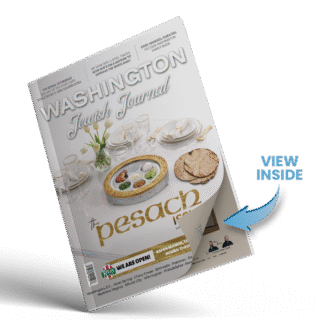
From the WJJ print archive · March 2026 Pesach edition. Wine selections and tasting notes reflect the original feature.
Cup 1
והוצאתי
I Will Take You Out
Covenant “The Tribe” Cabernet Sauvignon
This first cup marks the very beginning of our journey, the moment when the possibility of leaving Egypt first stirs hope and anticipation, and when a scattered people begins to imagine itself as a nation.
The Haggadah opens by recalling our most humble origins: “At first our ancestors were idol worshipers.” We were fragmented, spiritually and physically, a disparate group without shared direction. Yet as the story unfolds, we retrace our lineage and arrive at a pivotal moment: Yaakov and his sons descend to Egypt. What appears to be the beginning of exile is, in truth, the planting of a promise—the fulfillment of the covenant made to the Patriarchs that their descendants would become a great nation.
Covenant “The Tribe” Cabernet Sauvignon mirrors this idea beautifully. The very name “The Tribe” evokes the transition from individuals into a collective identity. As a single-varietal Cabernet Sauvignon, it reflects unity emerging from dispersion: many grapes, drawn together into one cohesive expression. Just as Bnei Yisrael began to coalesce in Egypt, from isolated families into a single people, this wine expresses focus, structure, and purpose.
This first cup, V’hotzeiti—“I will take you out,” is not yet redemption, but it is the promise of movement. It is the moment when destiny begins to shift, when exile gives way to becoming, and when disparate people start to take shape as a nation.
Cup 2
והצלתי
I Will Rescue You
Yaacov Oryah — A Place by the Sea
The second cup corresponds to the dramatic turning point of the Exodus: the splitting of the Red Sea and Hashem’s decisive rescue of Bnei Yisrael from the final pursuit of the Egyptians. This is no longer the promise of redemption, it is salvation in real time.
The Haggadah lingers on this moment, describing and debating the intensity of the makos suffered by the Egyptians at the Sea. Whether counted as tens, fifties, or hundreds, all opinions share a single underlying theme: everything flows from the “Finger” and the “Hand” of Hashem. Redemption here is not abstract or distant; it is intimate, deliberate, and deeply personal.
That same sense of personal Divine care is captured in the name A Place by the Sea. After generations of oppression and spiritual toxicity, the Jewish People are given space to breathe, to stand safely on the far shore, watch their oppressors disappear, and begin healing. It is a profound moment: no longer slaves, not yet fully formed as a nation, but finally free to recover and to grow.
The wine itself reflects this transition beautifully. With balanced acidity and refined tannins, it carries both tension and composure, echoing the drama of the crossing while preparing the palate for what follows. It is structured yet inviting, making it an ideal bridge into the heart of the Seder meal.
V’hitzalti—“I will rescue you” is the cup of clarity: the realization that we were not only taken out of Egypt, but actively saved by Hashem’s guiding hand, and given the space—A Place by the Sea—to begin anew.
Cup 3
וגאלתי
I Will Redeem You
Tishbi Winery — Special Reserve Fortified Dessert Wine
The third cup brings us to the very heart of redemption—V’gaalti, “I will redeem you.” The Afikomen, the dessert of the meal, is the final taste meant to linger long after the Seder ends. Yet it is inseparable from the moment that follows, when we open the door to welcome Eliahu HaTishbi. Together, these acts lift us beyond remembrance of past redemption and direct us toward the promise of a future, complete geulah.
Eliahu occupies a unique place in the Jewish consciousness. At the Seder, he stands as the bridge between redemptions: from the Exodus and the building of the Beis HaMikdash, through the Davidic dynasty, and forward to the final geulah from our current exile following the destruction of the Temple by the Romans. His presence reminds us that redemption is not a closed chapter, but an unfolding story.
The Tishbi Special Reserve Fortified Dessert Wine captures this idea with elegance and depth. Sweet and fortified, it is a wine designed not merely to endure time, but to improve with age. That quality symbolizes the eternal nature of the Jewish people: shaped by history, refined through exile, and growing richer as time unfolds. Its sweetness reflects the joy and wholeness of the ultimate geulah—a redemption that will not fade, but deepen forever.
This is the cup that tastes like a promise fulfilled, yet still awaited.
Cup 4
ולקחתי
I Will Take You
Shiran Hope
As we conclude the Seder, we arrive at Nirtzah, the final section, which gives voice to our hope for the future. It is here that we express our longing to be found worthy, to witness Hashem’s glory through the rebuilding of the Beis HaMikdash, and to celebrate together, unified, in Jerusalem.
This vision is reflected powerfully in the wine itself. Shiran Hope is a blend created by continually adding varietals and fermenting them together, not to preserve their separateness, but to form a new, intentional whole. The goal is not a collection of competing notes, but a harmonious amalgamation, each component retaining its character while contributing to something greater than itself. The result is an off-dry wine that is approachable and carries flavor without weight, its gentle sweetness integrated into a unified, seamless whole—a wine that invites another sip, completes the arc of the meal, and leaves the palate refreshed rather than fatigued.
The blending process mirrors the message of V’lakachti—“I will take you to Me as a people.” Our story does not end with rescue or redemption alone, but with belonging. Disparate individuals, tribes, and journeys are drawn together into a single nation, bound by purpose and destiny.
This final cup is therefore not just a closing, but a culmination: a declaration of faith that our uniqueness, when brought together with intention, will allow us to become one people, complete, united, and ready for the future, sweet redemption we continue to hope for.
About the author
Azik Schwechter, Ph.D.
Kosher wine writer · KosherWine.com
Azik Schwechter, Ph.D., writes about kosher wine through the lens of Jewish tradition, flavor and storytelling. His WJJ contributions connect the experience of tasting wine with the meaning of the Jewish table. A longtime member of the Greater Washington food community, he holds a doctorate in neuroscience from Georgetown University and has worked in kosher food and hospitality.
Tishbi bottle image from Kosher Wine World. Additional bottle and food images from the WJJ print feature.